









News

Share
Published 09:02 19 Mar 2026 GMT
Updated 09:02 19 Mar 2026 GMT
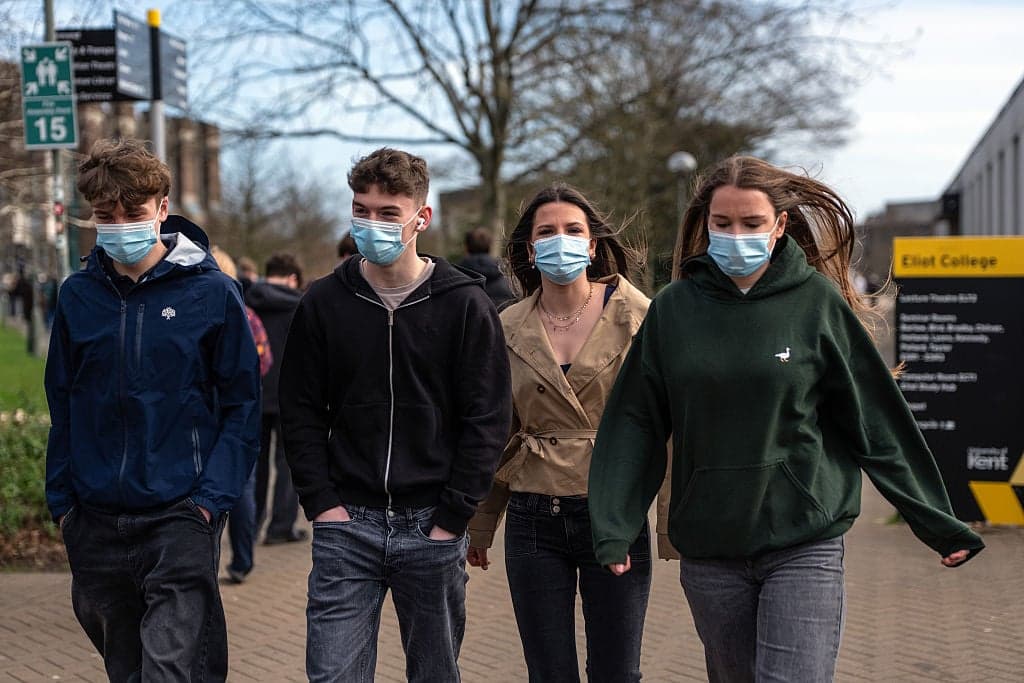
Two young people have died and 20 more are sick in the UK, after the outbreak of a deadly meningitis in Kent.
An urgent public health alert has now been issued as health workers across England are urged to look out for signs of infection.
Following an outbreak thought to have originated at a nightclub in Canterbury, the UK Health Security Agency (UKHSA) issued the alert as a vaccination programme targeting about 5,000 students began at the University of Kent.

An outbreak of Meningitis B, a strain of a rare but deadly illness, has been linked to Club Chemistry in Canterbury, a venue popular with local university and college students.
This is the fastest outbreak of meningococcal disease they have seen, leaving students worried it will be a repeat of the coronavirus, experts have said.
And fears are high as according to the Oxford Vaccine Group, roughly one in 20 people who develop meningococcal disease dies.
But could meningitis lead to a Covid-grade pandemic? To find out, Metro spoke with nearly a dozen health experts to find out.
Are Covid and meningitis similar?
Covid-19 is the name of the disease, not the virus that causes it – SARS-CoV-2. The respiratory virus is spread when people talk, breathe, cough or sneeze.
Meningitis similarly doesn’t refer to the bacteria that causes it, called Neisseria meningitidis.
Meningitis is the inflammation of the membranes covering the brain and spinal cord.
According to Eliza Gil, clinical lecturer at the London School of Hygiene & Tropical Medicine, the similarities end there.
She explains that “MenB is a very different type of infection from Covid”.
Neisseria meningitidis, also called meningococcus, is transmitted through prolonged, very close contact, Dr Gil says.
Associate professor of cellular microbiology at the University of Reading, Dr Simon Clarke, says that sharing vapes could be another way bacteria are getting around.
However, he adds that Neisseria meningitidis has a harder time sickening people than SARS-CoV-2 does.
He stresses that “most people who carry the bacteria never become ill”.
While Professor Johnjoe McFadden, an expert in molecular genetics at the University of Surrey, says that “unlike when Covid first appeared, we have antibiotics and vaccines to limit the spread of the infection.”
In other words, a large portion of the population in the UK is already immune to meningitis and scientists know what they’re up against.
The MenB vaccine has been offered to babies at eight weeks since 2015, with a second dose at 12 weeks and a booster at one year.
However, experts previously warned Metro that this means anyone born before 2015 is not immune.
In the Canterbury area, four centres with a total of 11,000 doses of antibiotics have been opened to treat people who may have been exposed.

But could meningitis cause a lockdown?
A lockdown, whether Canterbury-wide or nationwide, is unlikely, according to the experts that Metro spoke with.
They stress that people outside of Kent don’t have to worry too much. As the illness spreads through close contact, outbreaks tend to be local.
And according to Andrew Lee, a professor of public health at the University of Sheffield, any new cases may have no connection to the Canterbury outbreak.
Explore more on these topics:

News

News

News

News
Government plans to expand BBC licence fee with proposed ‘YouTube Tax’
YouTube, Netflix and Disney+ could face new BBC fee rules Watching videos online could soon come with an unexpected cost, as the government considers extending the BBC licence fee to streaming services and digital platforms. The proposed shake-up could bring websites and services such as YouTube, Netflix, Amazon Prime Video and Disney+ under the same […]
News
just now
19 people injured after Channel Tunnel collision between bus and train
The incident happened on the French side of the tunnel. A collision between a bus and a train on the French side of the Channel Tunnel has left 19 people injured. Latest reports from outlets in France say that a minibus transporting passengers hit a stationary train wagon in the loading area at the entrance […]
News
13h
Former DUP leader Jeffrey Donaldson sentenced to 15 years in prison for child sex crimes
News