






News

Share
Published 10:16 3 Nov 2024 GMT
Updated 10:16 3 Nov 2024 GMT

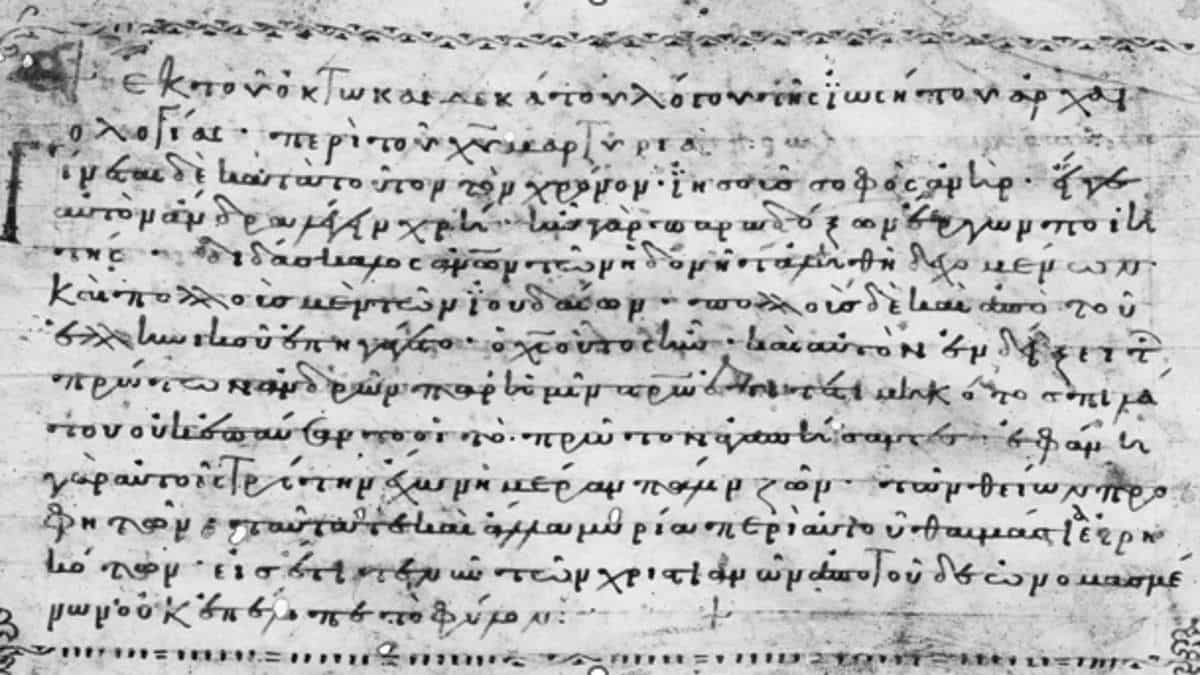
It's the age old adage that tells the story of monkey labour, Shakespeare and the notion of infinity in a scenario only the human mind could conjure.
The theorem goes that if every monkey on earth was placed into a room each with a typewriter and typed at random a letter every second for long enough, one of these monkeys would eventually write the entire works of Shakespeare.
Despite sounding like some crazed science fair experiment, a pair of mathematicians from Australia have actually crunched the numbers and they believe the statement to be false.
The boffins deemed the theorem misleading, claiming that even if all of Earth's chimpanzees tapped away for the entire lifespan of the universe, they would “almost certainly” never end up writing all of Shakespeare's work.
For obvious reasons these mathematicians couldn't take actually monkeys and make them type until they drop, however, using the power of the mind, a solution could still be found.
The pair based their calculations off a single monkey typing for 30 years one key a second on a keyboard with 30 keys containing all the letter of the English language and basic punctuation.
After multiplying this single example upwards, they ultimately concluded that it would take a monkey longer than the lifespan of our universe to accidently write out the entirety of Shakespeare, - which, by the way, is an incredibly long time.
Our universe is predicted to last a googol of years, which is 10 to the power of 100, or just one followed by 100 zeroes.
Bearing in mind the Earth is expected to be consumed by the Sun in a mere few billion years, this is a very, very long time.
In fact there was only a 5% chance that a single monkey would randomly write out the word "bananas" in their lifetime, according to the study in the journal Franklin Open.
With the entire works of Shakespeare featuring 884,647 words, none of which are "bananas", the issue here becomes apparent.
"It’s not even like one in a million,” study co-author Stephen Woodcock of the University of Technology Sydney told New Scientist. “If every atom in the universe was a universe in itself, it still wouldn’t happen.”

However, despite these new challenges made, it is possible that people are getting the wrong end of the stick when it comes to this little thought experiment.
The infinite monkey theorem is often credited to French mathematician Émile Borel with the original idea serving as an illustrator for randomness and probabilitiy.
The original theorem states that if an infinite number of monkeys typed for an infinite amount of time they would eventually manage to write out any given text.
This is theorem hinges on the notion of infinity which is never ending, therefore meaning that the monkeys would theoretically end up writing any written work, including Shakespeare's.
What made the paper by these Australian mathematicians different is that they put a timeframe on the monkeys and a cap on how many would be typing.
However, with the difference between a theory and theorem being that a theorem can be proven while a theory can only predict, maybe it is time to start thinking about this apish thought experiment as the latter.

News
News

News

News
Man asked by Fox News why he’s at Trump rally – gives greatest answer ever
This is absolutely fantastic TV. You won’t often find us singing the praises of someone at a Donald Trump rally – but this is very justified exception. On Thursday, Fox News were reporting from a Republican rally in South Carolina ahead of the crucial midterm elections next week. Correspondent Lucas Tomlinson was looking to speak […]
News
8h
Man fighting for life ‘after incident involving a punching bag machine’
A CCTV hunt has been launched by the authorities A man in his 50s has been left with life-threatening injuries after a punching bag machine was allegedly pushed onto him during a fight in Liverpool. The incident took place on Berkley Street, near Liverpool Cathedral, where police were called shortly before 7pm yesterday following reports […]
News
9h

News
Living standards squeeze to cost UK households £1,050, think tanks warn
News