








News

Share
Published 18:14 26 Sept 2025 BST
Updated 18:21 26 Sept 2025 BST
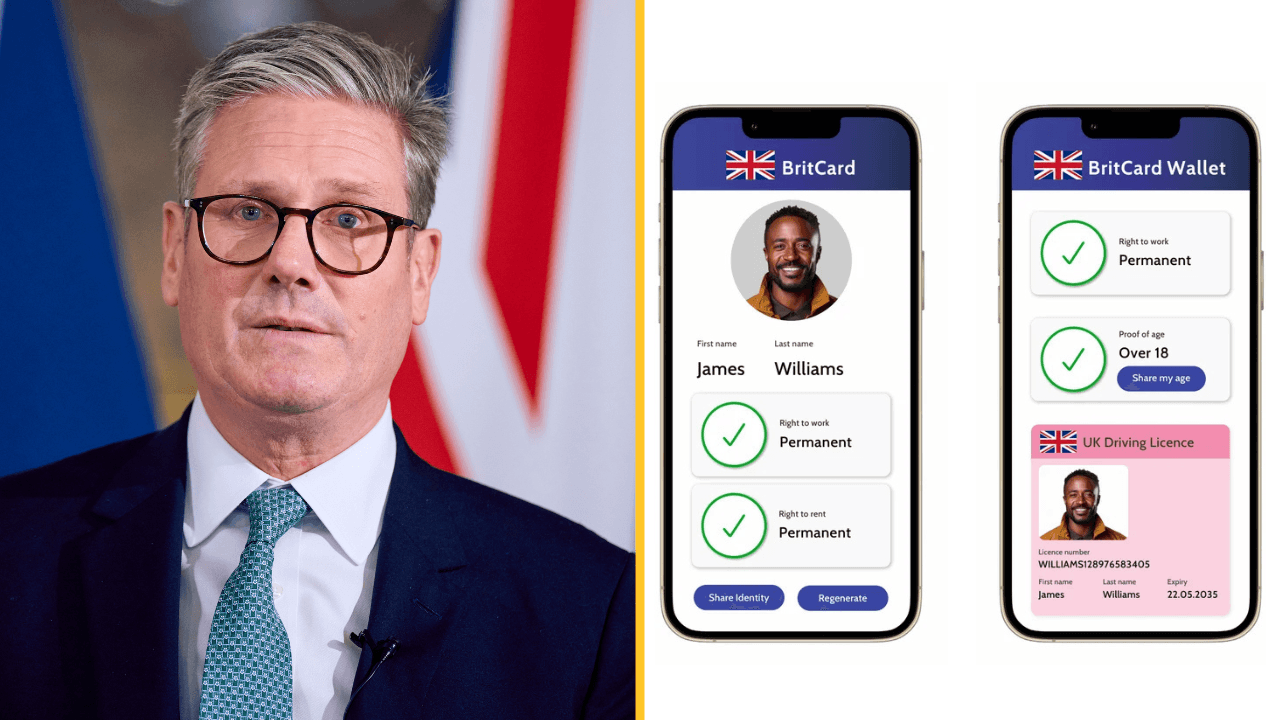
Yesterday, Prime Minister Keir Starmer announced plans to introduce new legislation that will require every adult in the UK to own a form of government-issued digital ID, as first reported by Sky News.
The proposal is part of a new plan to tackle illegal immigration with the new ID set to make up part of each citizen's right to live and work in the UK.
The new IDs, which were first reported yesterday, have been dubbed the "Britcard" but will require a full consultation and the passing of legislation before they can be fully rolled out.
Under the new rules, anyone planning to start a new job in the UK must hold a digital ID.
With the plans stirring plenty of backlash and confusion, here's how, from what we know so far, these digital IDs will work.
A digital ID is basically what is says on the tin, an identity card, but electronic and stored without the need for a physical document.
Many nations around Europe and the rest of the world already use identity cards, unlike the UK where driving licenses suffice for most matters.
The likes of France and Switzerland have non-compulsory ID cards while nations such as Spain, Germany and Brazil have compulsory ID cards.
This doesn't always mean they need to be on someone's person at all times.
A digital ID serves has a secure way of a citizen's ID to be verified along with other personal attributes.
The EU is rolling out its own Digital Identity Wallet for members by the end of 2026.
Under early plans revealed by the government, the ID cards will be stored and accessible on smartphones, similar to how the NHS app currently works.
The app will of course be free for anyone entitled to live or work in the UK, whether they be British-born or a foreign national.
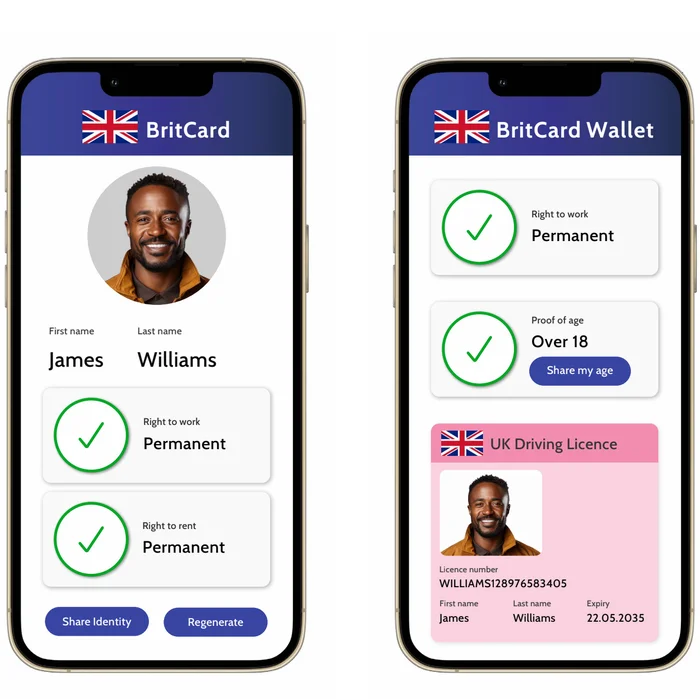
The ID will include a handful of essential personal information, including proof of identity, residency status in the UK, name, date of birth, an image of the holder and nationality.
The digital ID is set to be required for anyone starting a new job or looking to rent a home so they can prove their identity and right to live and work in the UK.
Once shown, the ID will be corroborated against a central Home Office database with a full list of people entitled to live and work in the country.
The Labour government want to implement digital IDs for a number of reasons, but one key factor is to help reduce illegal immigration numbers.
Keir Starmer said the idea is to "make it tougher to work illegally in this country" and "[make] our borders more secure".
He added that it will offer other benefits, including ease of access for tasks that require an ID be presented.
The move will also bring the UK in line with most country's in the world that have ID cards, many in a compulsory manner.
The UK is one of a handful of country's without any form of a national ID card.
With the announcement of these plans, some confusion followed surrounding the obligation around the digital ID.
The government confirmed it will not be compulsory to possess, carry at all times, or even download and present it.
However, due to it being a requirement to getting a job or rent a home, the ID will effectively be rendered obligatory for most.
It is still not confirmed what will happen to people without a smartphone, with some reports suggesting a physical ID could be issued as an alternative.
In response to these plans, a petition has been set up which has already reached one million signatures in just over 24 hours.
This has made it one of the fastest growing petitions in recent history, up there with the petition to repeal the Online Safety Act and to call a general election.
The petition reads: "We demand that the UK Government immediately commits to not introducing a digital ID cards. There are reports that this is being looked at.
"We think this would be a step towards mass surveillance and digital control, and that no one should be forced to register with a state-controlled ID system. We oppose the creation of any national ID system. ID cards were scrapped in 2010, in our view for good reason."

News

News

News

News
Government rejects an AI kill switch because you cannot simply turn AI off
Experts warn a British AI kill switch has a major flaw The government is questioning whether Britain could do much to control the most serious AI risks on its own, even if ministers were given the power to shut down systems during an emergency. The idea has been under discussion in Parliament in recent weeks. […]
News
2 days ago
Michael O’Leary doubles down and accuses Dublin Rape Crisis Centre of defamation
Ryanair boss Michael O’Leary has refused to back down on comments he has made likening airline rivals to “rapists”. Comments by Ryanair boss Michael O’Leary have drawn widespread criticism from victims and advocates for trivialising rape. Now, the controversial figure has sent an open letter to Rachel Morrogh, the chief executive of the Dublin Rape […]
News
3 days ago
Council rejects plans to erect Ali G statue in UK town
News