







News

Share
Published 14:21 30 Sept 2024 BST
Updated 14:22 30 Sept 2024 BST
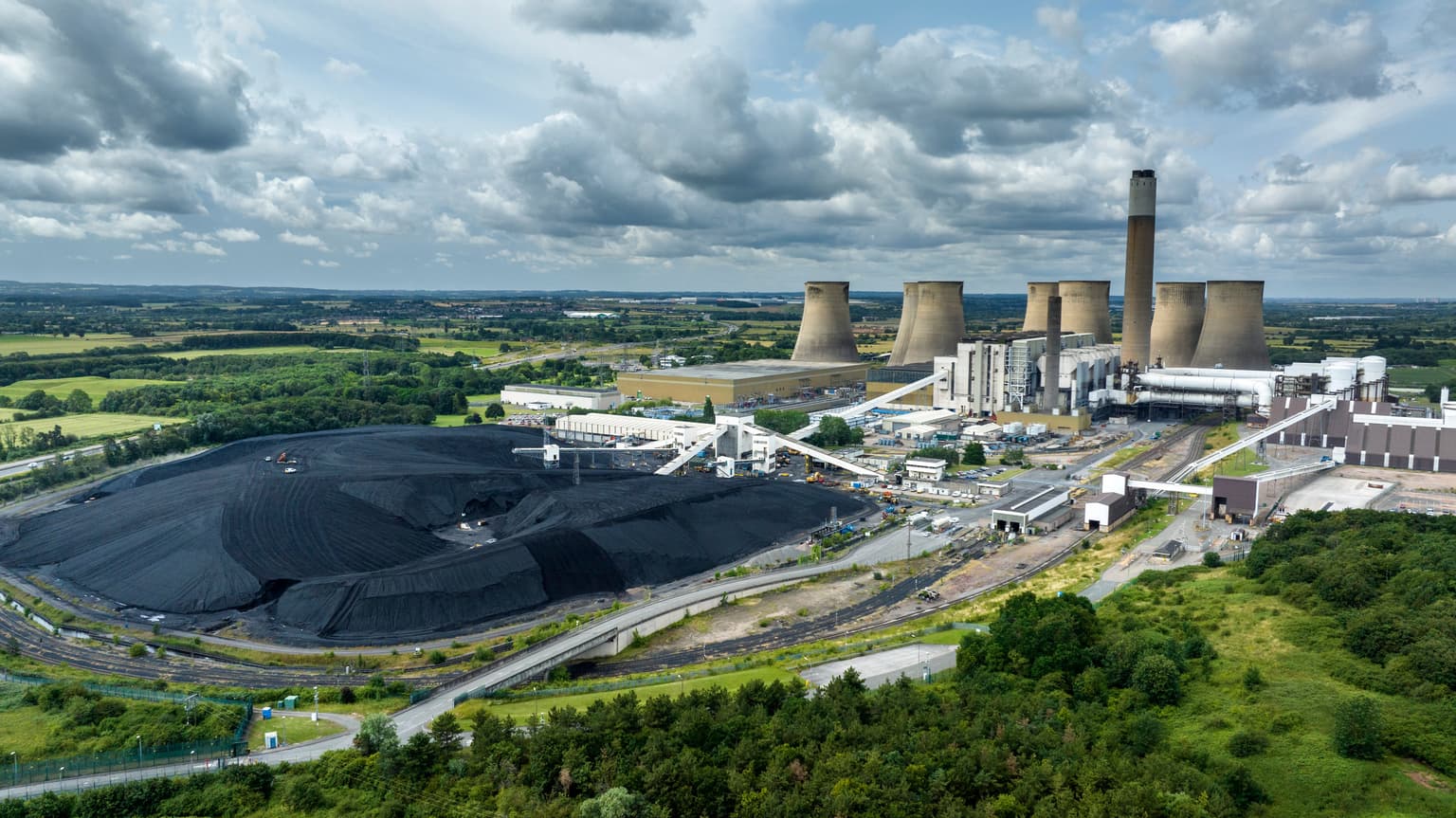
Britain's last coal power station has closed down, marking the end of a 142 year coal-fuelled era that helped transform the UK.
The very last coal power plant in the UK, located in Ratcliffe-on-Soar, in Nottinghamshire, was switched off for the final time today.
This means that for the first time since electricity became widespread, the UK's power grid is completely coal free.
The plant in Ratcliffe has been active for 57 years after it was announced almost a decade ago that coal would be fazed out by today's date, which indeed it has.
With its industrial revolution, Britain was a pioneer of coal, creating the world's first coal-fired power station in 1882 when the Holborn Viaduct power station began electricity production.
The UK's position on phasing out the fossil fuel was strengthened in 2021 in the lead up to the UN's Cop26 climate talks in Glasgow.
The entirety of Ratcliffe's 170 staff gathered in the plant's canteen to watch a live stream of the plant being shut down for the final time.
Peter O’Grady, Ratcliffe’s plant manager, said: “This whole year has been a series of poignant moments. I’m sure there will be a few tears as the whole thing stops and as people leave.”
At its peak, the plant provided jobs to 3,000 engineers, however its workforce reduced in tandem with its power output in recent years.
At one point in the 1980s, 80% of the UK's electricity grid was supplied by coal, which still stood at 40% as early as 2012.
The falling cost of renewable energy and increase in carbon taxes encouraged the shift towards more greener energies.
Across the past year, the UK has produced 38.6% (mostly wind) 27.7% fossil fuels (mostly gas) and 21.8% from other sources (mostly nuclear).
Phil MacDonald, managing director of global energy thinktank Ember, "This is the final chapter of a remarkably swift transition from the country that started the industrial revolution.”
The plan now is for the phasing out of gas, as the final true fossil fuel used to produce electricity in the UK.
The dark black substance is in Britain's blood, peaking in the 1920s when 1.2 million worked in the coal industry.
Meanwhile the miners' strikes of the 1980s was a huge defining moment in the UK's history, marking people for decades.
The UK now continues to look towards renewable energies, with the continued construction of wind farms on and off shore while new research into tidal energy continues to prove fruitful.
The UK aims to have net zero emissions by 2050.
Explore more on these topics:
News

News

News

News
Reform accused of ‘sickening new low’ with small boats mobile game
So that’s what Reform have decided to spend their crypto billions on. Reform has been accused of hitting a “sickening new low” after the party launched a small boats mobile game. As the party continues to face questions over whether £72m of donations from crypto billionaires will comply with electoral law, it seems Reform are already spending some […]
News
4h
Harry Potter star says private schools should be ‘burnt to the ground’
Johnny Flynn says therapy helped him understand his boarding school trauma Johnny Flynn has spoken candidly about the lasting impact of his time at boarding school, describing the experience as traumatic and taking a strong stance against private education. The actor, known for the Channel 4 sitcom Lovesick, previously titled Scrotal Recall, and the 2020 […]
News
4h
Major new ChatGPT rules announced for young people in the UK
News