









News

Share
Published 13:58 2 Jul 2025 BST
Updated 13:58 2 Jul 2025 BST
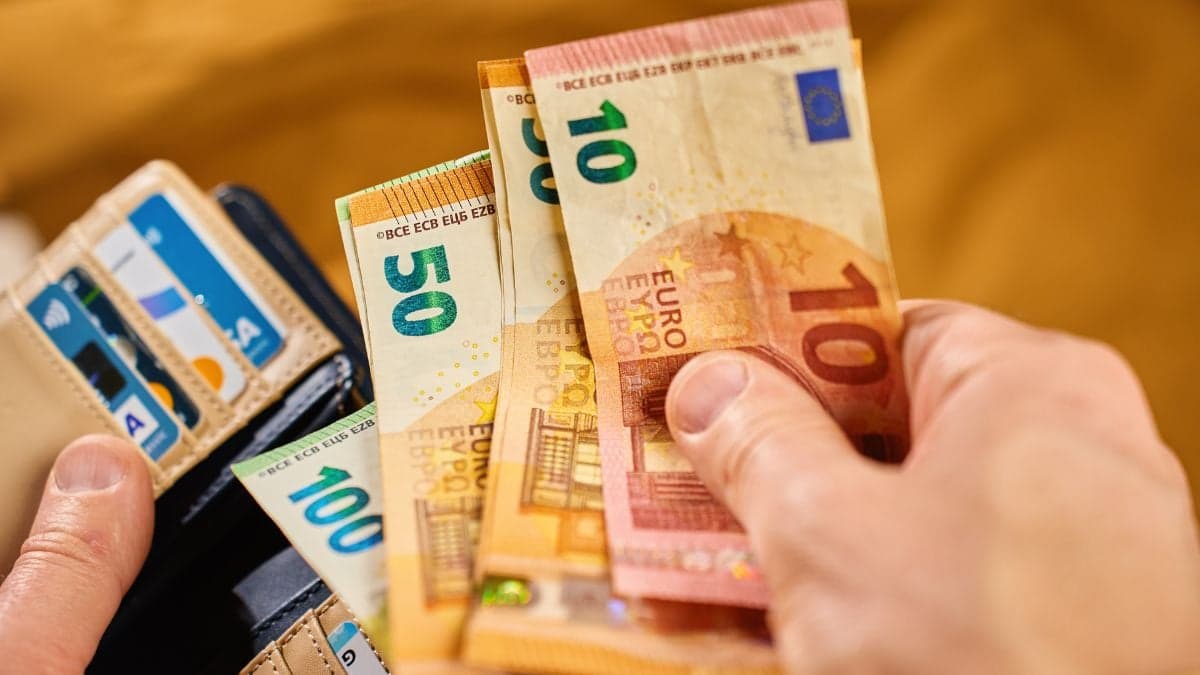
If you're planning a trip to Spain soon, make sure you're aware of some new rules regarding Euro banknotes.
While many of us have switched to card payments for the majority of our travels, some still prefer cash, and there may be situations on holiday where cards aren't accepted.
So if you're thinking of getting some Euro banknotes out for your next trip to bargain at some local vendors or tip the staff when eating out, keep these new 'rules' in mind.
First of all, try to avoid withdrawing €500 notes at the currency exchange or bank, as you'll get nowhere with them in mainland Spain, the Canary Islands, or the Balearic Islands.
The European Central Bank and the Bank of Spain officially ceased production of these notes in 2016; however, a small number of the purple notes are still in circulation.
Even though these banknotes are still legal, they're becoming increasingly difficult to use, as many places simply refuse them, per EuroWeekly.
Because of the high value of the notes, along with their link to criminal activity, many places will not accept €500 notes.
If you do end up with a €500 note, you're better off going to a Spanish bank and asking for an exchange into smaller notes.
Then, the Central Bank of Spain has also started the process of removing old and damaged €50 notes from circulation. This initiative is set to begin this month and will hopefully improve the security of cash transactions and reduce fraud.
This policy change concurs with the tourist season, resulting in a gradual withdrawal of old and damaged banknotes. This could lead to your worn and torn banknotes being rejected by cashiers or restaurants.
So, when exchanging your holiday money, make sure any €50 notes are in good condition, and otherwise ask for replacements if you spot any impairments.
Important to keep in mind is that most European countries will soon do away with one and two-cent Euro coins.
Countries such as Ireland, Belgium, and Italy have already stopped using these coins, rounding up cash transactions to the nearest five cents instead.
Many European countries are debating doing the same, so if you're someone who collects their coins in a jar, think about spending them on a beer on your next holiday instead.

News

News

News

News
British Airways flight declares mid-air emergency after sudden descent and U-turn over Ireland
It made a sudden U-turn A British Airways flight is currently flying a triangular circuit over the south west of England after it was forced to turn back over the Ireland after a “sudden descent”. It comes after the plane squawked 7700, the internationally recognised code for a midair emergency. Flight BA259 is being operated […]
News
1h
Sainsbury’s ‘held talks’ with major supermarket rival about potential merger
Sainsbury’s to potentially merge with competing grocer Sainsbury’s are said to have ‘held talks’ with a major competing supermarket in what could become the most significant coalition in the grocer sector, as reported by Sky News. Although talks are not believed to be currently active, industry sources say that a wave of top grocery market […]
News
1h

News
Contactless border tech ends passport scans at UK airports
News