







News

Share
Published 13:59 24 Oct 2025 BST
Updated 13:59 24 Oct 2025 BST

Keir Starmer has said that there is 'no way' new digital ID cards will be used to track things like people's consumption habits.
Last month (26 September), the government announced that digital ID cards, dubbed "Britcards" would be coming to the UK, subject to a full consultation.
The proposal is part of a new plan to tackle illegal immigration with the new ID set to make up part of each citizen’s right to live and work in the UK.
Under the new rules, anyone planning to start a new job in the UK must hold a digital ID.
Starmer issued a statement about the cards, reading: "Digital ID will be a huge help in tackling illegal immigration. But it’s so much more than that.
"It will empower people every single day by giving you a new way to prove who you are. Saving time and money when you apply for a mortgage by cutting down unnecessary paperwork.
"Proving your right to rent in one click. Personalised public services like helping parents claim eligibility for free childcare and nursery places.
"It is time to put power back in people’s hands and bring the UK into the modern age."
However, there have been many a video online which claims the new plans will see things like how much beer you drink and how many flights you take being tracked by the government.
Starmer has since told Metro that these claims are completely false.
"None of that is going to be any part of this, it’s just a false rumour. There’s absolutely no plans to do it, nor ever would there be," he told the outlet.
"This is basic information – who you are, what your age is, that sort of information. The basic stuff we use every day to prove who we are, nothing beyond that.
"So let me knock down that rumour absolutely flat."
When asked how much the digital ID should be a part of people's lives, he said proving the right to work in the UK will be the ‘only area in which it’ll be mandatory’.
He added that the rest of the system will be ‘totally voluntary’.
Starmer further said that some Brits may find the digital ID helpful, and that it could make things like renting and buying alcohol easier.
"In other countries where this has been done, the take-up is massive because everybody sees it, they know somebody who’s got digital ID, and they think, “Why haven’t I got that? It makes life so much easier."
"Digital ID would cut all that faff out, they could do it in one move from their digital ID," he added.
The minister in charge of the rollout, Ian Murray MP, spoke about the benefits of having IDs on your phone.
He said: "We all use our smartphones for everyday life.
"So it's about making the relationship with the citizen easier and making their access to government services easier."
The Minister of State for Digital Government and Data said he is looking forward to the end of "having to continuously fill out my name, my address, my telephone number" and instead just scanning his phone.
Despite much backlash towards the scheme with almost three million signatures on a petition to repeal digital IDs, the government insists the digitalising of IDs will be done securely to protect personal information.
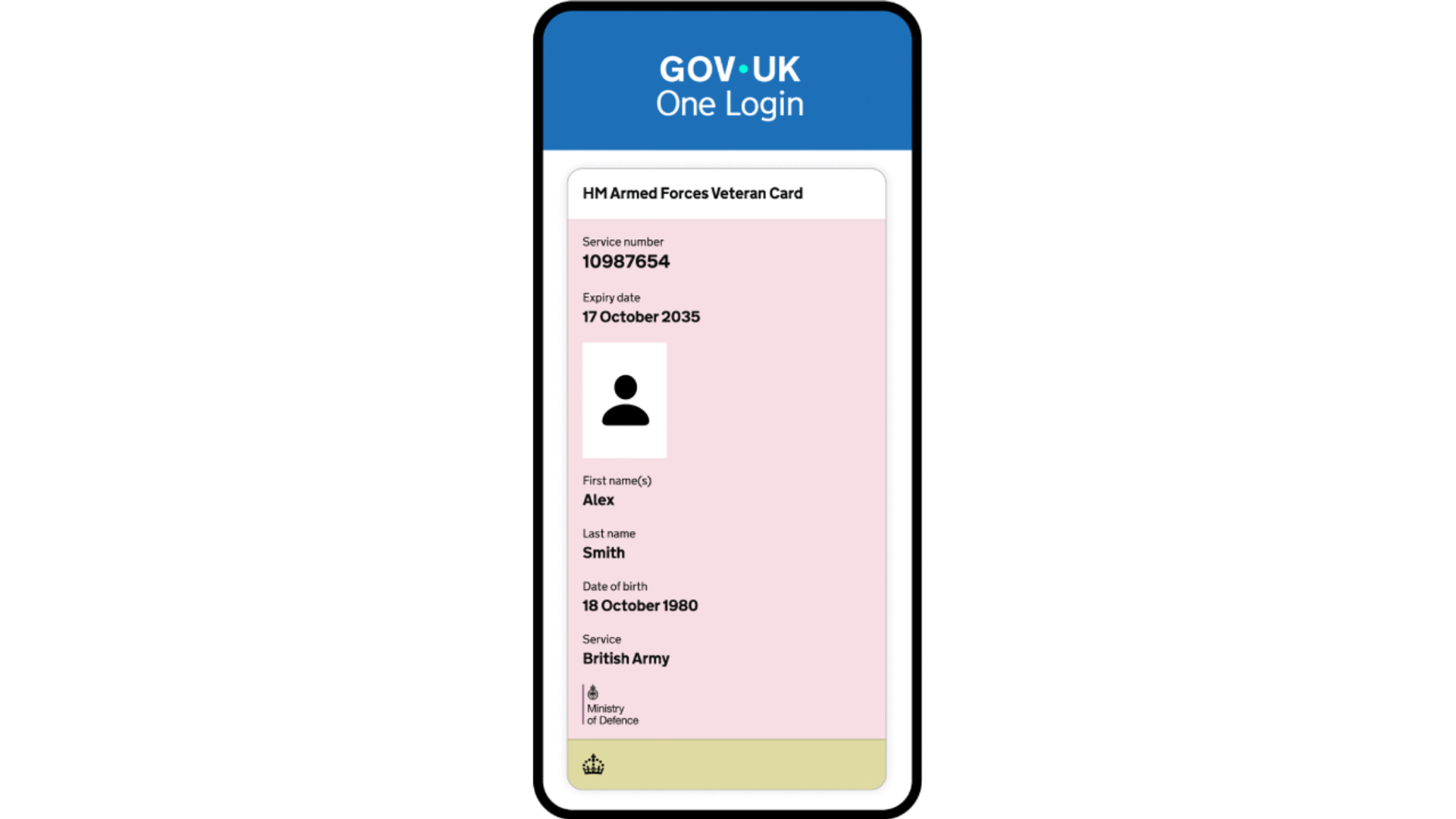
It says it will use a "federated" approach that would guard much of the sensitive data of a person at the relevant ministries.
In the case of the veteran's ID, it means any sensitive information would be guarded at the Ministry of Defence with the ID linked back to it.
The government says this information can then be used to sign-in before accessing services to housing, mental health support, shopping discounts, museum entry and other benefits.
Similarly, in the case of a driving licence, data would stay with the DVLA, passports with the passport office and national insurance with the DWP.
This divulged approach means that not the entirety of the nation's data will be stored in one place.
There has even been mention of the potential introduction of using IDs in a contactless fashion when buying age-verified products such as alcohol.
Minister Ian Murray has already said that the right to work ID will be mandatory as "it's mandatory already to be able to prove that you can work in the UK".
This suggests that digital IDs will be compulsory to be used in situations where ID is currently needed to prove the right to certain privileges.
Explore more on these topics:
Nottingham city centre closed after police officer shooting
BREAKING Police have confirmed that an officer has been shot in Nottingham city centre. According to Nottinghamshire Police, a man and woman have fled the scene while a firearm has been recovered. The two suspects have not been found yet, police said. They were approached by the officer in Angel Row shortly before the incident, […]
News
2 days ago
Wainwright fire kills several at Canada military base
A nearby hospital declared a mass-casualty emergency A fire at a Canadian military base has caused the deaths of several people and left dozens of others injured. The fire broke out at Canadian Forces Base Wainwright on Saturday evening, as per the BBC. According to Canadian broadcaster Global News, which cited unnamed military sources, at […]
News
2 days ago
News
Homes evacuated after ‘pipe bomb’ explosion in Belfast
News