







News

Share
Published 11:25 3 Jun 2025 BST
Updated 11:25 3 Jun 2025 BST
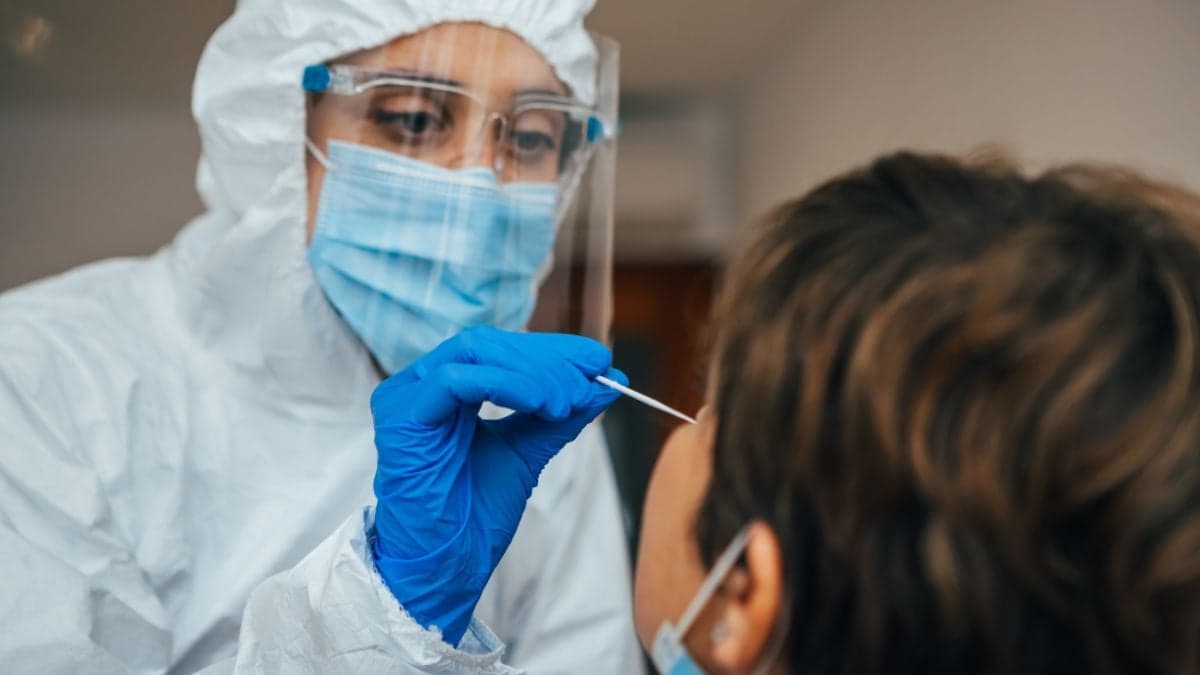
Health authorities in popular holiday hotspots have warned of a new Covid variant that's feared to be 'more infectious' than foregoing variants.
Tourists are urged to wear masks and wash their hands as new Covid cases rise.
The new variant is most prevalent in popular British holiday destinations, such as Egypt, the Maldives, and Thailand.
However, there has also been a rapid rise in cases in Ireland, parts of Europe, Australia, and certain regions of the UK.
Health authorities in Thailand raised the issue after recording 257,280 Covid cases and 52 deaths.
Anukool Pruksanusak, deputy government spokesperson, said that international travel and the oncoming rainy season could cause a rise in even more outbreaks.
The Ministry of Public Health will closely monitor the situation, as stated by Nation Thailand.
Pruksanusak continues to urge people to "limit activities that increase the risk of infection, wash their hands regularly, wear masks in crowded places, get booster vaccinations when due, and seek medical attention promptly if experiencing symptoms such as fever, cough, sore throat, or other respiratory issues".
Bangkok, the country's capital, as well as the Chonburi Province, are seeing the worst of the outbreak.
The World Health Organisation (WHO) has also issued a warning concerning the new variant NB.1.8.1, deeming it a "variant under monitoring" due to its global spread and key mutations.
Yet, the WHO also said: “Despite a concurrent increase in cases and hospitalisations in some countries where NB.1.8.1 is widespread, current data do not indicate that this variant leads to more severe illness than other variants in circulation.”
Even though this variant might not be exceptionally severe, it might still be more infectious than previous variants. Evidence suggests that NB.1.8.1 binds more tightly to human cells.
"Data indicates that NB.1.8.1 does not lead to more severe illness compared to previous variants, although it appears to have a growth advantage, suggesting it may spread more easily," Subhash Verma, professor of microbiology and immunology at the University of Nevada, told CBS News last week.
The WHO points out that the variant's risk to public health was "low at the global level" and that "currently approved COVID-19 vaccines are expected to remain effective to this variant against symptomatic and severe disease."
NB.1.8.1 was first identified in samples collected in January 2025 and has now been detected in 22 countries as of May 18. The WHO warned that the new variant was rising in prevalence in the Western Pacific region, North and South America, and Europe.
NB.1.8.1 is now the dominant variant in Hong Kong and China, according to Laura Herrero, associate professor in virology and infectious disease at Griffith University.
News


News

News
News
Sainsbury’s ‘held talks’ with major supermarket rival about potential merger
Sainsbury’s to potentially merge with competing grocer Sainsbury’s are said to have ‘held talks’ with a major competing supermarket in what could become the most significant coalition in the grocer sector, as reported by Sky News. Although talks are not believed to be currently active, industry sources say that a wave of top grocery market […]
News
35 min
The top 10 ‘best’ cities in the world have been revealed
Five factors determined the ‘best’ and ‘worst’ It’s that time of the year again when the brain boxes at some large, academic institution create a fancy index full of number of buzz-word measures to make the ultimate tier list of planet Earth’s cities. This time it’s the turn of the boffins at Oxford Economics to […]
News
42 min

News
Pensioner sepsis death: Coroner warns over unmonitored transfer
News