



Politics

Share
Published 00:01 15 Jun 2021 BST
Updated 10:58 21 Jun 2021 BST
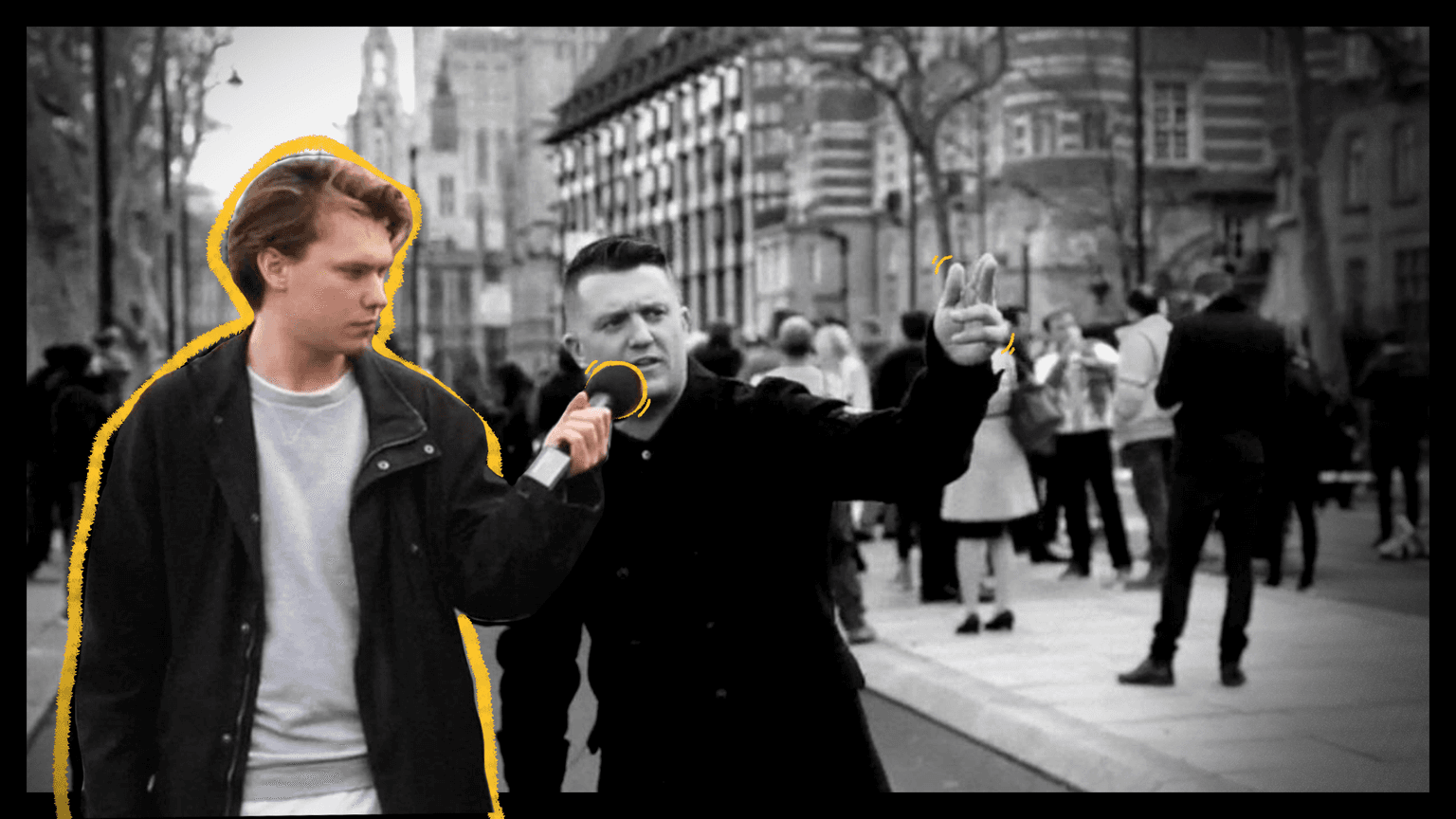
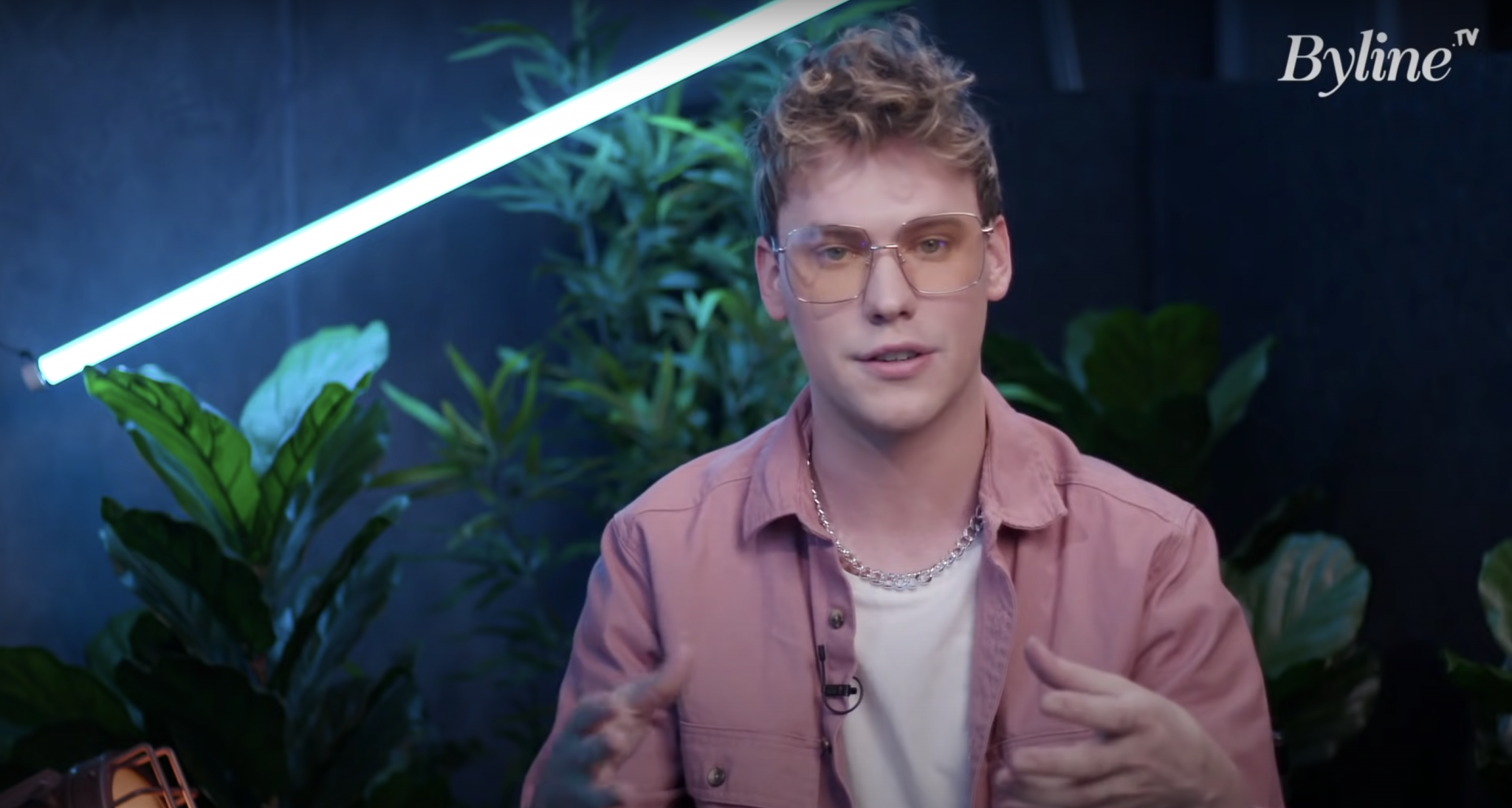 Caolan working his new job at Byline TV (Credit: YouTube)[/caption]
He was a far-right YouTuber and claims to be responsible for half-a-billion video views. He filmed, scripted and edited video for the likes of Tommy Robinson and American conspiracy theorist Alex Jones for two years. During that period Robinson’s content was cited at trial as an influence on Darren Osbourne, the Finsbury Park mosque attacker. Caolan strongly denies a link between his work and the attack.
Then, in 2019, he got out. "I was at the centre of that online right system, right in the middle of it," he says. “I made a monster with those videos."
What motivates someone to believe racist myths? What role does social media play in the spread of extremist ideas? And where should our threshold for forgiveness lie?
In Caolan's case, the first question has a straightforward answer - the Orlando nightclub shooting in 2016. Forty-nine LGBTQ+ people died at the hands of Omar Mateen, an Islamist extremist. When Caolan, himself a gay man, heard about the massacre, he wanted to know more. "I wasn't even political at that time," he says. "I went online to find answers about it. I'm not a boomer, I don't get my information from newspapers and TV, I get it from YouTube. I went down this rabbit hole and became obsessed with it."
The world's second-largest search engine, YouTube, plays a prominent role in this story. Social media is symbiotic with politics, particularly its extremes.
Take, for example, the mob’s storming of the Capitol in Washington DC on January 6, America wasn’t witnessing a revolution. The crowd weren't wresting control of their democracy from elites. The majority were there for the clout.
Photos of the scene show a throng, their arms straightened and at an angle out in front. But they're not performing Nazi salutes, the hands weren't extended flat, they were clasping smartphones.
[caption id="attachment_275894" align="alignnone" width="2048"]
Caolan working his new job at Byline TV (Credit: YouTube)[/caption]
He was a far-right YouTuber and claims to be responsible for half-a-billion video views. He filmed, scripted and edited video for the likes of Tommy Robinson and American conspiracy theorist Alex Jones for two years. During that period Robinson’s content was cited at trial as an influence on Darren Osbourne, the Finsbury Park mosque attacker. Caolan strongly denies a link between his work and the attack.
Then, in 2019, he got out. "I was at the centre of that online right system, right in the middle of it," he says. “I made a monster with those videos."
What motivates someone to believe racist myths? What role does social media play in the spread of extremist ideas? And where should our threshold for forgiveness lie?
In Caolan's case, the first question has a straightforward answer - the Orlando nightclub shooting in 2016. Forty-nine LGBTQ+ people died at the hands of Omar Mateen, an Islamist extremist. When Caolan, himself a gay man, heard about the massacre, he wanted to know more. "I wasn't even political at that time," he says. "I went online to find answers about it. I'm not a boomer, I don't get my information from newspapers and TV, I get it from YouTube. I went down this rabbit hole and became obsessed with it."
The world's second-largest search engine, YouTube, plays a prominent role in this story. Social media is symbiotic with politics, particularly its extremes.
Take, for example, the mob’s storming of the Capitol in Washington DC on January 6, America wasn’t witnessing a revolution. The crowd weren't wresting control of their democracy from elites. The majority were there for the clout.
Photos of the scene show a throng, their arms straightened and at an angle out in front. But they're not performing Nazi salutes, the hands weren't extended flat, they were clasping smartphones.
[caption id="attachment_275894" align="alignnone" width="2048"]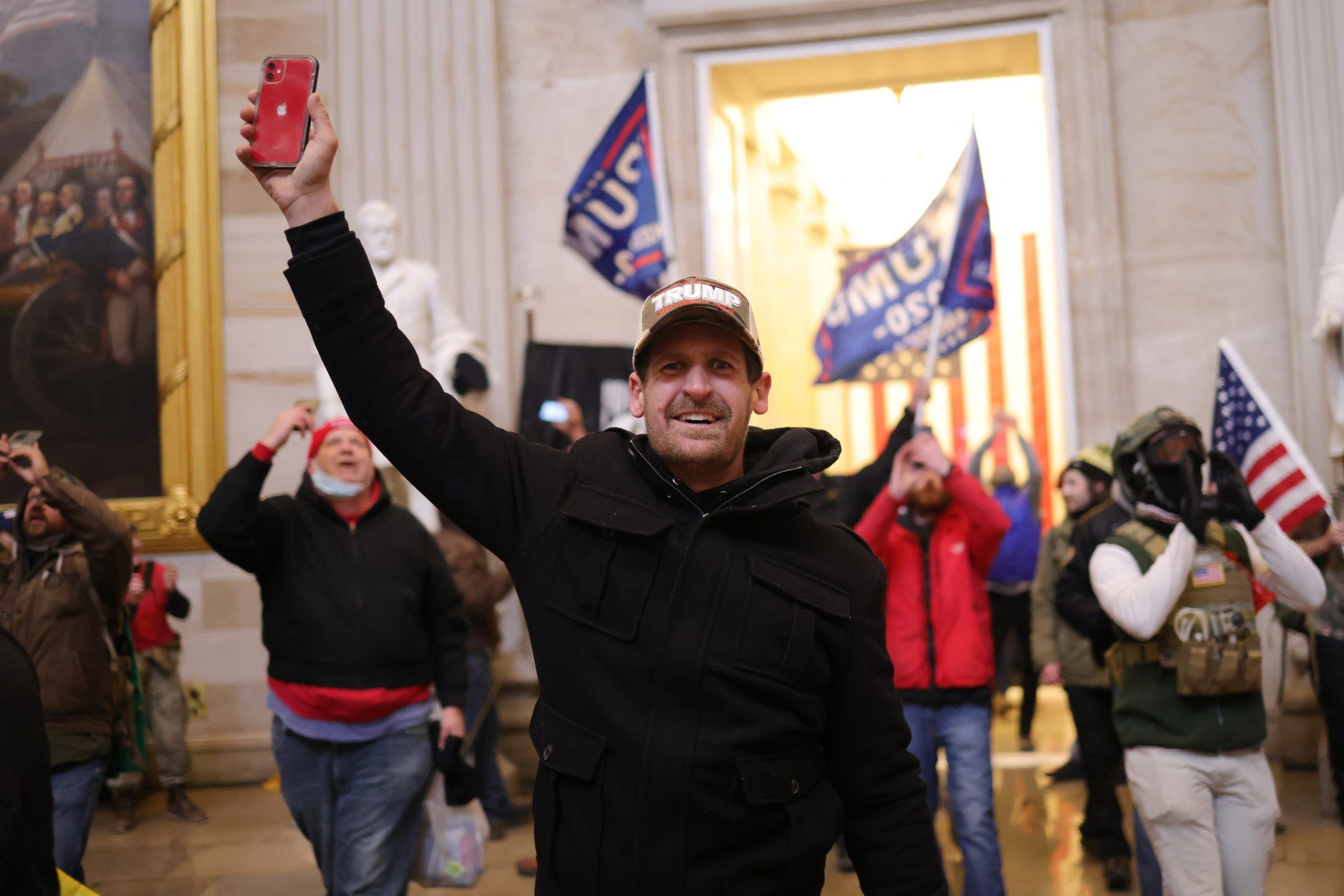 The modern day salute (Credit: Win McNamee/Getty)[/caption]
"Everything that you do, if it's not been live streamed it never happened, everything is driven by phones and by the internet," Caolan says. "Our movement is, was, specifically online, it was incredibly online."
This slip between present and past tense is telling. It's been two years since Caolan declared he was no longer working for Tommy Robinson, 38, whose real name is Stephen Yaxley-Lennon. "A long time ago" according to Caolan but not long enough to stop speaking like he's still part of it.
Robinson understood the potential of tapping into online political groups. "I remember when Tommy first met me he was like 'This is the most powerful thing I could possibly have' and it was his phone," Caolan says. "He was like 'This is the future, I don't need the media, I don't need to go out onto the street to speak to people.'"
Caolan grew up in Ireland before moving to the north of England and, from an early age, internet stardom was a focus. His first taste of notoriety came in 2014, when he appeared in the Channel 4 documentary series, Shut Your Facebook, which claimed to explore "the increasingly uninhibited way we present ourselves online.” The interviewees were selected on the grounds of their “outrageous, embarrassing or ridiculous "social media profiles and the series aimed to demonstrate the "implications of their online exploits in the real world." It's a prescient description.
The reason for Caolan’s inclusion was his role in creating a social media gossip series. Imagine a collaboration between Geordie Shore and Topman, full of fights, drinking and ostentatious living. "There was this golden community of people on the internet who had fame and I wanted to be a part of it," a 17-year-old Caolan says in one episode before joking that he's suffering withdrawal symptoms for not having drunk champagne in three days.
The premium alcohol and five-star hotels necessary to portray a luxury lifestyle landed Caolan in £5,000 of debt but he learned a valuable lesson about how to engineer clout: "We'd have arguments and relationship break-ups - just loads and loads of drama - and I was getting loads more fans and followers."
Rows, the collapse of a relationship, these are traumatic experiences, albeit within the confines of reality TV, but you sense that meaning is irrelevant to Caolan. They are, instead, narrative devices, tools concocted to keep people watching, like those deployed by the producers of Love Island.
Beside the Thames, its waters rendered opaque by the clouds, he reiterates this belief. He's planning to utilise confrontation and theatrics to get his new work for Byline TV, the video offshoot of Byline Times, a progressive publisher that made its name scrutinising coronavirus contracts, to pop on YouTube, using the same camera equipment originally gifted to him by right-wing fans, worth tens-of-thousands of pounds. Still producing content, just with different politics.
Arie W Kruglanski is a psychology professor at the University of Maryland in the US, who specialises in extremism and radicalisation. He told me that it's not unusual for an extremist to change their ideology: "You can be radical on the right, you can be radical on the left, you can be radical religiously, in your lifestyle, sport. You can be addicted to love.
"There are many different kinds of extremism that differ in their content, but what extremism usually means is focusing on one thing. Mother Theresa willed one thing, to be a good person, a humanitarian. A person on the far-right is focusing on a far-right narrative that fears the purity of their country is in danger.”
From a wood panelled office, shelves groaning under heavy books, Kruglanski explains that all human activity stems from a motivation to fulfil a basic need. "The question is, what is the motivation here?” he asks. “It is the mother of all motives, the motive that makes the world go round, what I call the quest for significance - the need to be somebody, to have respect, to have dignity.
"This need is a major political force. It underlies the Proud Boys, it underlies Black Lives Matter, it underlies the suffragette movement, the gay movement, it underlies all the major revolutions that transformed world history. It underlies to some extent Brexit.
"It also fuels extremism of the kind you're talking about.”
[caption id="attachment_275903" align="alignnone" width="2048"]
The modern day salute (Credit: Win McNamee/Getty)[/caption]
"Everything that you do, if it's not been live streamed it never happened, everything is driven by phones and by the internet," Caolan says. "Our movement is, was, specifically online, it was incredibly online."
This slip between present and past tense is telling. It's been two years since Caolan declared he was no longer working for Tommy Robinson, 38, whose real name is Stephen Yaxley-Lennon. "A long time ago" according to Caolan but not long enough to stop speaking like he's still part of it.
Robinson understood the potential of tapping into online political groups. "I remember when Tommy first met me he was like 'This is the most powerful thing I could possibly have' and it was his phone," Caolan says. "He was like 'This is the future, I don't need the media, I don't need to go out onto the street to speak to people.'"
Caolan grew up in Ireland before moving to the north of England and, from an early age, internet stardom was a focus. His first taste of notoriety came in 2014, when he appeared in the Channel 4 documentary series, Shut Your Facebook, which claimed to explore "the increasingly uninhibited way we present ourselves online.” The interviewees were selected on the grounds of their “outrageous, embarrassing or ridiculous "social media profiles and the series aimed to demonstrate the "implications of their online exploits in the real world." It's a prescient description.
The reason for Caolan’s inclusion was his role in creating a social media gossip series. Imagine a collaboration between Geordie Shore and Topman, full of fights, drinking and ostentatious living. "There was this golden community of people on the internet who had fame and I wanted to be a part of it," a 17-year-old Caolan says in one episode before joking that he's suffering withdrawal symptoms for not having drunk champagne in three days.
The premium alcohol and five-star hotels necessary to portray a luxury lifestyle landed Caolan in £5,000 of debt but he learned a valuable lesson about how to engineer clout: "We'd have arguments and relationship break-ups - just loads and loads of drama - and I was getting loads more fans and followers."
Rows, the collapse of a relationship, these are traumatic experiences, albeit within the confines of reality TV, but you sense that meaning is irrelevant to Caolan. They are, instead, narrative devices, tools concocted to keep people watching, like those deployed by the producers of Love Island.
Beside the Thames, its waters rendered opaque by the clouds, he reiterates this belief. He's planning to utilise confrontation and theatrics to get his new work for Byline TV, the video offshoot of Byline Times, a progressive publisher that made its name scrutinising coronavirus contracts, to pop on YouTube, using the same camera equipment originally gifted to him by right-wing fans, worth tens-of-thousands of pounds. Still producing content, just with different politics.
Arie W Kruglanski is a psychology professor at the University of Maryland in the US, who specialises in extremism and radicalisation. He told me that it's not unusual for an extremist to change their ideology: "You can be radical on the right, you can be radical on the left, you can be radical religiously, in your lifestyle, sport. You can be addicted to love.
"There are many different kinds of extremism that differ in their content, but what extremism usually means is focusing on one thing. Mother Theresa willed one thing, to be a good person, a humanitarian. A person on the far-right is focusing on a far-right narrative that fears the purity of their country is in danger.”
From a wood panelled office, shelves groaning under heavy books, Kruglanski explains that all human activity stems from a motivation to fulfil a basic need. "The question is, what is the motivation here?” he asks. “It is the mother of all motives, the motive that makes the world go round, what I call the quest for significance - the need to be somebody, to have respect, to have dignity.
"This need is a major political force. It underlies the Proud Boys, it underlies Black Lives Matter, it underlies the suffragette movement, the gay movement, it underlies all the major revolutions that transformed world history. It underlies to some extent Brexit.
"It also fuels extremism of the kind you're talking about.”
[caption id="attachment_275903" align="alignnone" width="2048"]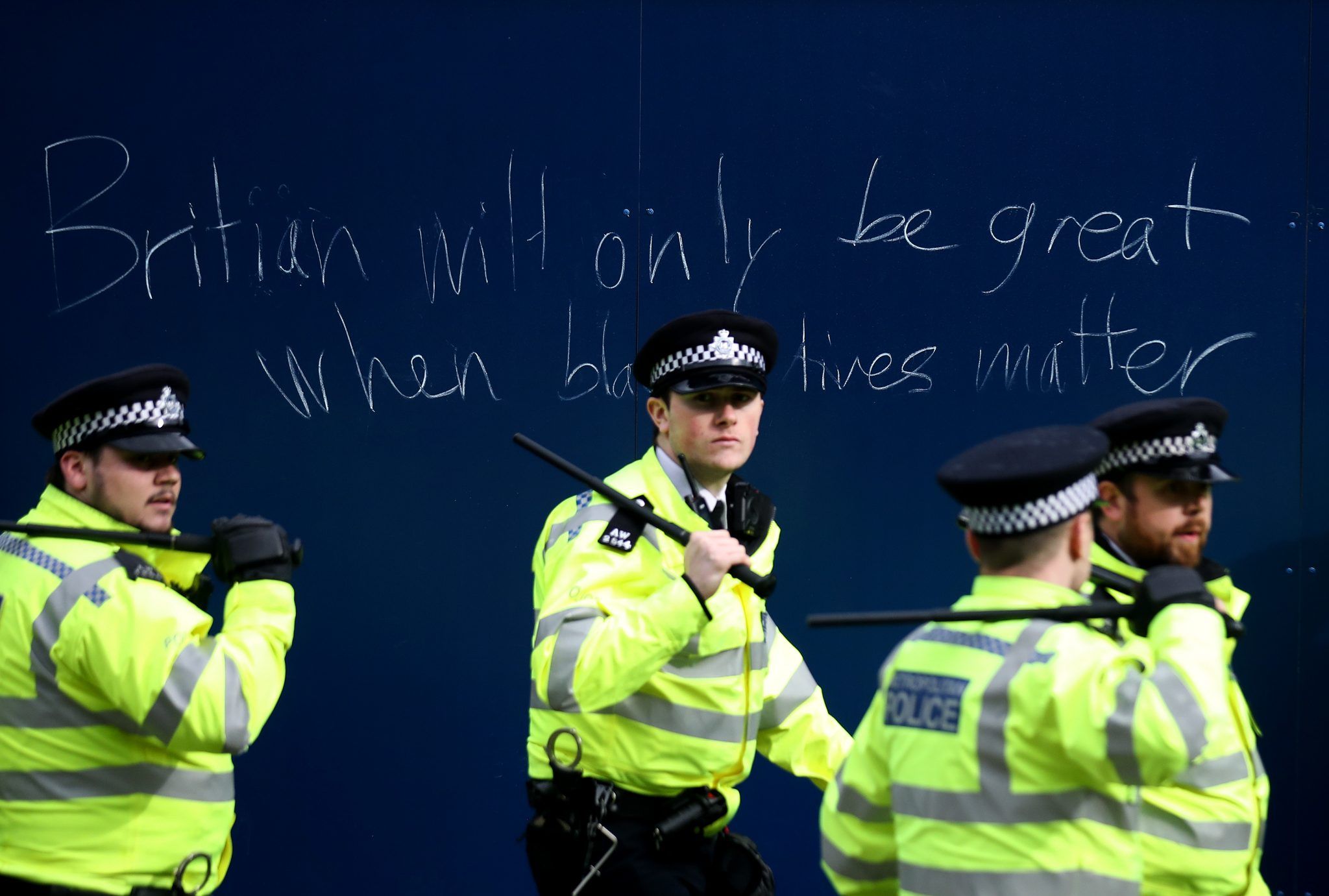 A series of Black Lives Matter protests were held in London following the death of George Floyd (Credit: Alex Pantling/Getty)[/caption]
This search for identity is realised via narratives and networks, and it’s possible, indeed common, for those to change. An individual might find far-right ideas compelling, but if they fall out with their group of friends who hold similar ideals, they may seek out a new ideology.
"If you are disenchanted, if you feel they’ve betrayed you, that you're gay and they're anti-gay, you leave,” Kruglanski continues. “But people who are extreme... will look for some alternative ideology that promises significance and then will gravitate towards it.
"By the way, several of my friends who research the far-right movement are former Neo Nazis, who are now leading the fight to bring people out,” he adds. “They gain tremendous significance from this."
Haunted by the treatment of the LGBTQ+ community at the hands of Islamist extremists, Caolan decided to take action. A popular early YouTube video, from January 2017, saw him attend a women's march in central London in the wake of Donald Trump's victory in the US presidential election. It was watched more than a million times and its comments mock the participants. Now, Caolan admits to selectively editing to make the protesters seem ill-informed.
The upload was spotted by Ezra Levant of Rebel Media, a Canadian far-right news outlet since demonetised by YouTube, who engineered a meet up with staff member Tommy Robinson. Robinson was presenting videos for Rebel. "He came round to my house and was genuinely the loveliest person I had ever met at that time," Caolan tells me. "He was really sweet to me, he was like 'Caolan, you're gay, you must understand, you're under attack by Islam,' and I fully believed him. I was like, that's amazing."
Caolan went on to make, in his words, "some of the biggest documentaries that have been on the right." He directed Lauren Southern's Farmlands, an alt-right film that proposes the idea of a genocide against white South Africans. It was tweeted by the then American president, Donald Trump. Then, InfoWars' Alex Jones commissioned him to make a “documentary '' about free speech.
https://twitter.com/Green_Footballs/status/1032461515381768209
"I loved working with Tommy and Alex," Caolan says assertively, as if recalling a childhood friendship, its validity unquestionable. "Tommy knew how useful I was to him and so did Alex. They would be incredibly complimentary about me. It felt like we were on an amazing crusade - like we were on the side of good."
https://www.youtube.com/watch?v=ZhrhLovaFs8
Caolan interchangeably filmed or presented videos with Tommy, they share the screen in the above video filmed in the wake of the Westminster Bridge terror attack. “If you import a culture, you get a culture,” Caolan opines. Tommy is more blunt: “We are at war.” Robertson tells me that he felt part of a shared mission, driving across the country to expose “the truth” while members of the public waved from their cars on the motorway.
It's hard to overstate the popularity Caolan's work enjoyed. "I walk to work everyday across the Millennium Bridge," he says. "I get recognised at least once a week by someone who thinks that I'm still right-wing. 'Oh mate, keep up the good work.' So I definitely entered the public consciousness." He’s not bragging but I detect a flicker of relish, proud of the notoriety.
This real world impact stems from digital scale. "The New York Times did an assessment of the amount of views I was attributed to and it was half a billion," he relays earlier in the day while we film him at work, pausing to sip from a mug. The statistic hangs in the air for a moment, deliberately, the man knows how to work a camera from either side and the end result is a sense of satisfaction.
At another point Caolan checks his smartwatch and claims that his heart rate is 130bpm, he says talking about this “is so stressful.” When I ask him to show the camera he recoils, concerned he'll come across as emotionally unstable.
He is hyper self-aware when it comes to his image and perception but in terms of personal culpability, that awareness diminishes. Responsibility is repeatedly put upon social media platforms and their algorithms and his own role rendered nebulous. He says "YouTube were pushing this stuff beyond belief," or argues that the platform shoulders responsibility for not taking his videos down.
YouTube did not respond to a request for comment.
"I wish I could take them down because I feel like I'm still radicalising people now. I wish I could tell them all it's bullshit.
“Tommy is a liar. The way he treated me, a lot of it, was just a front. It was an act to grow and make a lot of money. I thought he cared about saving Britain, saving young girls from being raped in Rotherham, but it was about making money."
Since Caolan severed ties with his old colleague, a string of press reports have made allegations about Robinson's "misuse of donations" on "coke and prostitutes." Robinson denies these claims.
Caolan also alleges that Robinson made offensive remarks about his sexuality.
"Towards the end of working with him, I remember him making really homophobic comments thinking that I wasn't listening and even directly about me."
"Do you think he's racist?" I ask.
"It's a hard question. A lot of the people I worked with are racist, but Tommy doesn't even have any views.
"He only cares about himself and his money."
JOE put all of Caolan’s claims to Tommy Robinson. He only replied to some. He said: "Caolan’s motives aren’t true, he’s not telling the truth. It’s bullshit, your source is not reliable.
"He was blackmailed, I'll get you the recording where he specifically says they blackmailed him to make up negative stories and bring down Tommy Robinson.
"Half the stuff he shows journalists, some fucking figure of money from donations is totally bullshit. Just made it up. It’s nuts."
I text Caolan for a response. The reply: "Lmao, insane... Make sure you use the lmao."
Caolan was at home when he heard about the Christchurch shooting in March 2019. It was the moment of enlightenment, or aversion. Fifty-one people were killed by Brenton Harrison Tarrant, a white supremacist, at two mosques in New Zealand. He live streamed the first part of his murder spree on Facebook.
"My first thoughts were - the same number of people who were killed in this attack were killed at Orlando by a Muslim," Caolan says. "By going down the far-right path it leads to the same horrible hate, real world violence. It felt like a full circle."
He logged into Lauren Southern’s YouTube channel and deleted her 2017 video ‘Great Replacement,’ which promoted the conspiracy theory of the same name - that white people are being culturally and demographically replaced by other races. He called Alex Jones, and others, to pull out of upcoming work.
"I had done so much damage to society and to the political spectrum that I never wanted to have anything to do with politics again," Caolan says.
"But those videos of me are still live getting more and more views, I realised it's not enough to just walk away and leave it behind."
Since he stopped working with Rebel Media, Tommy and other far-right figures, Caolan appears, publicly at least, to be working to counter the narrative of hate he helped spread. This year, a week after the Capitol riot, he set up Future Freedom, a foundation aiming to counter far-right narratives and help others to leave them behind.
He also says his work for Byline TV fights disinformation and the racist narratives of his former movement.
His belief is that the radicalisation he previously propagated can be outweighed on the moral scale, or counteracted, with content of a different political persuasion. Whether that's possible isn't immediately obvious.
A series of Black Lives Matter protests were held in London following the death of George Floyd (Credit: Alex Pantling/Getty)[/caption]
This search for identity is realised via narratives and networks, and it’s possible, indeed common, for those to change. An individual might find far-right ideas compelling, but if they fall out with their group of friends who hold similar ideals, they may seek out a new ideology.
"If you are disenchanted, if you feel they’ve betrayed you, that you're gay and they're anti-gay, you leave,” Kruglanski continues. “But people who are extreme... will look for some alternative ideology that promises significance and then will gravitate towards it.
"By the way, several of my friends who research the far-right movement are former Neo Nazis, who are now leading the fight to bring people out,” he adds. “They gain tremendous significance from this."
Haunted by the treatment of the LGBTQ+ community at the hands of Islamist extremists, Caolan decided to take action. A popular early YouTube video, from January 2017, saw him attend a women's march in central London in the wake of Donald Trump's victory in the US presidential election. It was watched more than a million times and its comments mock the participants. Now, Caolan admits to selectively editing to make the protesters seem ill-informed.
The upload was spotted by Ezra Levant of Rebel Media, a Canadian far-right news outlet since demonetised by YouTube, who engineered a meet up with staff member Tommy Robinson. Robinson was presenting videos for Rebel. "He came round to my house and was genuinely the loveliest person I had ever met at that time," Caolan tells me. "He was really sweet to me, he was like 'Caolan, you're gay, you must understand, you're under attack by Islam,' and I fully believed him. I was like, that's amazing."
Caolan went on to make, in his words, "some of the biggest documentaries that have been on the right." He directed Lauren Southern's Farmlands, an alt-right film that proposes the idea of a genocide against white South Africans. It was tweeted by the then American president, Donald Trump. Then, InfoWars' Alex Jones commissioned him to make a “documentary '' about free speech.
https://twitter.com/Green_Footballs/status/1032461515381768209
"I loved working with Tommy and Alex," Caolan says assertively, as if recalling a childhood friendship, its validity unquestionable. "Tommy knew how useful I was to him and so did Alex. They would be incredibly complimentary about me. It felt like we were on an amazing crusade - like we were on the side of good."
https://www.youtube.com/watch?v=ZhrhLovaFs8
Caolan interchangeably filmed or presented videos with Tommy, they share the screen in the above video filmed in the wake of the Westminster Bridge terror attack. “If you import a culture, you get a culture,” Caolan opines. Tommy is more blunt: “We are at war.” Robertson tells me that he felt part of a shared mission, driving across the country to expose “the truth” while members of the public waved from their cars on the motorway.
It's hard to overstate the popularity Caolan's work enjoyed. "I walk to work everyday across the Millennium Bridge," he says. "I get recognised at least once a week by someone who thinks that I'm still right-wing. 'Oh mate, keep up the good work.' So I definitely entered the public consciousness." He’s not bragging but I detect a flicker of relish, proud of the notoriety.
This real world impact stems from digital scale. "The New York Times did an assessment of the amount of views I was attributed to and it was half a billion," he relays earlier in the day while we film him at work, pausing to sip from a mug. The statistic hangs in the air for a moment, deliberately, the man knows how to work a camera from either side and the end result is a sense of satisfaction.
At another point Caolan checks his smartwatch and claims that his heart rate is 130bpm, he says talking about this “is so stressful.” When I ask him to show the camera he recoils, concerned he'll come across as emotionally unstable.
He is hyper self-aware when it comes to his image and perception but in terms of personal culpability, that awareness diminishes. Responsibility is repeatedly put upon social media platforms and their algorithms and his own role rendered nebulous. He says "YouTube were pushing this stuff beyond belief," or argues that the platform shoulders responsibility for not taking his videos down.
YouTube did not respond to a request for comment.
"I wish I could take them down because I feel like I'm still radicalising people now. I wish I could tell them all it's bullshit.
“Tommy is a liar. The way he treated me, a lot of it, was just a front. It was an act to grow and make a lot of money. I thought he cared about saving Britain, saving young girls from being raped in Rotherham, but it was about making money."
Since Caolan severed ties with his old colleague, a string of press reports have made allegations about Robinson's "misuse of donations" on "coke and prostitutes." Robinson denies these claims.
Caolan also alleges that Robinson made offensive remarks about his sexuality.
"Towards the end of working with him, I remember him making really homophobic comments thinking that I wasn't listening and even directly about me."
"Do you think he's racist?" I ask.
"It's a hard question. A lot of the people I worked with are racist, but Tommy doesn't even have any views.
"He only cares about himself and his money."
JOE put all of Caolan’s claims to Tommy Robinson. He only replied to some. He said: "Caolan’s motives aren’t true, he’s not telling the truth. It’s bullshit, your source is not reliable.
"He was blackmailed, I'll get you the recording where he specifically says they blackmailed him to make up negative stories and bring down Tommy Robinson.
"Half the stuff he shows journalists, some fucking figure of money from donations is totally bullshit. Just made it up. It’s nuts."
I text Caolan for a response. The reply: "Lmao, insane... Make sure you use the lmao."
Caolan was at home when he heard about the Christchurch shooting in March 2019. It was the moment of enlightenment, or aversion. Fifty-one people were killed by Brenton Harrison Tarrant, a white supremacist, at two mosques in New Zealand. He live streamed the first part of his murder spree on Facebook.
"My first thoughts were - the same number of people who were killed in this attack were killed at Orlando by a Muslim," Caolan says. "By going down the far-right path it leads to the same horrible hate, real world violence. It felt like a full circle."
He logged into Lauren Southern’s YouTube channel and deleted her 2017 video ‘Great Replacement,’ which promoted the conspiracy theory of the same name - that white people are being culturally and demographically replaced by other races. He called Alex Jones, and others, to pull out of upcoming work.
"I had done so much damage to society and to the political spectrum that I never wanted to have anything to do with politics again," Caolan says.
"But those videos of me are still live getting more and more views, I realised it's not enough to just walk away and leave it behind."
Since he stopped working with Rebel Media, Tommy and other far-right figures, Caolan appears, publicly at least, to be working to counter the narrative of hate he helped spread. This year, a week after the Capitol riot, he set up Future Freedom, a foundation aiming to counter far-right narratives and help others to leave them behind.
He also says his work for Byline TV fights disinformation and the racist narratives of his former movement.
His belief is that the radicalisation he previously propagated can be outweighed on the moral scale, or counteracted, with content of a different political persuasion. Whether that's possible isn't immediately obvious.
Explore more on these topics:
Politics
Politics

Politics

Politics
Reform UK has just taken the biggest political donation in British history
Ben Delo moved quickly as political donation rules could change Ben Delo has decided to put tens of millions of pounds behind Nigel Farage’s Reform UK, committing £36m to the party in what is believed to be the largest single political donation in British history. The cryptocurrency billionaire originally intended to spread the money over […]
Politics
1 day ago
Zack Polanski will stand in the by-election for Keir Starmer’s old seat
Zack Polanski is making a bid for Westminster Zack Polanski is set to take on one of Labour’s strongest constituencies after being chosen as the Green Party candidate for the Holborn and St Pancras by-election. The Green Party leader, who currently sits on the London Assembly, secured the nomination after Camden Green Party members voted […]
Politics
1 day ago

Politics
Politics