






Food

Share
Published 15:02 17 Feb 2025 GMT
Updated 15:09 17 Feb 2025 GMT
Brits love Thai food, but there's one particular dish that's deadly.
Just one bite could give you liver cancer.
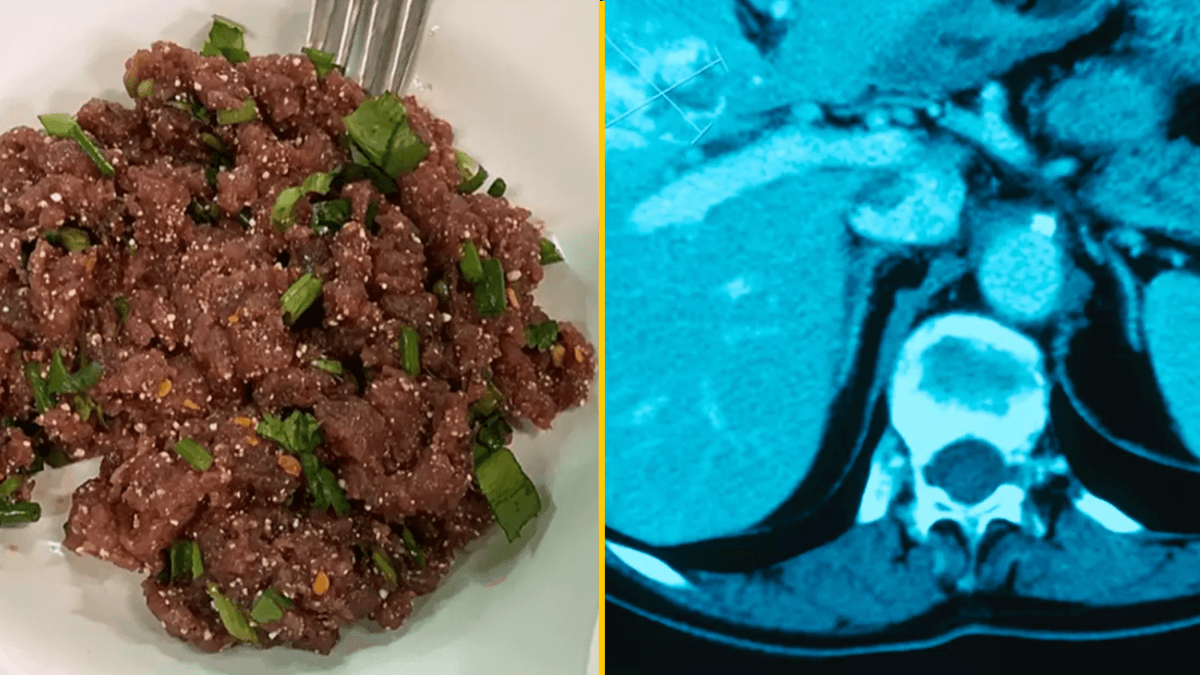
The dish in question is extremely popular in the Thai province of Khon Kaen and is known as Koi Pla.
Koi Pla, which is made with finely chopped up raw freshwater fish, herbs, lime juice and live red ants, is one of the most common causes of cancer in the region, the BBC reported.
Fish used in koi pla carry fluke worm parasites which would be killed if it were cooked, but fans of the fish say that ruins the taste. If they are ingested they can cause infection, and, if untreated, can develop into cancer of the bile ducts in the liver. Even if a person contracts the parasite young, they will typically not develop cancer until middle age.
The dish is said to be responsible for the deaths of 20,000 people in Thailand every year and according to the World Health Organisation (WHO) there are nearly 70 million people at risk of getting this worm.
In 2012, there were nine million people known to be infected in Thailand, Vietnam, Cambodia and Laos. Liver cancer makes up half of all cancer cases in the north east of Thailand, according to the BBC, while worldwide it comprises just 10 per cent.
While unlikely to be featured on your local Thai takeaway menu, koi pla is hugely popular in one of the nation’s poorest provinces, Isaan.
The parasites in the dish are native to fresh water fish in the Mekong region, leaving Isaan to have the highest reported instance of cholangiocarcinoma, or bile duct cancer, in the world due to the heavy consumption of the meal.
A doctor in Thailand, Narong Khuntikeo, is currently working to fight against the delicacy after both his parents died from liver cancer after eating it.
The 'silent killer' disease has one of the lowest survival rates of all cancers if left untreated by surgery.
Khuntikeo, joined by scientists, doctors and anthropologists, have spent several years testing villagers from the Isaan region for the parasite using ultrasound machines and urine testing kits.
They found that as much as 80 per cent of inhabitants from some communities had ingested the parasite.
Given the dishes popularity, Khuntikeo has said he's found it difficult to educate older generations about the risks of eating it: "They’ll say: 'Oh well, there are many ways to die'."
"But I cannot accept this answer."
Social image credit: Banchob Sripa, Sasithorn Kaewkes, Paiboon Sithithaworn, Eimorn Mairiang, Thewarach Laha, Michael Smout, Chawalit Pairojkul, Vajaraphongsa Bhudhisawasdi, Smarn Tesana, Bandit Thinkamrop, Jeffrey M. Bethony, Alex Loukas & Paul J. Brindley/Wikimedia Commons
Food

Food

Food

Food
Feeling stressed? Unwind with this deep tissue massage and save 73%
You’ll feel like a new person after this deep tissue massage If you’re feeling tense and stressed, then we’ve found the perfect (and most affordable) treatment for you. Wowcher is currently offering you a 60-Minute Massage Experience with a choice of Deep Tissue, Sports, or Swedish, saving you 73% off London Clinic Group’s prices. Book […]
Food
6 days ago
NHS rolls out new prescription service for millions — here’s what to do
One simple NHS app change could save you time at the pharmacy Millions of people in England can now find out when their medication is ready without having to call their local pharmacy, thanks to a new notification feature in the NHS app. The service sends alerts to users’ phones and smartwatches when prescriptions are […]
Food
2 weeks ago
Food
Millions in England unaware they have ‘silent killer’ condition, research reveals
Food