







News

Share
Published 15:59 22 Jun 2026 BST
Updated 15:59 22 Jun 2026 BST
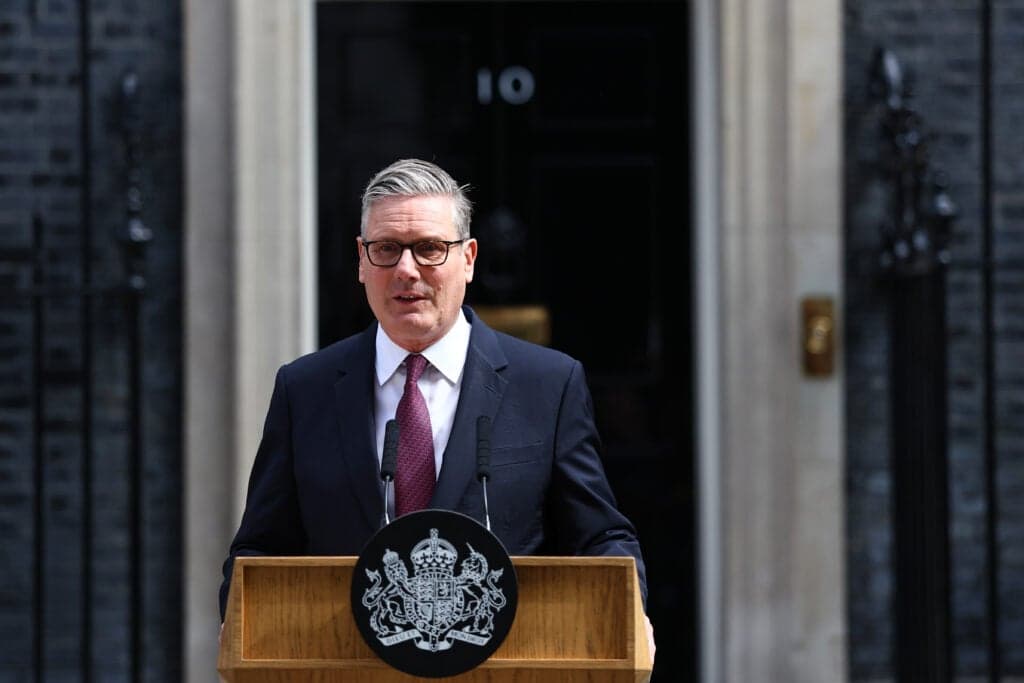
Sir Keir Starmer announced his resignation today, bringing to an end a premiership that was as relentlessly criticised as it was quietly consequential.
In an address to the nation on Monday morning from Downing Street, Starmer gave an emotional speech in which he confirmed he would be stepping down as Labour leader.
Starmer spoke of his pride in becoming prime minister and saving Labour from ‘moral and financial bankruptcy’ when he took over.
After listing the achievements of his government, he went on to say that his party was now asking “whether I am best placed to lead us into the next general election.”
He said he had heard the answer and “accepts it with good grace,” before confirming he was resigning as the leader of the Labour party, with a new leader set to be in place by September.
His resignation comes less than two years after Labour claimed a huge majority at the last general election. For much of his time as prime minister though, Starmer was deeply unpopular according to the polls and Labour have languished behind Reform in pretty much every poll for over a year now.
In the years ahead though, historians will likely look back on Starmer’s time in office and ask a question that already feels unavoidable: why was he so hated?
The answer may have less to do with Starmer himself than with the age in which he governed.
He inherited a country battered by forces that were largely beyond his control. The economic aftershocks of the financial crash still lingered in stagnant productivity and hollowed-out public services. Brexit continued to cast a long shadow over trade, investment and Britain’s place in the world. Covid left a fiscal black hole and a health service under immense strain. Internationally, conflict in the Middle East threatened to spill into a wider regional war, while geopolitical instability became the new normal.
No prime minister could have emerged from that landscape looking pristine.
And yet, judged on outcomes rather than optics, Starmer’s government delivered more than many of his predecessors managed in far calmer times.
NHS waiting lists began to fall. Workers’ rights were strengthened. Rail operators returned to public ownership. Relations with Europe improved after years of needless antagonism. The non-dom tax status was abolished. Childcare costs were cut significantly. State pensions rose. Violent crime continued its long-term decline, with homicide rates reaching historic lows. Child poverty fell. Net migration was reduced substantially.
These are not insignificant achievements. They are the kind of measurable improvements that governments once hoped would earn public trust.
Instead, they barely registered.
Because modern politics no longer rewards competence. It rewards performance.
The Westminster ecosystem has become addicted to outrage. Social media has transformed political discourse into a permanent gladiatorial contest in which governing well is less important than landing blows. The incentives all point in the same direction: create conflict, generate anger, feed resentment.
Starmer’s greatest political sin may simply have been that he refused to play the role people increasingly expected of him.
He was not a populist. He did not offer grand fantasies or easy villains. He rarely provided the emotional highs and lows that drive engagement online. In an era obsessed with political theatre, he insisted on treating government as administration.
That may have been admirable. It was certainly unfashionable.
There is also a darker reality. We are living through an age of industrial-scale misinformation, funded and amplified by interests that benefit from public distrust. Across the democratic world, billionaire-backed media networks, online influencers and algorithm-driven outrage machines have learned that cynicism is profitable. The goal is not necessarily to persuade people that one leader is good. It is to convince them that every leader is bad.
Once that mindset takes hold, achievements become invisible. Progress becomes irrelevant. Governing becomes impossible.
None of this is to suggest that Starmer was perfect. He made mistakes. He disappointed supporters. He often struggled to communicate his successes. Every government leaves behind a list of missed opportunities.
But resignation day is a moment for perspective.
Keir Starmer may ultimately be remembered as a decent prime minister who arrived at the wrong moment in history: a leader trying to solve problems in a political culture that increasingly rewards those who create them.
If that proves to be his legacy, it is less an indictment of Starmer than of the country that judged him.
The tragedy of his premiership is not that he failed. It is that in a world that no longer knows what good government looks like, success itself became impossible to recognise.
Explore more on these topics:

News

News
News
News
Martha’s Rule is coming to every A&E department in England
Who Martha’s Rule is named after in ‘a critical new lifeline’ Martha’s Rule, which lets patients, families and staff demand an urgent second opinion on care, is being expanded to every hospital emergency department in England. Patients, loved ones and staff in A&E units will be able to call a dedicated phone number to trigger […]
News
1 day ago
Trump’s attack on the press ‘backfires’ as microphones go silent during White House event
When you bite the hand that feeds you US President Donald Trump’s attempts to silence the media have backfired immediately and it turns out that his latest decision silenced no one but him. In a ribbon cutting ceremony for his new helipad on the South Lawn of the White House Monday, Trump spoke in front […]
News
2 days ago
News