






Entertainment

Share
Published 13:20 2 Oct 2018 BST
Updated 15:58 9 Oct 2018 BST

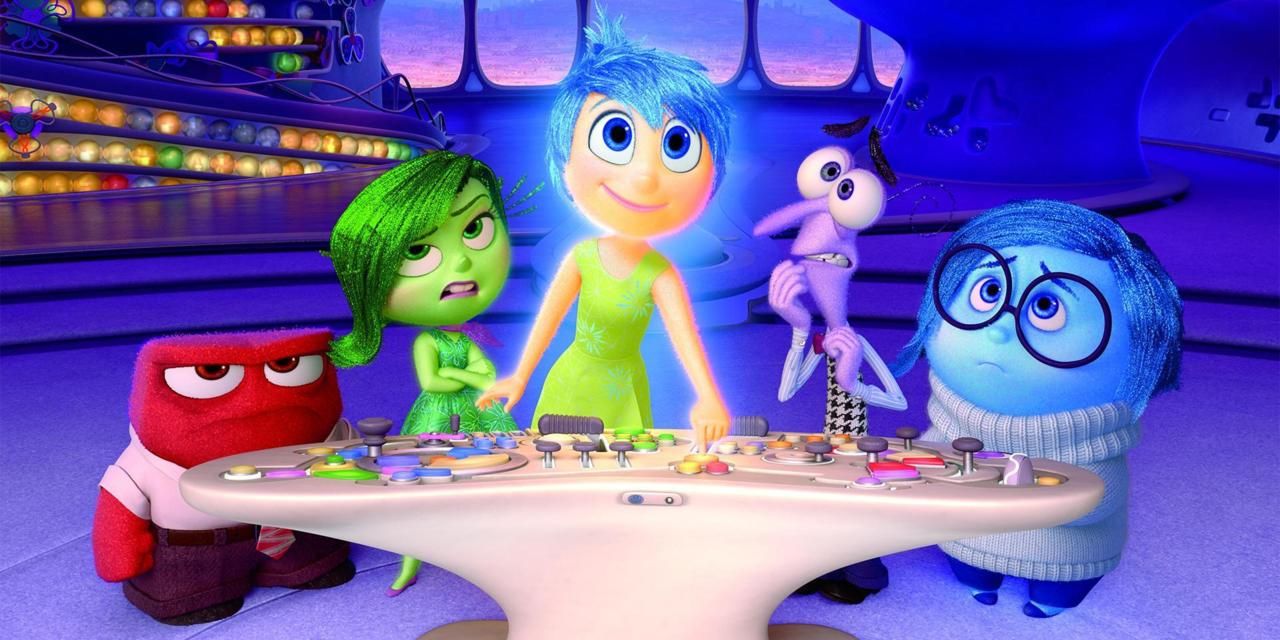 Pixar’s incredible, hilarious animation focuses on the anthropomorphised emotions that inhabit the mind of 11-year-old Riley. When Riley and her parents move to San Francisco, the stress of the causes Joy and Sadness to become lost, leaving Anger, Fear and Disgust in charge.
Jo: We had a lovely example of a father who watched Inside Out, and used that as a way to open up discussion with his seven-year-old son about mental health. And what it taught his seven-year-old was to recognise that he had lots of different emotions. Sometimes he’s happy, sometimes he’s sad. And right at the end of the conversation, he said to his dad, “Sometimes, we feel sad, but it’s ok, dad.” And I just think that’s lovely.
Pixar’s incredible, hilarious animation focuses on the anthropomorphised emotions that inhabit the mind of 11-year-old Riley. When Riley and her parents move to San Francisco, the stress of the causes Joy and Sadness to become lost, leaving Anger, Fear and Disgust in charge.
Jo: We had a lovely example of a father who watched Inside Out, and used that as a way to open up discussion with his seven-year-old son about mental health. And what it taught his seven-year-old was to recognise that he had lots of different emotions. Sometimes he’s happy, sometimes he’s sad. And right at the end of the conversation, he said to his dad, “Sometimes, we feel sad, but it’s ok, dad.” And I just think that’s lovely.
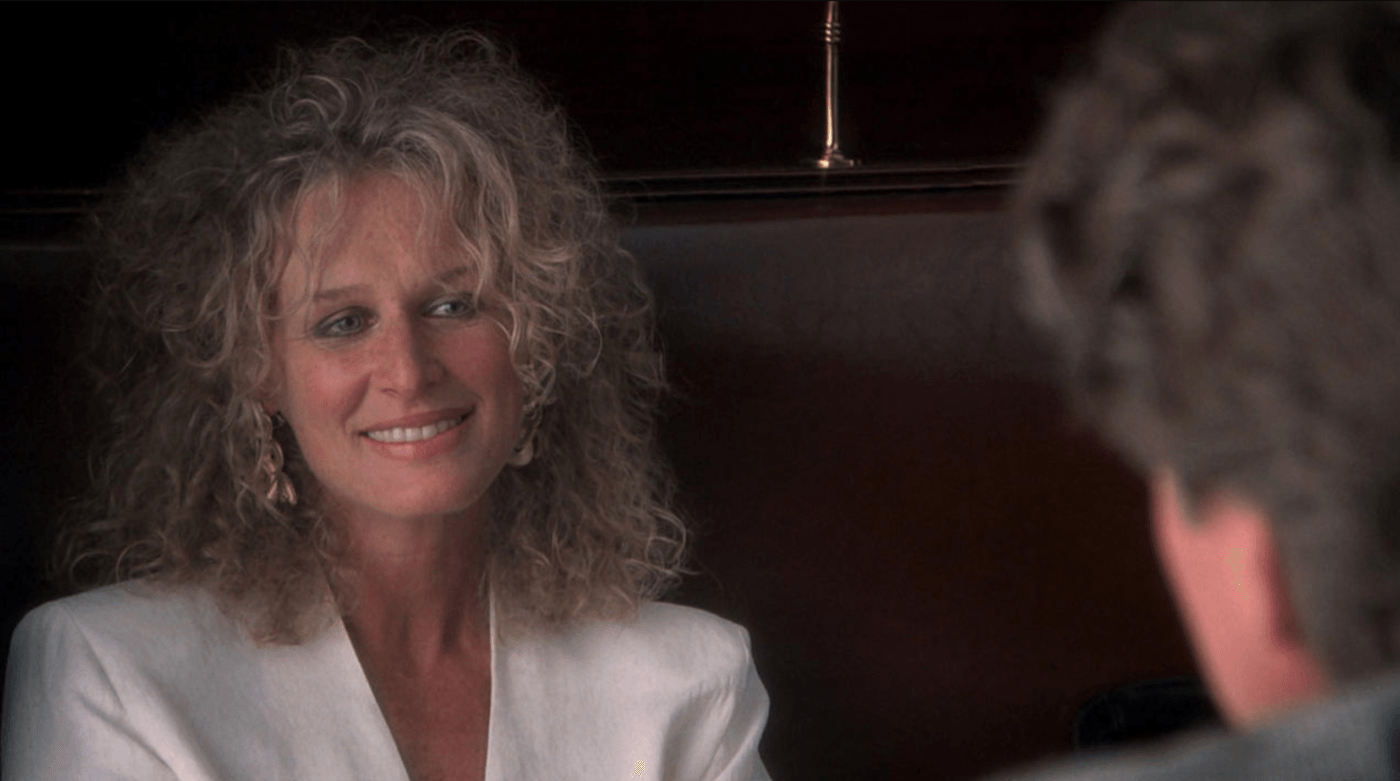 This iconic 1980s iconic thriller saw family man Michael Douglas have a casual fling with sultry Glenn Close. But when Douglas later rejects her, Close becomes unstable, taking revenge on his family. Jo pointed it out as one of the key films that sends out a damaging portrayal of mental illness.
Jo: We’ve come a long way from some of the really damaging films like Fatal Attraction. Glenn Close has since set up an anti-stigma programme in the US, and she’s said that if she’d known then what she knows now, she may have asked for the character to be depicted in a different way. That was not a particularly helpful portrayal of someone who was clearly experiencing some sort of mental health breakdown.
This iconic 1980s iconic thriller saw family man Michael Douglas have a casual fling with sultry Glenn Close. But when Douglas later rejects her, Close becomes unstable, taking revenge on his family. Jo pointed it out as one of the key films that sends out a damaging portrayal of mental illness.
Jo: We’ve come a long way from some of the really damaging films like Fatal Attraction. Glenn Close has since set up an anti-stigma programme in the US, and she’s said that if she’d known then what she knows now, she may have asked for the character to be depicted in a different way. That was not a particularly helpful portrayal of someone who was clearly experiencing some sort of mental health breakdown.
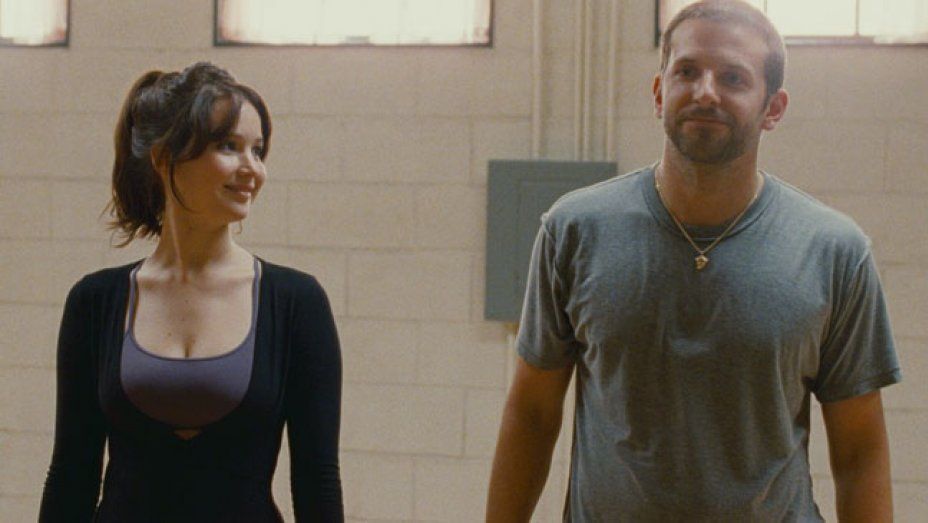 This romantic comedy starred Bradley Cooper as a man returning home after receiving treatment at a mental health facility for bipolar disorder, and Jennifer Lawrence as the young widow living with depression that he befriends.
Jo: I really liked Silver Linings Playbook, because it doesn’t try to pretend to be something that it isn’t. It is a really lovely portrayal of what it might feel like to have a mental health problem. And actually, it really beautifully shows the benefit of support, of having friends around you who will unconditionally be there to support you. And for us at Time to Change, that’s really big. Being there in your mate’s corner [is important] - you don’t have to be an expert, but sometimes just being there will make that big difference.
This romantic comedy starred Bradley Cooper as a man returning home after receiving treatment at a mental health facility for bipolar disorder, and Jennifer Lawrence as the young widow living with depression that he befriends.
Jo: I really liked Silver Linings Playbook, because it doesn’t try to pretend to be something that it isn’t. It is a really lovely portrayal of what it might feel like to have a mental health problem. And actually, it really beautifully shows the benefit of support, of having friends around you who will unconditionally be there to support you. And for us at Time to Change, that’s really big. Being there in your mate’s corner [is important] - you don’t have to be an expert, but sometimes just being there will make that big difference.
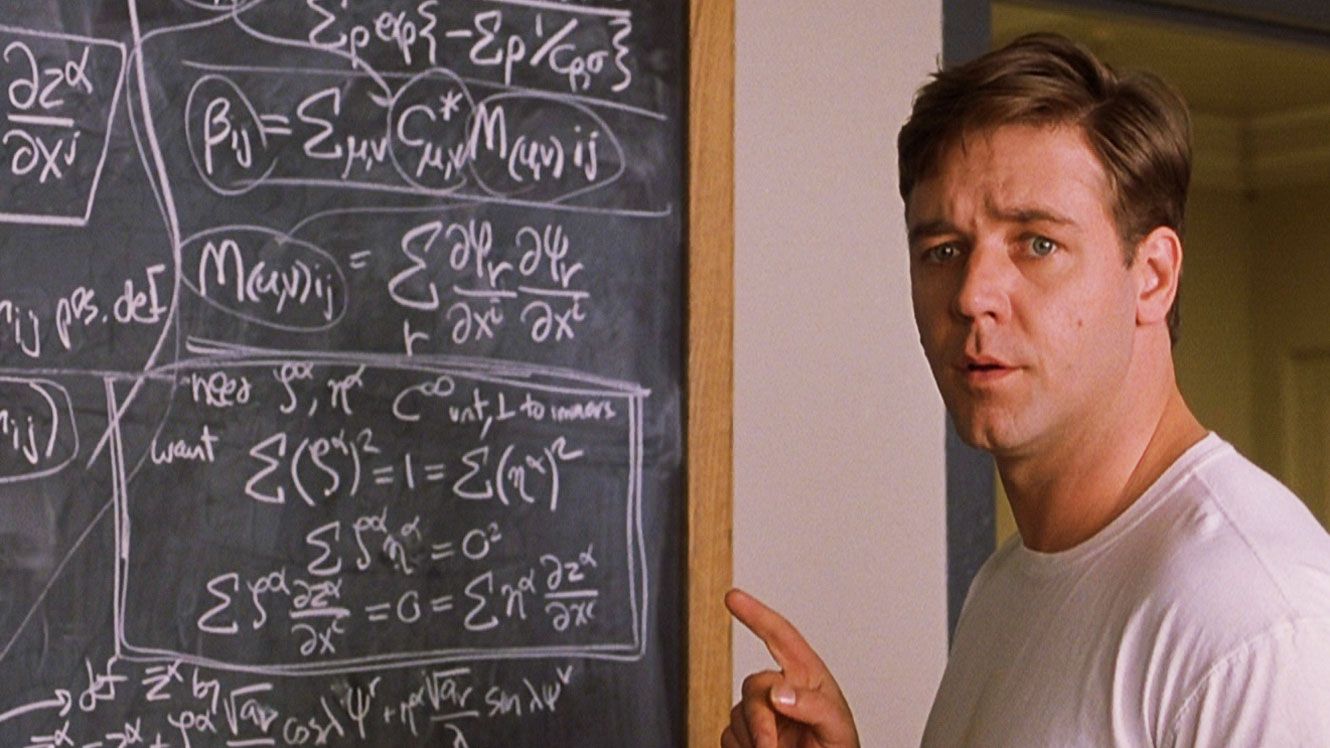 Russell Crowe starred in this Oscar-winning biopic of maths genius Forbes Nash Jr, who experienced paranoid schizophrenia and delusional episodes. Late in the film, it is revealed that several characters which the viewer believes to be real people, actually just exist in Nash’s imagination.
Jo: A Beautiful Mind was also quite a balanced portrayal. I thought it was a really nice way of just opening up the subject area of severe mental illness. It is one of the things that doesn’t necessarily get as much of the positive coverage in film as perhaps it needs to. People experiencing severe mental illness still get a lot of stigma and discrimination – much more so than depression, or anxiety. So it is lovely to see that depicted in a film that is fairly positive.
For the person experiencing hallucinations or hearing voices, they are absolutely real. So from that point of view I thought that was a really nice way of showing that. For people who don’t know a lot about schizophrenia or bipolar disorder, it’s really difficult to explain what that feels like. I really liked the fact that you could go through the film, and it is only revealed quite late on that these characters are hallucinations.
Russell Crowe starred in this Oscar-winning biopic of maths genius Forbes Nash Jr, who experienced paranoid schizophrenia and delusional episodes. Late in the film, it is revealed that several characters which the viewer believes to be real people, actually just exist in Nash’s imagination.
Jo: A Beautiful Mind was also quite a balanced portrayal. I thought it was a really nice way of just opening up the subject area of severe mental illness. It is one of the things that doesn’t necessarily get as much of the positive coverage in film as perhaps it needs to. People experiencing severe mental illness still get a lot of stigma and discrimination – much more so than depression, or anxiety. So it is lovely to see that depicted in a film that is fairly positive.
For the person experiencing hallucinations or hearing voices, they are absolutely real. So from that point of view I thought that was a really nice way of showing that. For people who don’t know a lot about schizophrenia or bipolar disorder, it’s really difficult to explain what that feels like. I really liked the fact that you could go through the film, and it is only revealed quite late on that these characters are hallucinations.
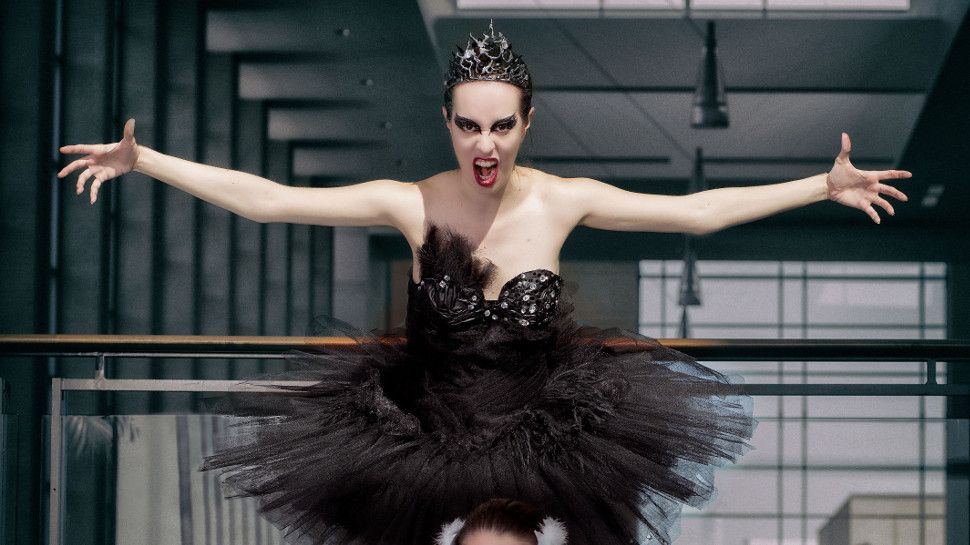 This over-the-top psychological horror movie starred Natalie Portman as a star ballerina, who descends into a super-stylised breakdown when she is usurped by a younger dancer.
Jo: For me, Black Swan is pure drama. I thought it was a beautiful film, but I’m not sure it gives any true education into mental illness. I came out of it, even with my knowledge of mental health, still being quite unsure what was trying to be depicted.
Can taking wild artistic license to real conditions like this be at all damaging?
Jo: For me, there is a much wider question about education and culture. If you create something in an environment where everybody knows what mental health looks like, and what it doesn’t look like, it's fine. If you have a culture of people who don’t know a lot about it, then all it does is play up and reinforces negative stereotypes. You are not questioning it – why would you? Therein lies the problem. People should be allowed to make beautiful films that are stylised and artistic, but I do think we’ve got a wider piece of work to do with educating the general population.
This over-the-top psychological horror movie starred Natalie Portman as a star ballerina, who descends into a super-stylised breakdown when she is usurped by a younger dancer.
Jo: For me, Black Swan is pure drama. I thought it was a beautiful film, but I’m not sure it gives any true education into mental illness. I came out of it, even with my knowledge of mental health, still being quite unsure what was trying to be depicted.
Can taking wild artistic license to real conditions like this be at all damaging?
Jo: For me, there is a much wider question about education and culture. If you create something in an environment where everybody knows what mental health looks like, and what it doesn’t look like, it's fine. If you have a culture of people who don’t know a lot about it, then all it does is play up and reinforces negative stereotypes. You are not questioning it – why would you? Therein lies the problem. People should be allowed to make beautiful films that are stylised and artistic, but I do think we’ve got a wider piece of work to do with educating the general population.
 These are two of the most famous movies set in mental institutions, and both of them depict them to be an oppressive, difficult place to be.
Jo: The biggest fear over those sorts of depictions is that it would stop people getting help and support in a timely manner. People will see that and think “I’m not going to see help and support for fear of ending up in a place like that.”
We don’t have asylums as depicted in the film in the UK now, and while people tell us it is not a bed of roses being in an inpatient unit, the system is not set up not to be punitive – it’s not a punishment; the idea is to aid your recovery.
And we have to remember the staff who work in inpatient units. Apart from anything else, you are also creating a stereotype of the people who work there, and that’s a dangerous route to go down too. I think there is a real problem in the depiction of the staff [in One Flew Over The Cookoo’s Nest], and that can have an impact on people not wanting to go into those professions.
These are two of the most famous movies set in mental institutions, and both of them depict them to be an oppressive, difficult place to be.
Jo: The biggest fear over those sorts of depictions is that it would stop people getting help and support in a timely manner. People will see that and think “I’m not going to see help and support for fear of ending up in a place like that.”
We don’t have asylums as depicted in the film in the UK now, and while people tell us it is not a bed of roses being in an inpatient unit, the system is not set up not to be punitive – it’s not a punishment; the idea is to aid your recovery.
And we have to remember the staff who work in inpatient units. Apart from anything else, you are also creating a stereotype of the people who work there, and that’s a dangerous route to go down too. I think there is a real problem in the depiction of the staff [in One Flew Over The Cookoo’s Nest], and that can have an impact on people not wanting to go into those professions.
 When we asked Jo to recommend a recent on-screen take on mental health that she thought was very positive, she actually pointed a recent storyline in the long-running Australian soap, where teenager Spencer Harrington struggled with bipolar disorder.
Jo: In a recent episode, when they were talking about medication, they showed a really lovely, balanced scene which had the doctor giving really good advice. The doctor had thought about how Spencer was going cope and control his bipolar disorder. They recommended a course of medication to stabilise his mood, but also opened up the fact that there were other avenues of psychotherapy that might be of help, that could be used in conjunction with medication. It really got across that you have options. It had that balance, and it enables people to think about the grey area between doing nothing about their conditions, and being on medication.
When we asked Jo to recommend a recent on-screen take on mental health that she thought was very positive, she actually pointed a recent storyline in the long-running Australian soap, where teenager Spencer Harrington struggled with bipolar disorder.
Jo: In a recent episode, when they were talking about medication, they showed a really lovely, balanced scene which had the doctor giving really good advice. The doctor had thought about how Spencer was going cope and control his bipolar disorder. They recommended a course of medication to stabilise his mood, but also opened up the fact that there were other avenues of psychotherapy that might be of help, that could be used in conjunction with medication. It really got across that you have options. It had that balance, and it enables people to think about the grey area between doing nothing about their conditions, and being on medication.
Explore more on these topics:

Entertainment
Entertainment
Entertainment
Entertainment
A gripping new legal thriller movie is available to watch now
It’s a follow-up to one of the best films of the 21st century. The Social Reckoning, the sequel to the acclaimed biographical drama The Social Network, lands in cinemas today (Friday, 9 October). Aaron Sorkin, who wrote the screenplay for the original 2010 movie, has replaced David Fincher in the director’s chair for the follow-up. […]
Entertainment
1 week ago
This 72-minute new thriller is one of the tensest movies of the year
‘An unforgettable, immersive watch.’ A new, 72-minute (not counting credits), genre-bending thriller has just been released, and you need to put it on your radar. The movie is titled Child and hails from Luxembourg. Directed by Cyrus Neshvad in his feature debut, the story introduces us in medias res to a couple named Anne (Brigitte […]
Entertainment
1 week ago
Entertainment
National Treasure 3 is ‘finally real’, says director Jon Turteltaub
Entertainment