




Science

Share
Published 14:17 26 Jul 2023 BST
Updated 14:18 26 Jul 2023 BST
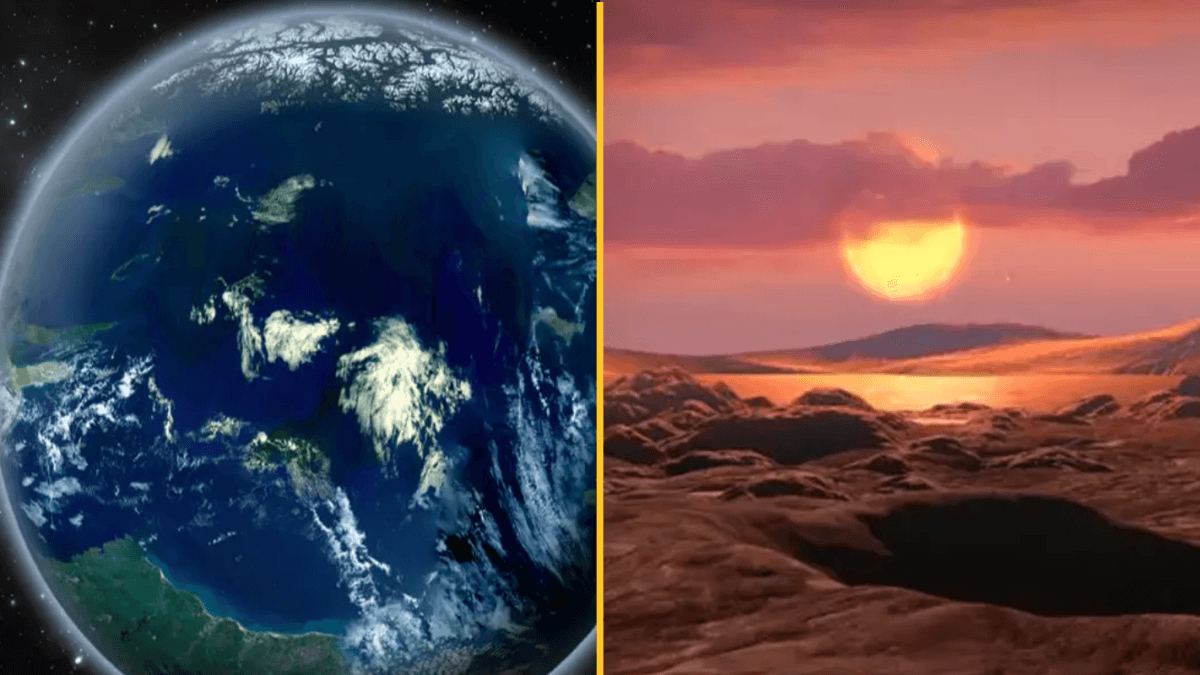
An Earth-like planet which could have the facilities to support human life could be closer than we thought.
The planet named 'Wolf 1069 b' is said to be 31 light-years away, which when put into space context, is the equivalent of heading to the Tesco express round the corner from your house.
There's plenty of features on this recently-discovered planet to suggest that human life could be on there, and the sixth-closest possible Earth-like planet which has so far been found by exoplanet hunters. Exoplanets are planets which orbits stars outside our solar system.
Scientists also believe that the planet sits within the habitable zone of its solar system, meaning it's in an area where water can exist in liquid form.
Wolf 1069 b is also considerably closer to the sun than planet Earth itself and it's orbit around the sun lasts just 15 days, meaning it is even closer to the sun than Mercury is.
The planet was spotted during a long-term study in which they are looking for exoplanets across the universe known as CARMENES as part of a method called 'radial velocity method'.
This method assesses to see if there is a 'wobble' in a star which therefore indicates that it may be as the result of a gravitational field of a planet.
Related links:
Explore more on these topics:
Science

Science

Science

Science
Supercomputer predicts exactly when humans will become extinct
That doesn’t sound good A supercomputer has predicted when humans will become extinct. Though climate change is always in the news and becoming a priority for governments to tackle, its long term impacts could be devastating not just on the environment but on our species as well. With this in mind, a supercomputer has analysed […]
Science
9 months ago
You need to ejaculate this many times in a month to prevent prostate cancer, experts say
Bashing the bishop is a scientifically proven way of staying healthy Regular ejaculation is something of a cheat code when it comes to shielding yourself from cancer. In a study published by European Urology, which followed 32,000 men for 18 years, scientists discovered the magic number of 21 times per month will reduce the chances […]
Science
9 months ago
Science
The world could end in 25 years, says Oxford scientist
Science