
news
Share
Warning issued to anyone using AI to write their work for them
Published 11:36 11 Aug 2026 BST
Updated 11:36 11 Aug 2026 BST
Homenews
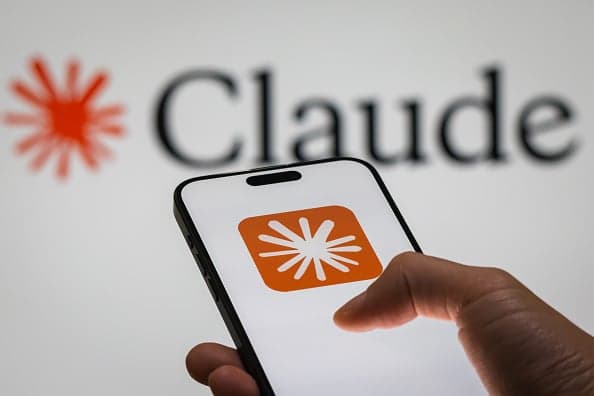
Claude AI to watermark AI-generated text with invisible watermark
From novels to essays and homework to coding, it’s going to be a whole lot harder having Claude to be your go-to ghostwriter.
Claude models launched on or after 2 August will have an invisible embedded watermark on all of its generated content.
This is part of Anthropic’s commitment to transparency in accordance with the European Union AI Act.
Announced on Monday, Anthropic said the new Claude models will embed an “imperceptible watermark” onto its generated texts.
They added that the watermark “may persist through some editing” for anyone who thought they could get away with Claude’s newest update.
A watermark is generally a faint image, logo or text embedded into a picture or document to help prove ownership, while reducing theft and plagiarism.
However, Anthropic assures the embedded watermarks for AI-generated texts will not affect the readability of said texts, remaining invisible to the human eye.
The new embedded watermarks are meant to be detected by third party tools only, using coding that is unique to the text, even when copypasted.
What are the extents of the new update and how are UK citizens affected
Although the initiative is joint to the EU’s AI act, this doesn’t mean the UK won’t be affected.
If you thought you wouldn’t be affected, Anthropic stated on Claude Support that the update will take place worldwide.
Additionally, all new models will be part of the update, in addition to Claude researchers cracking down on old Claude models.
All Claude products such as Claude Code, Claude Cowork and Claude Tag will be embedded with a water mark.
Claude partners who support their products have signed metadata agreements in accordance with the new update, including tech giants Google Cloud and Microsoft Foundry.
How industries react to the AI lab’s renovation
The announcement may be the start of AI watermarking, especially for the publishing industry which has struggled with AI generated content.
Writer Jerry Falade, author of ‘Call Me, I’ll Hide the Body’, has been on the hot seat as speculations of using AI to write his novel arose.
However, the author still denies using AI for writing purposes.
Allegations of AI generated writing has led to Mia Ballard’s horror novel ‘Shy Girl’ to be pulled from Hachette Book Group.
The author later spoke to The New York Times, stating she hadn't used AI, but that a freelance editor had introduced AI generated material without her consent.
However, it is not solely the publishing industry that will be directly affected by Anthropic’s newest update.
Schools and universities will be given a new way of AI-checking their students' works.
However, in this new age of AI-checking, nothing is perfect. Anthropic has said that heavy editing, paraphrasing and translating may render the watermark unreadable.
Anthropic is the second major AI lab to introduce watermarking, after Google’s Gemini introduced watermarks on their AI generated images in 2023.