







News

Share
Published 16:10 1 Jan 2025 GMT
Updated 16:10 1 Jan 2025 GMT
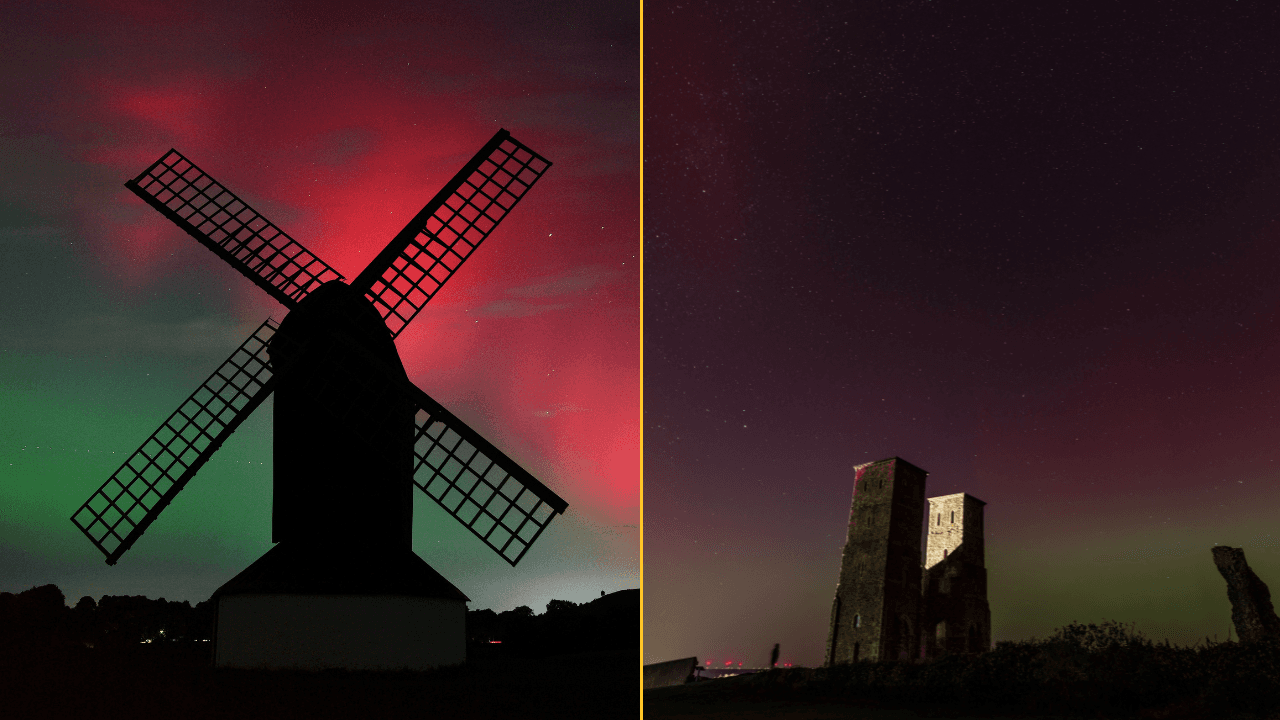
As we move into 2025, it's worthwhile to look ahead at some of the exciting things we have on the horizon - literally in this case!
That's because we can expect a once in a decade astrological event at some point over the next year, according to expert predictions.
The Met Office revealed last year that NASA have confirmed the start of a ‘solar maximum’ which is expected to enhance solar displays over the next 12 months.
It’s a phase that happens every 11 years and is characterised by an increase in sunspots and solar flares.
The Met Office suggests this could lead to "an ongoing chance of further space weather activity, and ultimately the potential for aurora visibility here on Earth".
The Northern Lights have been more visible over the UK over the last year thanks to solar winds from solar flares or coronal mass ejections (CMEs) interacting with our atmosphere.
The likelihood of seeing the Northern Lights, even at lower latitudes is expected to increase due to the solar maximum.
While Northern Scotland, especially Shetland, is often the best spot in the UK to see the aurora, there's anticipation that the spectacle will become more common across other parts of the country soon.
Krista Hammond, Space Weather Manager at the Met Office Space Weather Operations Centre, told Chronicle Live: “We're now in the solar maximum phase, which means there's more frequent sunspots and solar activity in general.
“While it's not possible to know precisely what this means for individual Earth-directed solar events, it does mean there will likely be further chances of aurora visibility in the UK in the coming months.”
She added that the solar maximum phase, which could last a year, makes it difficult to determine exactly when the number of sunspots peaked until after it has happened.
The Met Office noted that a geomagnetic storm caused by solar flares and CMEs in May was the strongest in two decades.
After the solar maximum concludes, solar activity will decrease, reaching the solar minimum during which aurora sightings will become less frequent but they will not disappear entirely.
Hammond explained: “While the total number of sunspots will start to reduce after solar maximum, we will continue to see space weather throughout the solar cycle, even as overall activity declines.
“Indeed, in some solar cycles, the larger events can happen as the Sun transitions back towards solar minimum.”

News
News

News

News
How is it possible for a borough to raise council tax by 94% and could more councils follow?
It used to have one of the lowest council tax rates From next year, a London borough has announced plans for a record increase in council tax. While a final decision won’t be made until early 2027, the plans by Wandsworth Council were announced the plans at a meeting on Tuesday. As per The Times, […]
News
1 day ago
Radio station removes Ed Sheeran from airwaves following Macklemore dispute
The latest blow for Sheeran A radio station has removed Ed Sheeran from the airwaves after failing to back his support acts following Macklemore’s Free Palestine speech. Sheeran has had a week to forget in comparison to his lofty career, seeing all his support acts drop out of his tour and global condemnation from fellow […]
News
1 day ago
Tommy Robinson comes out in support for Ed Sheeran in career low for singer
News