









News

Share
Published 12:15 6 Nov 2023 GMT
Updated 15:39 6 Nov 2023 GMT
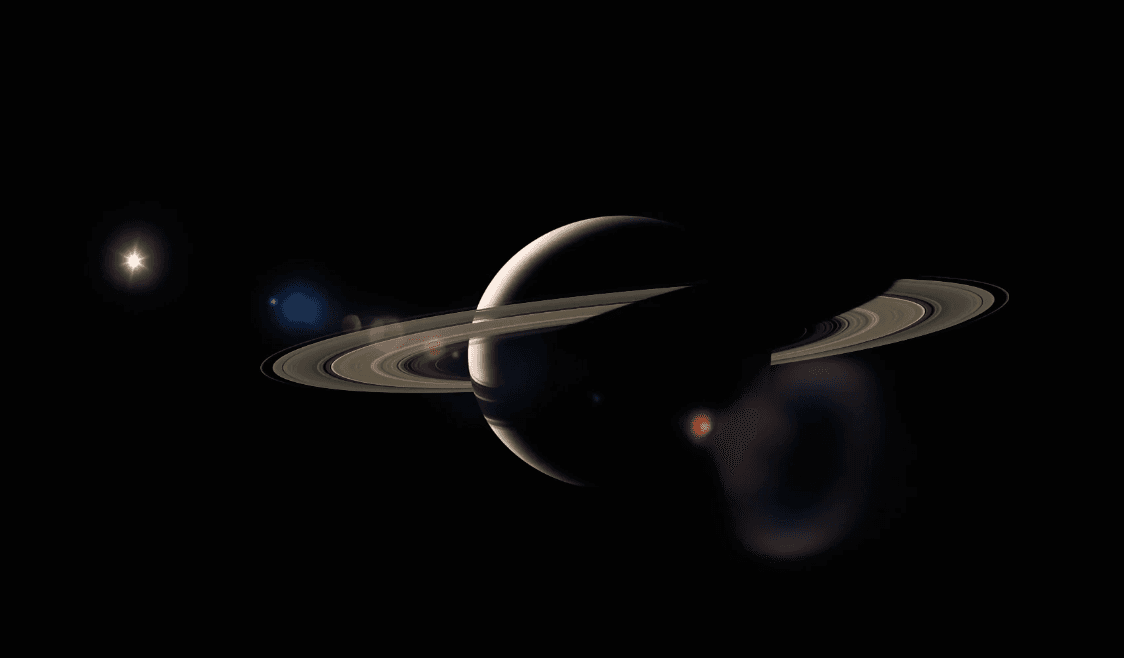
Time is running out for those who want to get a look at Saturn's rings, with only a matter of months left before they disappear from view.
NASA has confirmed that stargazers have until next year to get a glimpse of the structures before Saturn's movements place it edge-on with Earth. This will turn the vast rings into an almost invisible line from our perspective.
Despite the fact the structure are many tens of thousands of kilometres wide, they are comparatively thin, at only 30km depth in some places.
While it won't be the last time budding astronomers can catch a glimpse, this rare moment is a sight in itself to behold.
Due to a tilt in its orbit, Saturn wobbles slightly towards and away from the sun throughout its orbital rotations.
As a result, every 13.7 to 15.7 years, Earth sees the planet perfectly from the side, causing the rings to appear flat.
The rings will continue to become more visible from this point until 2032 when Saturn reaches its maximum tilt away from Earth and we can see the rings in all their glory once more.
However, they won't be around forever.
Yes, Saturn is losing its rings, and it turns out it’s happening quicker than experts realised.
Every second, 10,000 kg of rock and ice from the rings rains down on Saturn. This happens because the rings are constantly being hit by tiny meteoroids and UV radiation from the Sun.
This causes the ice particles in the rings to vaporize, forming charged water molecules that interact with Saturn’s magnetic field. They then fall toward the planet and burn up in the atmosphere.
This process has been known about since the 1980s thanks to NASA’s Voyager mission. But then, scientists estimated it would take 300 million years for the rings to disappear.
Now, it is thought this will happen much sooner, thanks to data gathered by the Cassini spacecraft.
Before it met its end by diving into Saturn, Cassini got a close look at the rings and it turns out that the ‘rain’ is heavier than previously thought.
The research from NASA reads: “The rings are being pulled into Saturn by gravity as a dusty rain of ice particles under the influence of Saturn’s magnetic field."
“We estimate that this ‘ring rain’ drains an amount of water products that could fill an Olympic-sized swimming pool from Saturn’s rings in half an hour.”
Scientists now predict that the rings have got just 100 million years left.
Saturn’s rings have actually only been around for fraction of the planet’s existence. Despite being more than 4.5 billion years old, the rings are only thought to have come into existence 100 to 200 million years ago.
Related links:

News

News

News

News
Rejoining EU could boost UK economy by £150bn – Goldman Sachs
Analysts from the bank reckon a ‘Breturn’ would boost the UK economy by 2-5% by the start of the next decade. Goldman Sachs has said rejoining the European Union could boost the UK economy by as much as £150 billion. In a note to clients, the Wall Street bank voiced its support for Andy Burnham’s […]
News
3h
Travel chaos across Italian airports after air traffic control failure
Air traffic management capacity has been slashed in half Travel chaos has struck Italy’s major airports after an air traffic control failure left capacity halved on Friday. Hundreds of flights across Italy have been delayed and over 100 cancelled due to “anomalies” with air traffic control (ATC) services. The Italian air navigation service provider, ENAV, […]
News
9h

News
Abu Dhabi Royal was found passed out on street in London after ‘cocaine binge’
News