









News

Share
Published 12:19 26 May 2024 BST
Updated 12:19 26 May 2024 BST
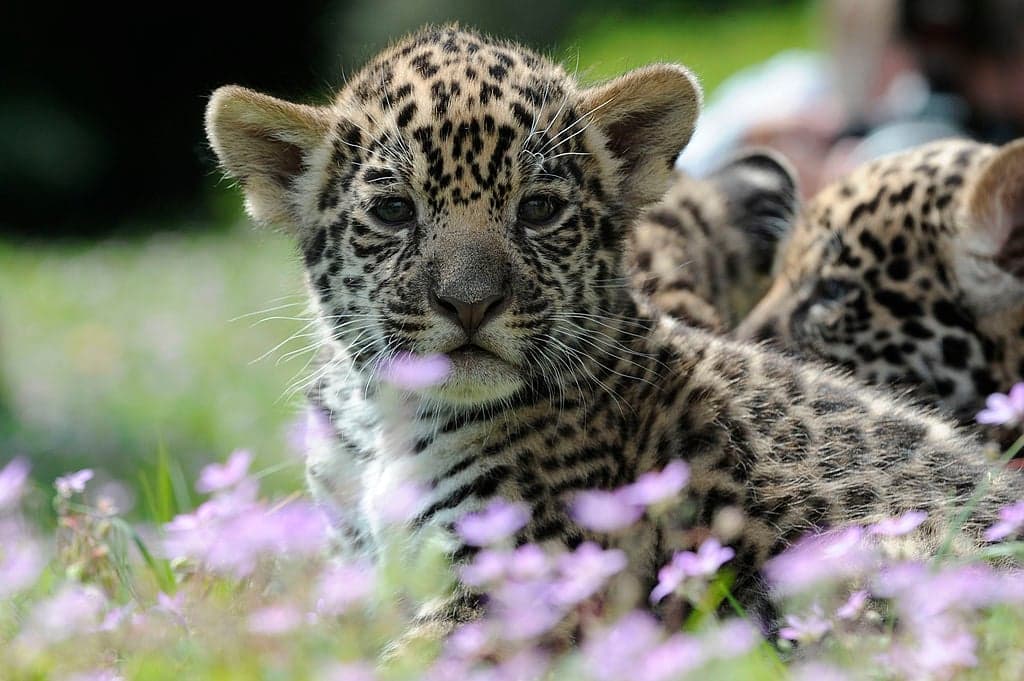
The world’s first jaguar to be born via artificial insemination was eaten by it's mother just two days after coming into the world.
A team of veterinarians at the environmental organization Mata Ciliar in Jundiaí, Sao Paulo state, Brazil, delivered the tragic news in a statement, just days after they had announced the birth as a scientific breakthrough for the conservation of the species.
According to the group of veterinarians, the cub was "born healthy", but was eaten by her mother - a 5-year-old jaguar named Bianca.
"Despite the sad fact, it is not uncommon for this to happen, both in captivity and in nature, especially in the case of carnivores. Bianca was a first-time mother and this may also have influenced the event," the Mata Ciliar website says.
Jaguars are an endangered species, with rapidly diminishing numbers surviving in limited Amazonian territory, where 90 percent of the animals are found.
Artificial insemination is viewed as a means of regenerating the population of the majestic felines.
Despite the death of the cub, scientists have shown they are able to successfully artificially inseminate jaguars - the "last of the seven big cat species to be produced by AI", according to Lindsey Vansandt, a researcher for the Centre for Conservation and Research of Endangered Wildlife (CREW) of the Cincinnati Zoo & Botanical Garden, which was also involved in the project.
"By using a systematic research strategy, we were able to improve our understanding of the jaguar's unique reproductive biology and make species-specific modifications to our standard AI approach," Vansandt said. "From a scientific perspective, we are celebrating the fact that the baby was born healthy and that artificial insemination was a success.
"It's disappointing that the cub did not survive longer, but it's not uncommon for carnivores, especially first-time mothers, to behave this way with their offspring."
According to the New York Times, the live birth of the single cub was captured on CCTV and showed the doting mother caring for her newborn, snuggling up to her and feeding.
Vets inseminated Bianca by using laparoscopic artificial insemination developed by CREW researchers, a method used in previous work with other species of wild cats.
Despite what happened to the newborn, research team leaders said they are happy with the result. They are already planning to carry out more procedures throughout this year.
“From a scientific perspective, we are celebrating the fact that the baby was born healthy and that AI was a success,” said Dr. Lindsey Vansandt, a CREW researcher.
Due to poaching and habitat loss, the jaguar population has dwindled dramatically throughout its natural environment, which stretches from the southwestern United States through Brazil and into Argentina.
Related Links:

News

News

News

News
Loch Lomond crash: boy, 16, and man, 80, killed in light aircraft crash near Drymen
Major incident declared after fatal plane crash Two people have died following a light aircraft crash in Stirlingshire, prompting a major emergency response and an investigation into the circumstances surrounding the incident. The victims were a 16-year-old boy and an 80-year-old man, who were both found dead after the aircraft came down near Drymen on […]
News
15h
White House press secretary Katie Zacharia fired after five days in position
It comes after Trump said she should ‘reconsider’ her job White House press secretary Katie Zacharia has been fired after five days in the position, as per reports. Zacharia had a tough start to life in the role, hosting a briefing on Tuesday which caused a lot of criticism and raised a number of questions. […]
News
1 day ago
Piers Morgan urges Trump to side with Ukraine against ‘modern-day Hitler’ Putin
News