








Entertainment

Share
Published 12:36 4 Jun 2018 BST
Updated 16:29 4 Jun 2018 BST

"When I am working on films, one of the reasons we are so successful is we have very clear and defined goals, as well as a time frame set by the director, producers or the studio. "Specific goals mean we can be well-focused with our training and nutrition and everything can be designed to be highly effective."The main influence on whether you gain muscle or lose fat is the calories and macros that you consume. Decide what it is you want out of your training plan, in the same way that an actor needs to gain muscle or lose fat in accordance with their role. If your goal is to gain muscle mass, you need to eat enough food to hit your calorie surplus. However, if your goal is fat loss, you need to ensure calories are low enough for you to burn the weight off for energy.
"If you don’t make concise decisions at this stage, the chances of any major changes are slim."
 Step 2 - Pick the right training plan
Training provides the stimulus to drive muscle gain or fat loss. Selecting an individualised workout plan is crucial for gaining results in a timely manner.
Step 2 - Pick the right training plan
Training provides the stimulus to drive muscle gain or fat loss. Selecting an individualised workout plan is crucial for gaining results in a timely manner.
"When working on films, we don’t have unlimited time to train - this is one of the biggest myths I see about training film stars. "The truth is, time is limited and so we need to be super-focused with our training to achieve our goals."David asserts that results are still possible, even if you are presented with the least possible workout time.
"More training doesn’t mean better results. I did a survey on my social media recently and the results were incredibly interesting. "I train just 3 days per week - but was amazed how many people said 6, 7 or even 8+ times!"You shouldn't just exercise for the sake of it. Each workout should feature as part of a wider plan. This becomes particularly important if you have to cram in a workout around work, family and social life. David, who has trained some of the world's leading A-list actors, claims that:
"A lot of people just end up training for the sake of training, with sessions not aiding their progress. "There are two key things that need to be considered when planning your training: 1. Every session needs a clear purpose 2. Your training and nutrition need to be balanced perfectly for you and your goals."You don't need hours and hours of training to see amazing results, but you do need to implement methods of tracking your progress, so every session counts. Keep a training log. You don't necessarily have to train with a paper, book and pen like many used to. Nowadays, it's perfectly possible to enter into your phone the weights you're lifting, exercises performed and rep range used.
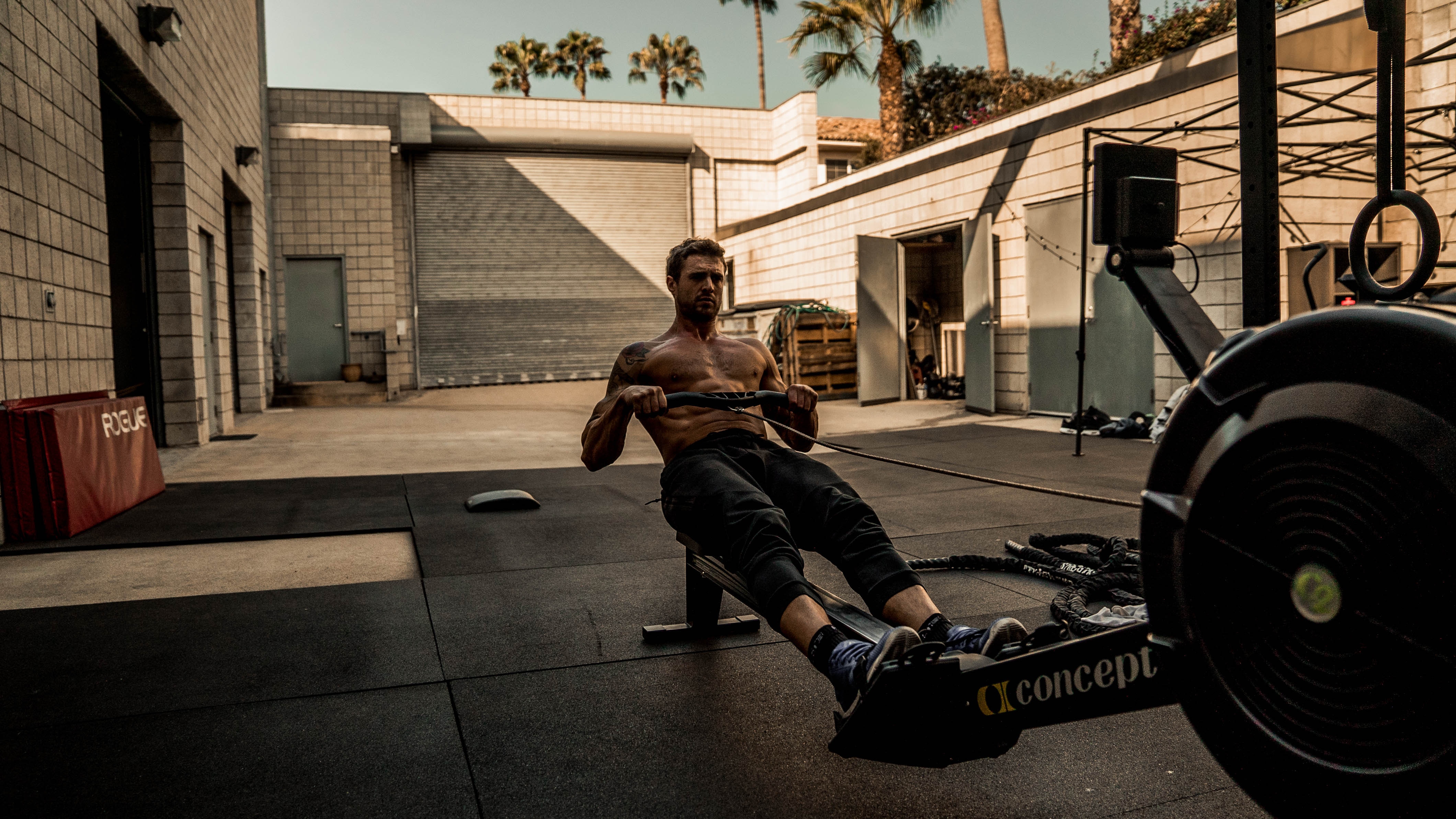 Step 3 - Create your ideal diet
Planning and tracking are particularly important in the context of your diet and nutrition. Kingsbury states:
Step 3 - Create your ideal diet
Planning and tracking are particularly important in the context of your diet and nutrition. Kingsbury states:
"Occasionally, on film projects we do have the luxury of private chefs, but “healthy” eating alone doesn’t mean progress. “It’s not just about eating healthy, however. You can lose weight eating healthily, but you can gain weight too. “What matters more than anything is eating the correct number of calories to achieve your goals.”A diet only works if you do. The best diet is one you can adhere to. Calculating your calorie needs is where to start, but this is often missed by many. It is the the base point from which film stars base their diets.
“Most people massively overcomplicate the way they eat”, says the Pinewood Studios-based PT. “People go paleo, cut out bread, intermittent fast, go keto, or swap meals for horrible meal replacement shakes”.These are all extreme methods, but if you get the basics of calorie intake nailed, you can enjoy a fairly balanced and flexible diet.
“Just make sure you are consuming the right amount of calories for your goals. Then, the next most important factor for nutrition is your macronutrient needs.”The three main macronutrients are protein, carbs and fat. You’ll need the right ratio of these to build your ideal body, as David states:
“Get your calories right and your weight will move in the direction you want - but get your macros right and your body composition will change in the way you want.”The American College of Sports Medicine (ACSM) recommend at least 1.6 grams of protein per kilo of bodyweight each day, in order to build muscle. Even if mass gain is not part of your wider plan, a high protein intake is optimal for fat loss as it is the food group which burns the most fuel when digested. https://www.instagram.com/p/BgB5CrvBI0k/?hl=en&taken-by=teamkingsbury Step 4 - Stir positive pressure When training actors for a Hollywood film, Kingsbury uses positive pressure as a vehicle to achieve results.
“A concept I use with actors is - If I told you that your shirtless torso would be on billboards in every major city how would you feel? “This would usually keep actors pretty focused, to say the least. This type of pressure may seem quite extreme, but a certain amount goes a long way.”A certain amount of positive pressure goes a long way - here are some ideas for you:
Entertainment

Entertainment

Entertainment

Entertainment
A gripping new legal thriller movie is available to watch now
It’s a follow-up to one of the best films of the 21st century. The Social Reckoning, the sequel to the acclaimed biographical drama The Social Network, lands in cinemas today (Friday, 9 October). Aaron Sorkin, who wrote the screenplay for the original 2010 movie, has replaced David Fincher in the director’s chair for the follow-up. […]
Entertainment
3 days ago
Liberty X and Hear’Say reunite for joint 2027 arena tour
Two early 2000s pop groups are joining forces again Pop fans are getting a major early-2000s reunion, as Liberty X and Hear’Say prepare to hit arenas together for a 13-date tour around the UK and Ireland in 2027. The groups have spent six months quietly putting the plans together after deciding to reunite, with the […]
Entertainment
4 days ago
Entertainment
Bonnie Blue criticises police after six officers check her ‘Bang Bus’
Entertainment