






Entertainment

Share
Published 18:19 10 Feb 2020 GMT
Updated 19:58 10 Feb 2020 GMT
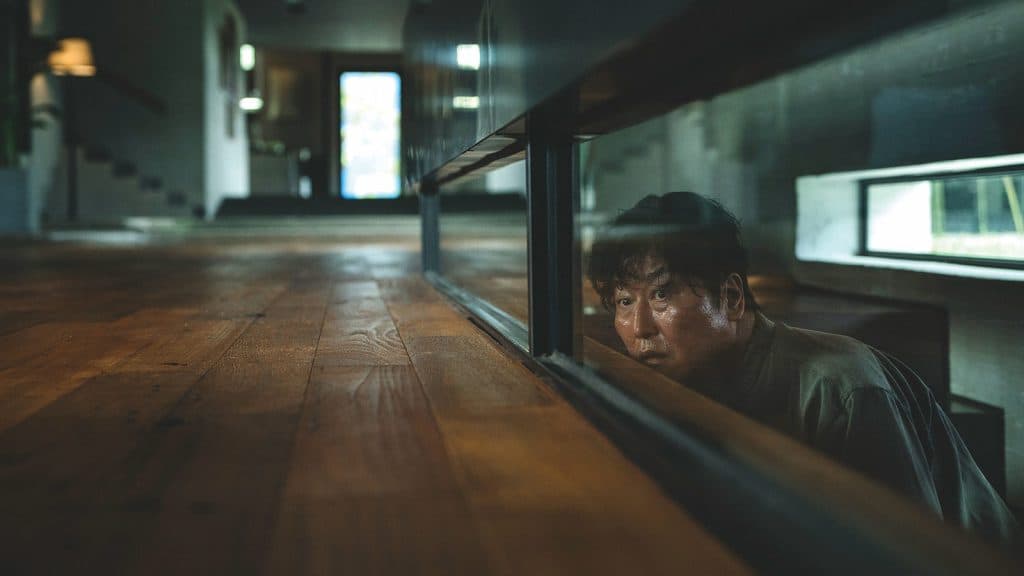
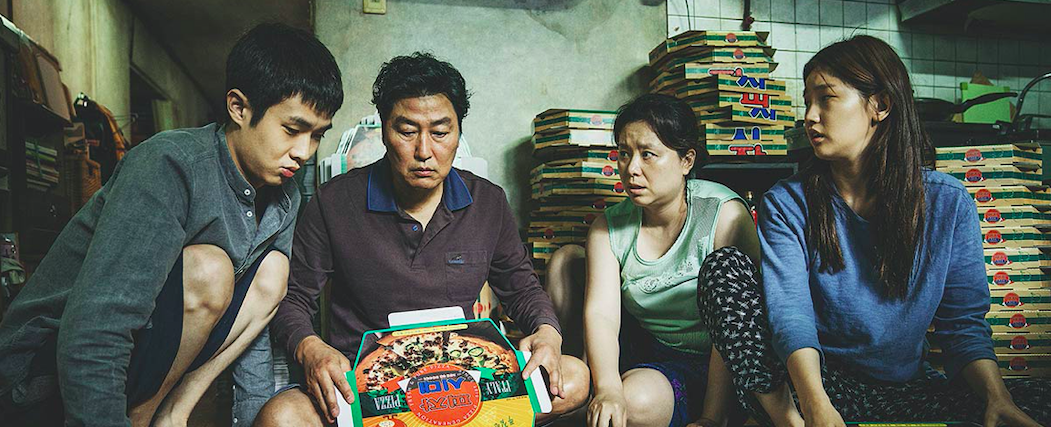 It is made immediately clear that the Kims are scavengers. They are at the bottom in a very literal sense, almost subterranean. Desperate to escape the entrapment of this miserable existence, and knowing that the only way out is to cheat the system, they conspire to deceive a much wealthier family and succeed beyond expectation in gaining employment and infiltrating a previously tranquil upper-class mansion. They get a bit too comfortable in their new environment and, as things often do when you exist on the side of the fence without the dual safety nets of money and reputation, it all spirals helplessly out of control.
Despite this, the film is not concerned with demonising the poorer family for their actions (in fact, they are presented as almost heroic) and instead scrutinises a society that first creates and then perpetuates these conditions. Regarding the film, the director stated: "In the midst of such a world, who can point their finger at a struggling family, locked in a fight for survival, and call them parasites? It's not that they were parasites from the start. They are our neighbours, friends and colleagues, who have merely been pushed to the edge of a precipice." When the rich Park family leave on a camping trip, the poor Kim family take over their home. They have space. They can actually live, rather than exist.
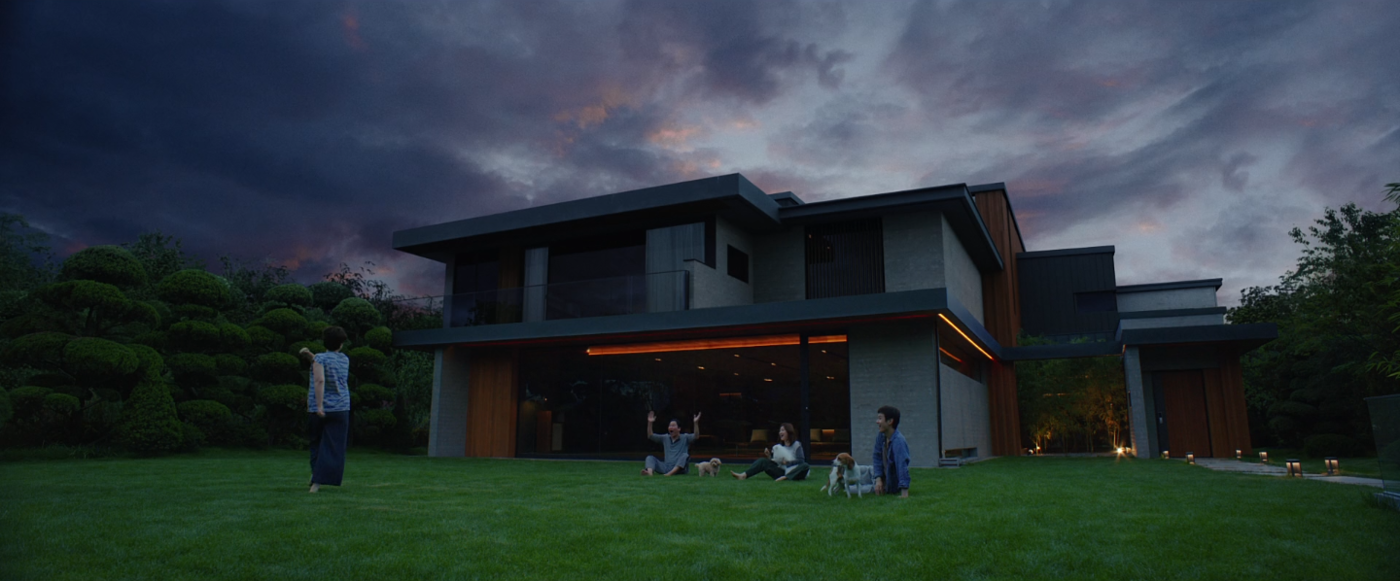
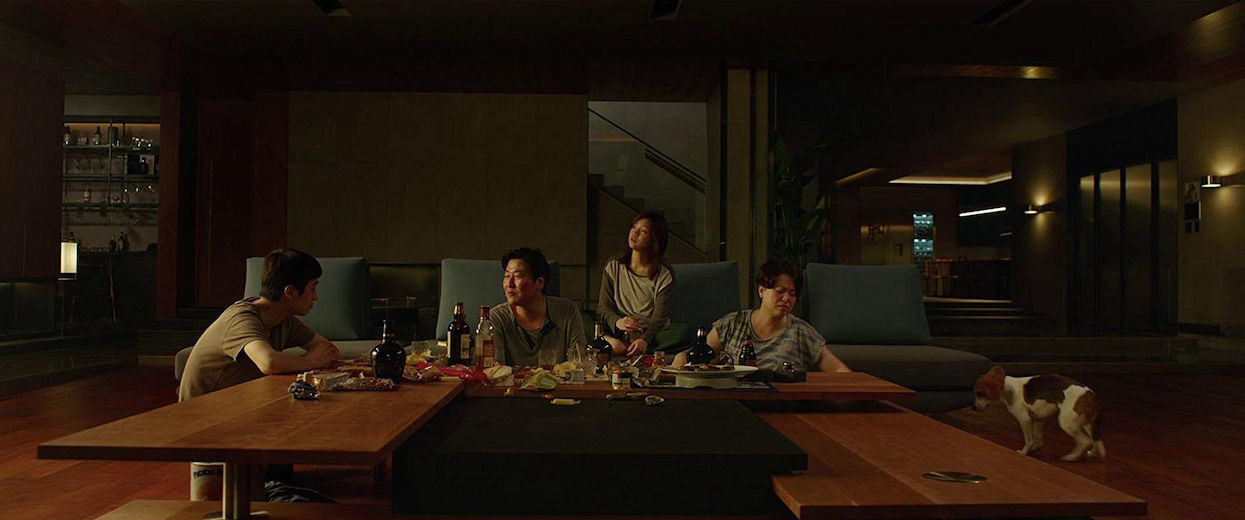
Parasites no more they take naps on the sofa, run bubble baths and help themselves to bottled water from the fridge. Ki-woo lies on his back in the garden and looks at the sky. His parents wonder what he is doing. Later, his family join him and they sit on the grass together until the day fades. They move inside, have dinner and get drunk in the living room. Night comes. They stare out at the garden through the window. They laugh. And right when the Kim family have reached something close to comfort, the illusion is shattered. The doorbell rings. With it comes the cold reaffirmation that this space will never truly be theirs after all.
It is made immediately clear that the Kims are scavengers. They are at the bottom in a very literal sense, almost subterranean. Desperate to escape the entrapment of this miserable existence, and knowing that the only way out is to cheat the system, they conspire to deceive a much wealthier family and succeed beyond expectation in gaining employment and infiltrating a previously tranquil upper-class mansion. They get a bit too comfortable in their new environment and, as things often do when you exist on the side of the fence without the dual safety nets of money and reputation, it all spirals helplessly out of control.
Despite this, the film is not concerned with demonising the poorer family for their actions (in fact, they are presented as almost heroic) and instead scrutinises a society that first creates and then perpetuates these conditions. Regarding the film, the director stated: "In the midst of such a world, who can point their finger at a struggling family, locked in a fight for survival, and call them parasites? It's not that they were parasites from the start. They are our neighbours, friends and colleagues, who have merely been pushed to the edge of a precipice." When the rich Park family leave on a camping trip, the poor Kim family take over their home. They have space. They can actually live, rather than exist.
Parasites no more they take naps on the sofa, run bubble baths and help themselves to bottled water from the fridge. Ki-woo lies on his back in the garden and looks at the sky. His parents wonder what he is doing. Later, his family join him and they sit on the grass together until the day fades. They move inside, have dinner and get drunk in the living room. Night comes. They stare out at the garden through the window. They laugh. And right when the Kim family have reached something close to comfort, the illusion is shattered. The doorbell rings. With it comes the cold reaffirmation that this space will never truly be theirs after all.
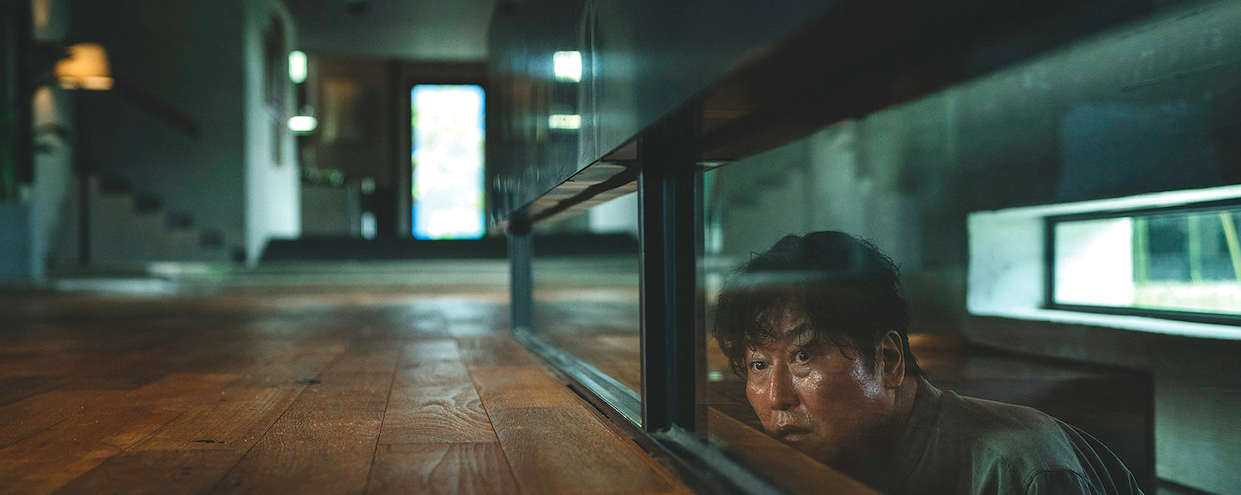
 The unwanted visitor disrupts their brief serenity and when the Parks also return home early from their camping trip due to rain, there is suddenly no space at all. The open-plan rooms and high ceilings become suffocating. The family are forced into hiding, under beds and under tables, one of them in plain sight, and they are again enclosed within their brutally constructed, perpetually inferior existence.
Bong Joon-ho takes us to it as close he can, poking his camera into every nook and cranny, moving in excruciatingly tight to each hidden face revealing a hidden thought. He, like the parasitic family, like Alfred Hitchcock, is just another intruder. There is little in the way of respite but one sequence, aching oil-painting wides of South Korean streets in the rain, sewers and stairwells, tunnels and bridges, moves us from the literal physical space of the suburbs into the dense confines of the inner-city. It feels like a few greedy breathes of oxygen after coming up for air before your head is dunked back underwater. We learn the Kims' basement has been flooded irreparably and now they really do have nothing. Ki-jeong sits atop the devastation, on a toilet exploding with sewage, and smokes a cigarette in acquiescence. Later that night, lying in a camp bed in a gymnasium amongst a sea of other displaced people, her father will tell her brother: "You know what kind of plan never fails? No plan at all. You know why? If you make a plan, life never works out that way." At least not when you're on the outside looking in.
The unwanted visitor disrupts their brief serenity and when the Parks also return home early from their camping trip due to rain, there is suddenly no space at all. The open-plan rooms and high ceilings become suffocating. The family are forced into hiding, under beds and under tables, one of them in plain sight, and they are again enclosed within their brutally constructed, perpetually inferior existence.
Bong Joon-ho takes us to it as close he can, poking his camera into every nook and cranny, moving in excruciatingly tight to each hidden face revealing a hidden thought. He, like the parasitic family, like Alfred Hitchcock, is just another intruder. There is little in the way of respite but one sequence, aching oil-painting wides of South Korean streets in the rain, sewers and stairwells, tunnels and bridges, moves us from the literal physical space of the suburbs into the dense confines of the inner-city. It feels like a few greedy breathes of oxygen after coming up for air before your head is dunked back underwater. We learn the Kims' basement has been flooded irreparably and now they really do have nothing. Ki-jeong sits atop the devastation, on a toilet exploding with sewage, and smokes a cigarette in acquiescence. Later that night, lying in a camp bed in a gymnasium amongst a sea of other displaced people, her father will tell her brother: "You know what kind of plan never fails? No plan at all. You know why? If you make a plan, life never works out that way." At least not when you're on the outside looking in.
 In the third act, the bloody mechanisation of social immobility is laid bare. The belief that this is ours, not yours, and in the squalor is where you must keep. The cruelty of the rich, parasites themselves, makes violence amongst the poor inevitable. They must fight for the scraps. Parasite treats that oppression with the disdain and ridicule it deserves, and now it has an Academy Award. Four, in fact. A film about people barging their way into the gated haven of a life they were denied and tearing that Eden down to the ground, winning the first Best Picture Oscar as a film not in the English language, is every bit as significant as it sounds.
There will be those that inevitably (and intentionally) misread the point of the film and argue that the way the two family's lives unravel is proof that it is better for different people to forcibly kept apart by borders and walls, physical or otherwise. They will say that foreign films should stay in the 'international film' category, that 1917 or Once Upon a Time in Hollywood were more deserving, that Bong Joon-ho should have delivered his acceptance speeches in English, rather than Korean. They will say that these barriers exist for everyone's benefit, rather than their own. That capitalism has given us all this and we should remain immensely grateful.
In the third act, the bloody mechanisation of social immobility is laid bare. The belief that this is ours, not yours, and in the squalor is where you must keep. The cruelty of the rich, parasites themselves, makes violence amongst the poor inevitable. They must fight for the scraps. Parasite treats that oppression with the disdain and ridicule it deserves, and now it has an Academy Award. Four, in fact. A film about people barging their way into the gated haven of a life they were denied and tearing that Eden down to the ground, winning the first Best Picture Oscar as a film not in the English language, is every bit as significant as it sounds.
There will be those that inevitably (and intentionally) misread the point of the film and argue that the way the two family's lives unravel is proof that it is better for different people to forcibly kept apart by borders and walls, physical or otherwise. They will say that foreign films should stay in the 'international film' category, that 1917 or Once Upon a Time in Hollywood were more deserving, that Bong Joon-ho should have delivered his acceptance speeches in English, rather than Korean. They will say that these barriers exist for everyone's benefit, rather than their own. That capitalism has given us all this and we should remain immensely grateful.
 Parasite's message is unequivocal: those barriers should not exist in the first place. The film's entire premise is only made possible through how illogical, and dehumanising, this occupation of space is. Award ceremonies have long been the same, the stuffy private reserve of the privileged and entitled, places to celebrate the repeated successes of the same people voted for by the people themselves. Painstakingly slowly, as more films bundle their way in on nothing other than their artistic merit, these awards will start to mean something far more. Moonlight's did. This will too.
Bong Joon-ho has previously described the Oscars as "not an international film festival" and "very local.” At the Golden Globes in January, he used his acceptance speech to tell the audience “Once you overcome the one-inch tall barrier of subtitles, you will be introduced to so many more amazing films." He didn't need this award, nor did South Korea, but the insular world of Hollywood did. Desperately.
Many more people will watch Parasite now. Many will continue to delve into the rich history of Korean cinema that existed long before belated Western recognition. Hopefully, the realisation will come that there really is no such thing as 'foreign' or 'international' cinema, that the terms and their use in prestigious award ceremonies are a method of entrenching divisions and control of that particular space. Have you ever heard anything quite as ridiculous as 'The BAFTA Award for Best Film Not in the English Language'?
In other words, there are those granted the right to belong (English language films) and those that must earn it on the terms of the former (everything else). The reality is that there are only different films made by different people from different places. Nothing needs to be treated with this harmful, reductive sense of otherness. Parasite's - and Bong's - greatest victory is also cinema's. It is resounding, defiant confirmation this space is ours. Go ahead and lay your head on the grass and dream. The house is not theirs.
Parasite's message is unequivocal: those barriers should not exist in the first place. The film's entire premise is only made possible through how illogical, and dehumanising, this occupation of space is. Award ceremonies have long been the same, the stuffy private reserve of the privileged and entitled, places to celebrate the repeated successes of the same people voted for by the people themselves. Painstakingly slowly, as more films bundle their way in on nothing other than their artistic merit, these awards will start to mean something far more. Moonlight's did. This will too.
Bong Joon-ho has previously described the Oscars as "not an international film festival" and "very local.” At the Golden Globes in January, he used his acceptance speech to tell the audience “Once you overcome the one-inch tall barrier of subtitles, you will be introduced to so many more amazing films." He didn't need this award, nor did South Korea, but the insular world of Hollywood did. Desperately.
Many more people will watch Parasite now. Many will continue to delve into the rich history of Korean cinema that existed long before belated Western recognition. Hopefully, the realisation will come that there really is no such thing as 'foreign' or 'international' cinema, that the terms and their use in prestigious award ceremonies are a method of entrenching divisions and control of that particular space. Have you ever heard anything quite as ridiculous as 'The BAFTA Award for Best Film Not in the English Language'?
In other words, there are those granted the right to belong (English language films) and those that must earn it on the terms of the former (everything else). The reality is that there are only different films made by different people from different places. Nothing needs to be treated with this harmful, reductive sense of otherness. Parasite's - and Bong's - greatest victory is also cinema's. It is resounding, defiant confirmation this space is ours. Go ahead and lay your head on the grass and dream. The house is not theirs.Explore more on these topics:

Entertainment
Entertainment
Entertainment

Entertainment
A gripping new legal thriller movie is available to watch now
It’s a follow-up to one of the best films of the 21st century. The Social Reckoning, the sequel to the acclaimed biographical drama The Social Network, lands in cinemas today (Friday, 9 October). Aaron Sorkin, who wrote the screenplay for the original 2010 movie, has replaced David Fincher in the director’s chair for the follow-up. […]
Entertainment
1 week ago
This 72-minute new thriller is one of the tensest movies of the year
‘An unforgettable, immersive watch.’ A new, 72-minute (not counting credits), genre-bending thriller has just been released, and you need to put it on your radar. The movie is titled Child and hails from Luxembourg. Directed by Cyrus Neshvad in his feature debut, the story introduces us in medias res to a couple named Anne (Brigitte […]
Entertainment
1 week ago

Entertainment
National Treasure 3 is ‘finally real’, says director Jon Turteltaub
Entertainment