








News

Share
Published 17:20 19 Apr 2022 BST
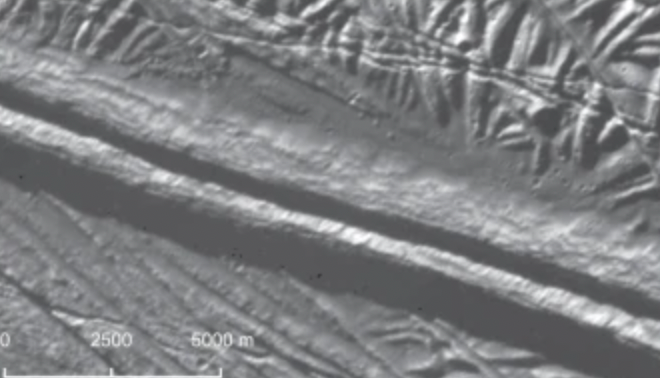 A ridge on Europa/Via Nature Communications[/caption]
Dr Riley Culberg is a geophysicist studying ice sheets and glaciers at Stanford University in California but he works with an interdisciplinary team of researchers who often share their work with each other. Still, when one of his colleagues was showing the team images of ridges crisscrossing Europa’s surface, he was taken by surprise.
“It’s like, ‘Wow, this looks exactly like this super weird thing that I saw in my data from Greenland the other day,’” said Dr Culberg.
In Greenland, he found a "double ridge" separated by a large trough measuring 50 meters wide.
[caption id="attachment_330691" align="alignnone" width="652"]
A ridge on Europa/Via Nature Communications[/caption]
Dr Riley Culberg is a geophysicist studying ice sheets and glaciers at Stanford University in California but he works with an interdisciplinary team of researchers who often share their work with each other. Still, when one of his colleagues was showing the team images of ridges crisscrossing Europa’s surface, he was taken by surprise.
“It’s like, ‘Wow, this looks exactly like this super weird thing that I saw in my data from Greenland the other day,’” said Dr Culberg.
In Greenland, he found a "double ridge" separated by a large trough measuring 50 meters wide.
[caption id="attachment_330691" align="alignnone" width="652"]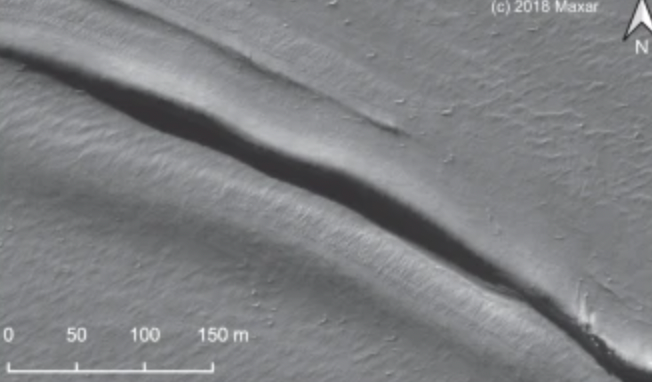 A ridge in Greenland/Via Nature Communications[/caption]
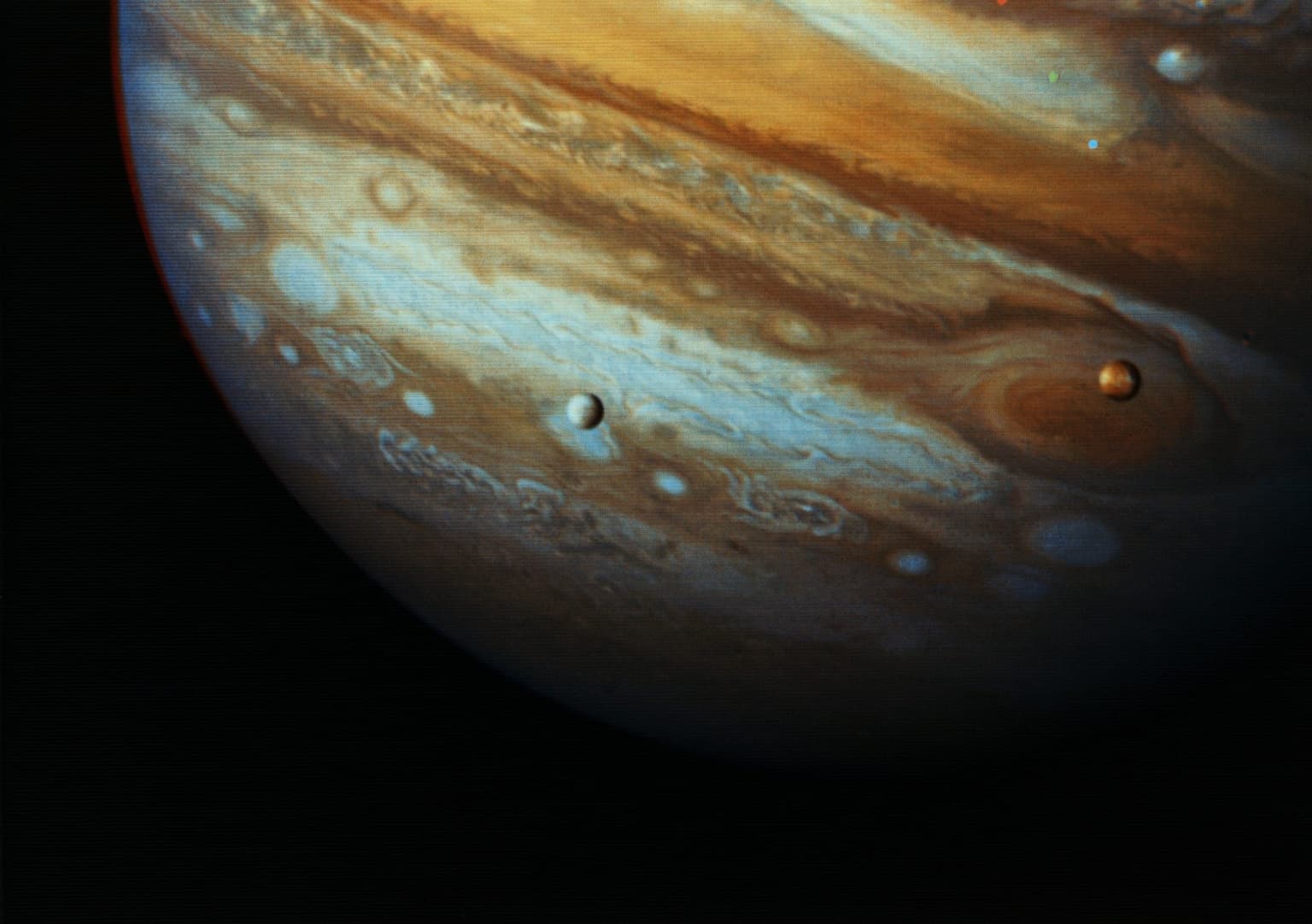
“If you sliced it in half and looked at the cross-section, it would be kind of like the capital letter ‘M’,” Dr Culberg said. While the double ridge in Greenland is the first of its kind, there are many similar ones 628.3 million km away on Europa, which Dr Culberg believes could be "160 to 200 metres tall."
“Because water expands when it freezes, that interior water in the core of this pocket gets pressurized. We think eventually there was so much pressure there that it fractured, and that you have these little sort of up-shoots of water getting forced out of the water pocket and then sort of forced the surface to also dome up into these ridges.”
Dr Culberg explained: “This is maybe water from the subsurface ocean that can get forced up through fractures inside of the ice shell.
“Or possibly you could get some kind of internal melting inside of the shell if you have a like plume of warm, buoyant ice that rises far enough up in it.”
Future space missions could access this water and test it for signs of life.
“It takes a pretty big setup, it takes a lot of power — you’re not going to pop this on like a Mars-sized rover or something," Dr Culberg detailed. "It’s going to be difficult, but this is something we do on Earth.”
A ridge in Greenland/Via Nature Communications[/caption]
“If you sliced it in half and looked at the cross-section, it would be kind of like the capital letter ‘M’,” Dr Culberg said. While the double ridge in Greenland is the first of its kind, there are many similar ones 628.3 million km away on Europa, which Dr Culberg believes could be "160 to 200 metres tall."
“Because water expands when it freezes, that interior water in the core of this pocket gets pressurized. We think eventually there was so much pressure there that it fractured, and that you have these little sort of up-shoots of water getting forced out of the water pocket and then sort of forced the surface to also dome up into these ridges.”
Dr Culberg explained: “This is maybe water from the subsurface ocean that can get forced up through fractures inside of the ice shell.
“Or possibly you could get some kind of internal melting inside of the shell if you have a like plume of warm, buoyant ice that rises far enough up in it.”
Future space missions could access this water and test it for signs of life.
“It takes a pretty big setup, it takes a lot of power — you’re not going to pop this on like a Mars-sized rover or something," Dr Culberg detailed. "It’s going to be difficult, but this is something we do on Earth.”

News

News

News

News
Loch Lomond crash: boy, 16, and man, 80, killed in light aircraft crash near Drymen
Major incident declared after fatal plane crash Two people have died following a light aircraft crash in Stirlingshire, prompting a major emergency response and an investigation into the circumstances surrounding the incident. The victims were a 16-year-old boy and an 80-year-old man, who were both found dead after the aircraft came down near Drymen on […]
News
5h
White House press secretary Katie Zacharia fired after five days in position
It comes after Trump said she should ‘reconsider’ her job White House press secretary Katie Zacharia has been fired after five days in the position, as per reports. Zacharia had a tough start to life in the role, hosting a briefing on Tuesday which caused a lot of criticism and raised a number of questions. […]
News
1 day ago
Piers Morgan urges Trump to side with Ukraine against ‘modern-day Hitler’ Putin
News