









News

Share
Published 13:20 13 Sept 2023 BST
Updated 13:20 13 Sept 2023 BST
Whilst many diseases continue to impact millions of people across the world every day, the huge strides in medical science taken over the last 100 years mean that we are much better placed to treat almost any disease.
The fatality rates for many of these have fallen thanks to the advances in science, but this isn't the case for all diseases.
And there's one disease that can probably stake a good claim for being the deadliest in the world, and had a fatality rate close to 100 per cent.
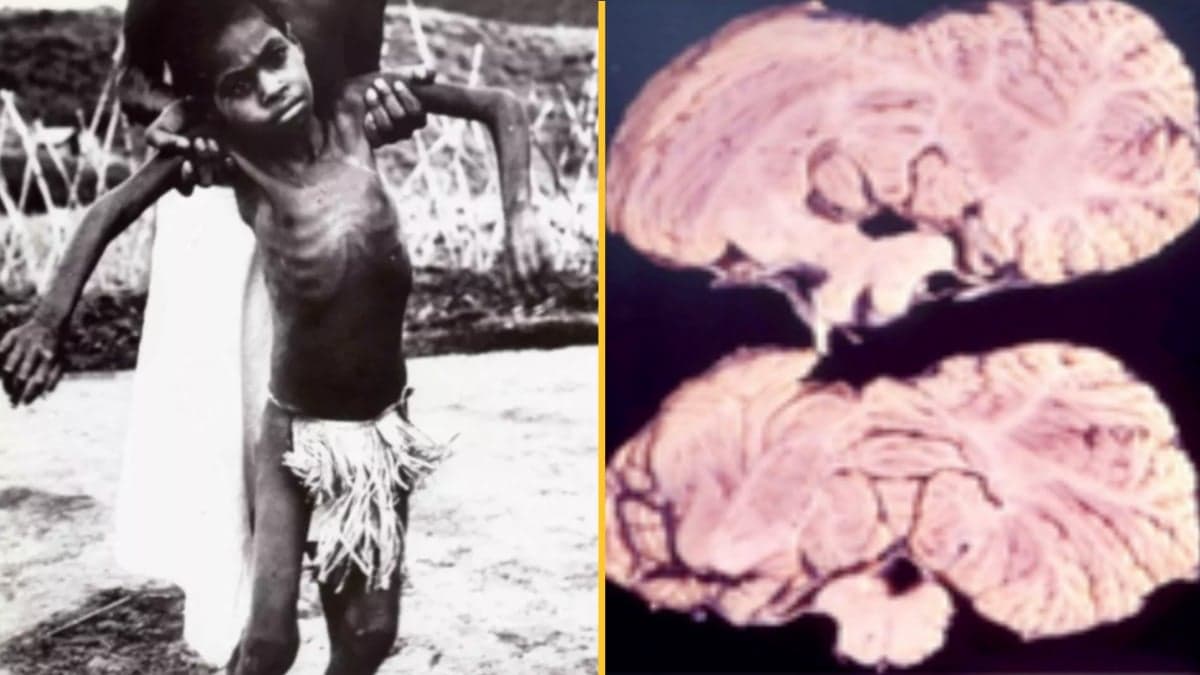
The kuru disease was first discovered in the 1950s in highland villages in Papua New Guinea.
Australian researchers found that among a tribe of about 11,000 people called the Fore, up to 200 people a year had been dying of an inexplicable illness.
They gave it the name 'kuru', which means 'shivering' or 'trembling.'
For those who had the disease, their demise would take place over the course of a year or two. First, they would struggle to walk before losing control of their limbs. Then, they'd lose control of their emotions. Eventually, they would be unable to move, feed themselves or control their bodily functions, NPR reports.
There was no cure for the disease and people would usually due within a year, according to Healthline.
After years of trying to work out what caused the disease, researchers eventually concluded it was caused by a pretty gruesome ritual the tribe performed - eating dead bodies at funerals.

The tribes would eat the brains of dead people as part of funeral ritual. A twisted protein, prion, in contaminated brain tissue would then cause the kuru disease.
The prions would compel normal proteins on the surface of nerve cells in the brain to twist like them, eventually managing to kill pockets of nerve cells in the infected person's brain.
Kuru was most common in women and young children, as they were the ones who would eat the deceased's brain, whilst the men would eat the muscles.
Although the brain-eating stopped in the 1960s, the disease continued for many years after due to its long incubation period, which was usually between 10 and 13 years, although some case of 50 years or longer have also been reported.
Thankfully, kuru is extremely rare and zero deaths have been reported since 2010.
According to researchers at Curtin University in Australia, the last person to die from kuru was in 2009.
The team had tracked kuru cases for decades, and declared the epidemic over in 2012.
Related links:

News

News

News

News
Protests across Europe show people have finally had enough of social inequality
For many, government no longer serves the people Europe has had enough of social inequality, and who can blame them. Inequality is rife. While billionaires play with flying cars, the people ask just to be able to afford to eat, get a good education and be housed. While the media focuses on France, protests are […]
News
13h
BBC continues to run rings around Trump in defence of defamation lawsuit
The BBC aren’t letting Trump off the hook. The BBC is continuing to run rings around Donald Trump as the broadcaster defends itself against his defamation lawsuit. Ever since Trump filed his ludicrous $10bn claim against the BBC over the edit of a Panorama documentary, the broadcaster has refused to cow down to the US […]
News
14h
Senate candidate Abdul El-Sayed dismantles heckler’s ‘muslim brotherhood’ question
News