







News

Share
Published 17:08 7 Jul 2026 BST
Updated 17:08 7 Jul 2026 BST
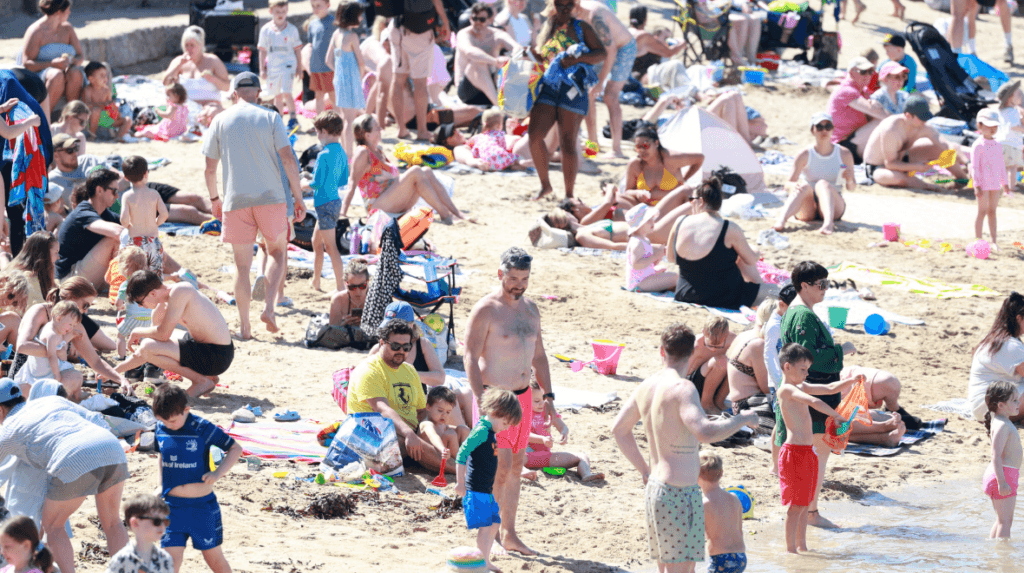
Undoubtedly, the summer season with nice holiday like weather is very welcome, especially in countries where rain and wind are the usual views. However, even Ireland is preparing for extreme heat warnings.
The heat dome that reached Ireland in early July was a pattern that transported hot air from North Africa into the region, expanding through European countries and reaching other higher areas including the UK.
World Weather Attribution, a network of climate scientists, said this current heatwave is the "most severe recorded". So be thankful that, despite this being the hottest summer you’ve ever experienced, you can enjoy it while it lasts, because it may also be the coldest.
There have already been two bouts of heat across Ireland this summer, with temperatures breaking monthly records and reaching over 32C in some places. The sun has made its return this week and will continue to shine right into the weekend.
Everything indicates that it has come to stay. Does this mean this is the new normal for Irish summers?
The World Weather Attribution group stated that if a similar heat dome event had occurred 50 years ago, the heatwave would have been around 3.5C cooler.
Europe has experienced repeated heatwaves in the last few summers, but this one seems to have surpassed many statistics.
The study also revealed that 45% of 854 cities across 30 European countries - including five cities on the island of Ireland - have already broken, or will break, their historic heat stress levels.
The scientific community states that there’s no longer any doubt that this hell-on-earth type of climate is the result of climate change from the burning of fossil fuels.
This weather brought many health impacts, including putting the body’s ability to cool itself at risk.
Most countries, and their natives, are not prepared for this heat as most people who live and work there are not designed for these temperatures, particularly here in Ireland.
Moreover, this heat is affecting our societal system by changing electricity demands, affecting power generation, forcing schools to close, disrupting transport, and saturating hospitals, simultaneously.
Despite Ireland having escaped the worst of the extreme heat thanks to the cooling influence of the Atlantic Ocean and its geographical distance from continental Europe, it cannot escape the collective aftermath.
Globalisation and the extremely tight connection between modern societies are making each country and its population equal victims in this matter.
In an interconnected world, disruptions like these can have significant repercussions, even in further countries like Ireland.
And what’s worse, even if global greenhouse emissions completely stopped right now, their impact would last because of the carbon dioxide that’s still in the atmosphere.
All that worryingly translates into more upcoming, frequent, and intense heatwaves.
So, while it's been a tough adjustment, it's likely that 2026 will be the least unbearable scorcher of a year compared to what's to come.
Image: Rolling News
Explore more on these topics:

News

News

News

News
The real reason Nigel Farage has resigned as MP for Clacton
He will stand again… Why has Nigel Farage decided to resign as an MP and call a by-election on himself? – Well, unsurprisingly, he has a scheme. This afternoon, Farage gave a lengthy speech in which he took aim at “the establishment”, the current government as well as the press. He also resigned as MP […]
News
40 min
Latest Clacton poll predicts outcome of snap byelection
The numbers are in! Nigel Farage has resigned as MP for Clacton, and the latest polling figures for the impending byelection have already emerged, revealing how strong the Reform UK leader’s chances are of reclaiming his seat, and place in British politics. The news comes after Farage had announced he would be making a statement […]
News
1h
Jets scrambled to intercept Russian plane ‘dropping devices’ near UK flagship carrier
News