








Entertainment

Share
Published 17:05 30 Sept 2026 BST
Updated 18:03 30 Sept 2026 BST
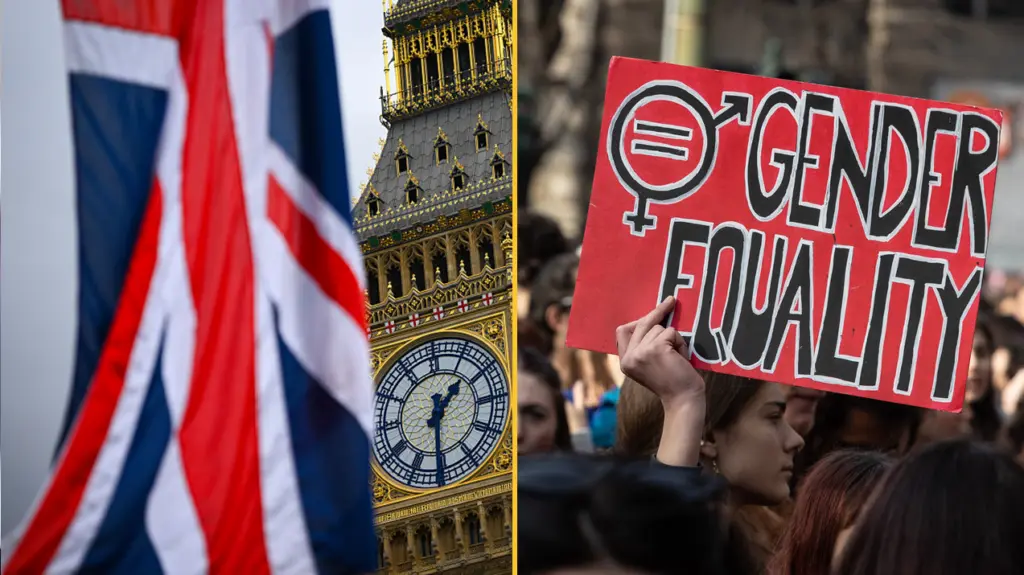
In September, the World Economic Forum released its annual Global Gender Gap Index, ranking 145 countries on gender equality.
Full equality appears 120 years away now, meaning the world will have to wait until 2146.
This is only assuming that progress actually continues, as before the pandemic, the same index declared parity was 99.5 years away.
That’s also if we manage to get things right on climate action (which has serious gendered implications globally) as well as AI job displacement, AI-related threats to safety, as well as rollbacks on gender equality efforts and the continued rise of far-right parties and governments globally.
The index is based on four metrics:
At time of writing, the gender gap now stands at 69.2 per cent closed.
This is up 0.4 percentage points over the last year. While it is nothing dramatic, it still is something.
Since 2006, one of the biggest gains has been political empowerment for women, but such progress has actually reversed since 2016.
While the share of world economies that are led by women peaked in 2022, it has now fallen back to 2016 levels.
Meanwhile, leadership has stalled, with women’s share of top-level management averaging under 30 per cent across 62 economies since 2024.
And every year since 2022, women’s share of new hires into such roles has fallen, now at 32.3 per cent.
It is in technology leadership positions where women are underrepresented, as they hold under one in five chief information officer positions and one in 10 chief technology officer roles.
According to the report, AI is the new frontier of the gap, as women make for fewer than one in five AI engineers and are underrepresented at every level in AI firms.
For the first time ever, Australia cracked the top ten, while Iceland continued to take pole position.
Iceland is followed by Finland in second, Norway in third, and Namibia in 4th.
The United Kingdom fell one place to 5th, while New Zealand fell one place to 6th.
Meanwhile, at the other end of the scale, Chad was listed in last (No. 145) place, below Iran, Pakistan, the Democratic Republic of the Congo and Algeria.
The United States continued its downward trajectory, dropping to 47th place.
But the biggest improver, according to the global ranking, was Kenya, up 33 spots to 65th place, followed by Ghana, up 32 to 56th place, and Guatemala, up 31 to 50th place.
Marking its 20th edition, the 2026 Global Gender Gap Report covers a cohort of 145 economies and analyses a longitudinal constant sample of 97 economies included in every edition since 2006, providing the longest-running assessment of progress towards gender parity.
The Global Gender Gap Index measures scores on a 0–1 scale, and scores can be interpreted as the distance covered towards parity (i.e. the percentage of the gender gap that has been closed, numbers rounded).
The Gender Gap Index measures gender parity across four dimensions: economic opportunities, educational, health and political leadership.
Explore more on these topics:

Entertainment

Entertainment

Entertainment

Ferry passengers travelling from UK to Ireland face passport checks for first time in 100 years
New checks cover several major Ireland to Britain routes Anyone catching a ferry between Ireland and Great Britain now needs to think twice before heading to the port, with passengers on several routes being asked to have their passports ready. The new requirement came into effect on Monday and covers sailings from Dublin and Rosslare, […]
Entertainment
4h
Greggs announces plans for major closures as 740 jobs on the line
Greggs ‘cost-efficient’ announcement could cost 740 jobs in the UK Greggs’ announcement for plans of major closures around the UK as a “necessary” growth move in “cost-efficient manner” could cost up to 740 jobs, despite 7.7% sales growth. The popularity of the bakery chain’s low cost baked goods and pastries has taken over the UK, […]
Entertainment
4h
Entertainment
Entertainment
Entertainment
Triple lock pension explained as Burnham announces reform from 2030
Entertainment