



news
Share
Ukrainian strikes on Yandex centres have ‘culled Russian bots’ – but how true is the claim?
Published 16:20 13 Oct 2026 BST
Updated 16:47 13 Oct 2026 BST
Homenews
Some things are too good to be true
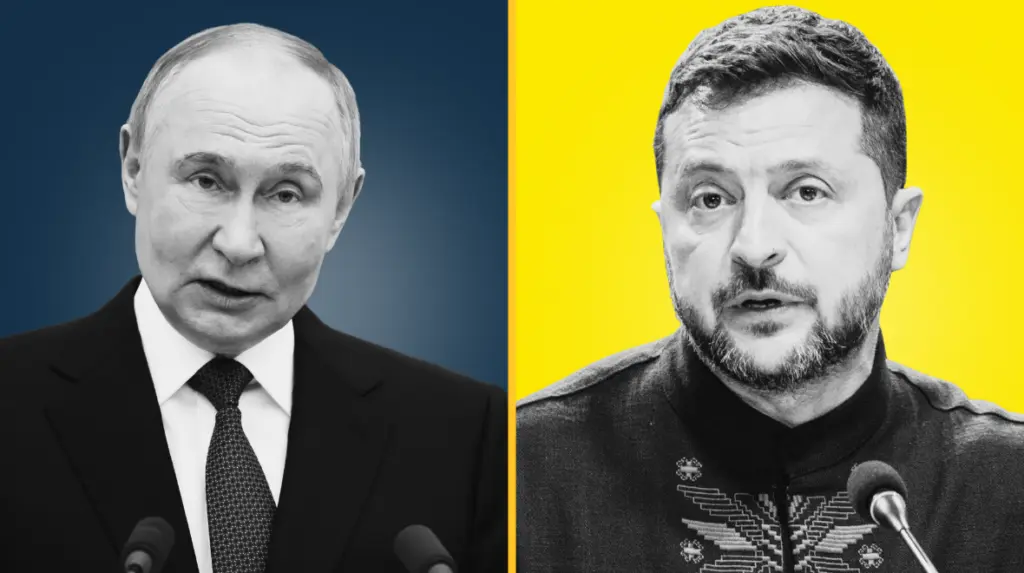
The internet has been ablaze in the last day with claims that Ukrainian strikes on Russian Yandex data centres have culled the number of Russian bots online pushing right-wing agendas.
While this sounds like an absolute win, somethings are often too good to be true, or at least not so black and white.
This isn't some conspiracy doing the rounds in the more speculative corners of the internet, but one supported by Ukrainian President Volodymyr Zelenskyy as well as a number of European politicians and analysts.
However, the claims are not without their sceptics, not Russian, but those also on the side of Ukraine, warning that while we'd all love this scenario to be true, it's not quite as simple as it seems.
What happened to Russia's data centres
Ukraine’s fight against Russia arguably took one of the most intriguing turns of the entire conflict this weekend, after a co-ordinated drone strike against several major Russian data centres completely decimated Yandex – their Google equivalent which controls more than 70% of search engine traffic in the country.
According to tech experts monitoring the situation, the strikes have successfully taken online services down, leaving large swathes of Russian citizens unable to use banking apps, complete transactions, or even book a taxi online. However, there’s another interesting by-product from this coordinated action.
A quick search on Cloudflare shows that bot traffic on Yandex's network dropped to just 0.3% of the maximum number of HTTP requests recorded in the past two weeks.
However, there have also been plenty of experts, notably those at tech site The Verge, saying that while, yes, Russian data centres have been destroyed, this doesn't necessarily mean the death of the Russian bot.
The definite facts and the uncertainties
Thanks to Cloudflare's bot tracking service, we can state with confidence which facts are true, and which may need a little more proving.
It is true that, as per the tracker, bot traffic from Yandex has collapsed since the Ukrainian strikes on the Russian data centres.
From the evening of 7 October until now, bot traffic has dropped from around 87% of its maximum in the last two weeks to 8.5% as of writing. At its lowest, this number was at 0.3% and Cloudflare's site specifically attributes this drop to Ukrainian strikes.
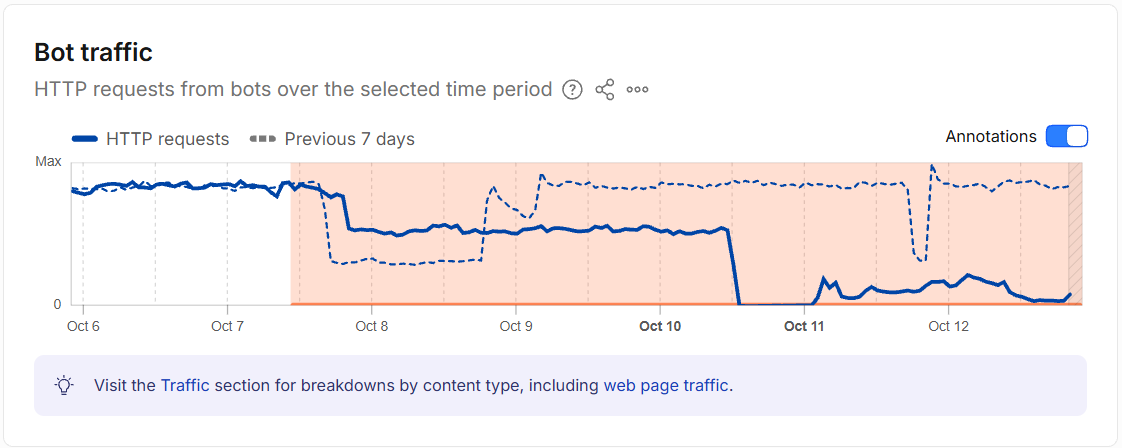
Bot traffic from Yandex dropped almost to zero after the strikes. Image: Cloudflare screenshot.
However, many people have raised the point that 'bot' does not necessarily correspond to 'right-wing bot account on X'.
Notably, cybersecurity expert Lukasz Olejnik explained that most of these bots are Yandex's own crawlers which collect information and index sites for its own search engine, seeing as Yandex is the Russian 'equivalent of Google'.
This point is made even clearer when Yandex is removed from the picture and all bots originating from Russia are analysed.
Cloudflare's own data shows no drop in the number of bots coming from Russia, in fact the regular pattern follows its course.
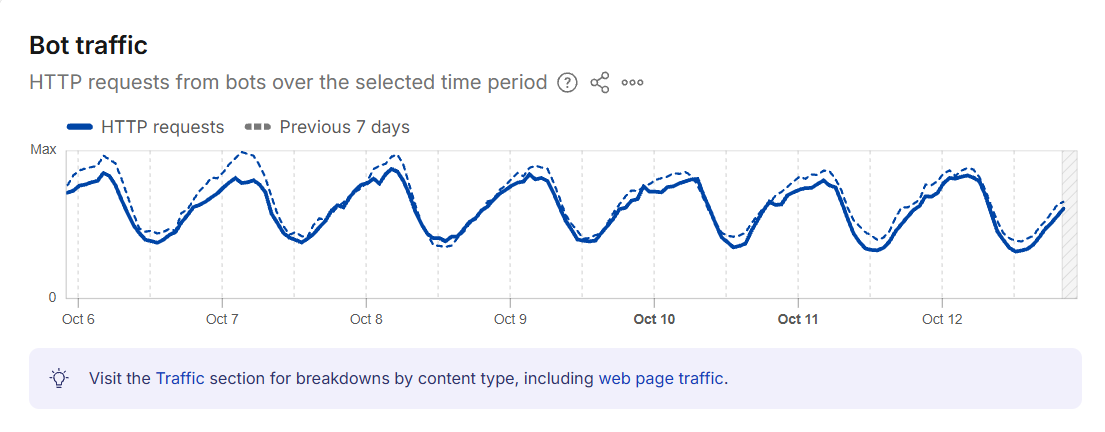
This makes sense, as many experts explain that while Yandex may host some bots, many also use proxies and western cloud systems.
Cloudflare also shows that it only holds 5.7% of bot traffic share by autonomous system, with Rostelecom having three times more.
HTTP requests from Rostelecom did not see any deviation from usual traffic.
Why have so many people perceived a dip across social media
The most likely explanation is that people want this to be true - we all do.
Bots are annoying at best, let alone the ones spreading pro-Russian propaganda and general misinformation.
Only yesterday, Prime Minister Andy Burnham said that it was "inconceivable" that there had not been Russian interference in the 2016 Brexit Referendum, although admitted that this did not sway the outcome.
Bot accounts are out there and they spread misinformation and from a 'dead internet' standpoint too, they just suck.
So, there's no surprise that a theory that makes complete sense, such as data centres getting blown to bits in Russia leading to the disappearance of bots, is so popular.
Despite people perceiving a drop in engagement and activity across social media on right-wing pages, it would appear that the best explanation is positive reinforcement - wanting to believe it is true.
Furthermore, while it is nice to believe that the far-right is propped up by bots rather than people, polling across Europe and beyond clearly shows these supporters do exist in many places.
This is important to remember, because reducing the threat of the far-right to just 'bot farms' is undermining a real threat to our democracies.
The real consequences
While everyone gets exicted about the potential disruption of Russian bot activity, the real consequences of the strikes on Yandex data centres is a lot more physical - the disruption of everyday services in Russia.
Yandex confirmed to the public that people may be unable to use banking apps, or complete transactions, affecting the everyday lives of everyday people.
This is where these strikes are most effective, impacting the lives of the population in a way that does not physically harm, but once again helps to raise discontent with the Putin regime, hopefully helping to end this war one day.