








News

Share
Published 13:14 6 Nov 2025 GMT
Updated 15:48 6 Nov 2025 GMT
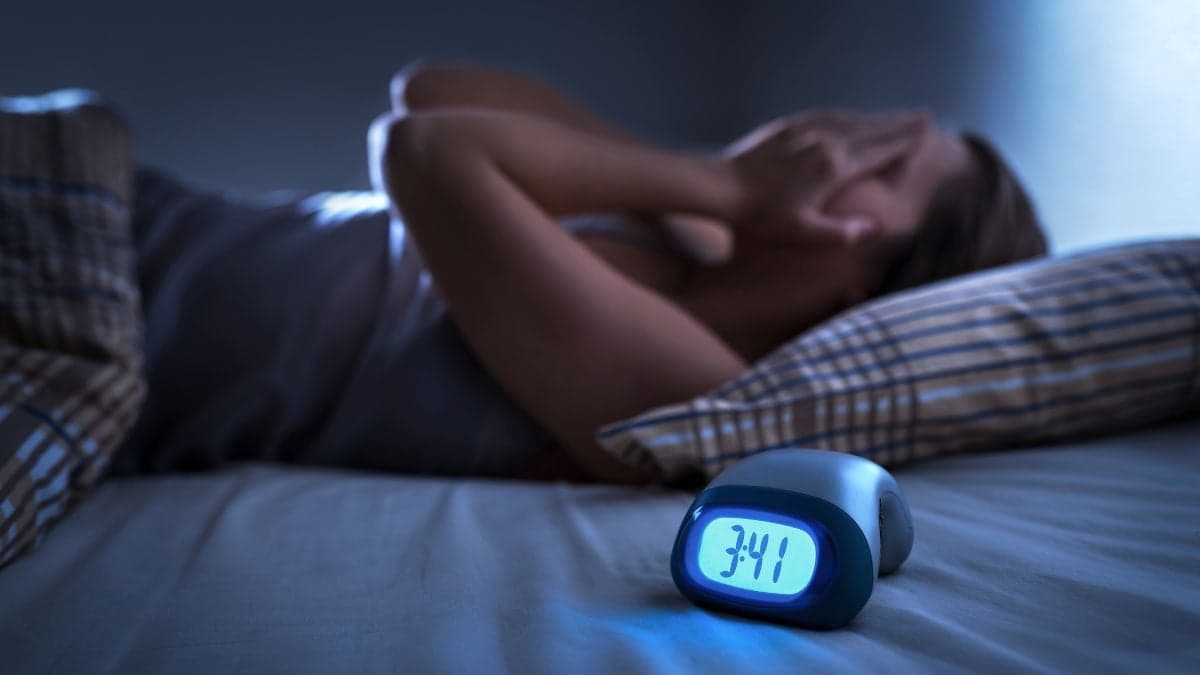
If you were one of many who just couldn't stop tossing and turning last night, we might know what's to blame.
It had nothing to do with your stuffy nose, your late-night tea, or your snoring partner; the reason why you didn't have a good night's sleep could be due to last night's cosmic phenomenon.
Last night (5 November) saw the Beaver supermoon, the largest and brightest supermoon of the year, light up our skies.
A supermoon occurs when a full moon coincides with its closest point to Earth, making it appear brighter and larger than usual.
Albeit it is a pretty sight, it can have a notable impact on our beauty sleep.
Mike Kocsis, hormonal health expert at Balance My Hormones, claims the 'most obvious impact' of the full moon is sleep disruption.
"Even if the bright light of the full moon doesn't wake you up, it can cause a chain reaction throughout your body and your hormones; cortisol rises, serotonin becomes dysregulated, and oxytocin can decrease, and this can lead to problems," he told Tyla.
He went on to explain that your levels of sleep hormone, melatonin, can dip during a full moon, making it harder to fall asleep and stay asleep throughout the night.
The expert continued: "Serotonin is highly responsive to light exposure, which is why serotonin levels tend to decrease in winter, when there is less sun, contributing to things like seasonal affective disorder (SAD).
"Being deprived of fully restful sleep makes you feel more emotionally reactive, more prone to conflict, and less empathetic, so it can cause trouble in relationships."
Managing Director and sleep expert at The Odd Company, Andrew Seed, added: "Full moons are often linked to changes in behaviour, and many people report that they can disrupt sleep. Beaver moons, in particular, tend to be brighter than average, which can interfere with the body’s natural sleep-wake rhythm.
"The moon has long been associated with biological patterns, from ocean tides to animal migration and even plant growth, so it’s plausible that human sleep could be affected too. Research suggests people may experience shorter, lighter sleep during a full moon, with less time spent in deep or REM stages, and there have been several explanations posed, from changes in light exposure to subtle electromagnetic shifts."
Now, there's no guaranteed solution to combat this cosmic phenomenon, however, Andrew did highlight that 'maintaining good sleep hygiene can help'.
He went on to recommend: "Keep your bedroom dark and quiet, reduce light exposure before bed, and consider using aids like white noise, eye masks, or earplugs.
"Relaxation techniques such as meditation can also help you stay calm and improve overall sleep quality."

News
News

News

News
Man who died in horror 150ft stadium fall named
The incident was seen by thousands A man who died after plunging 150ft (46m) in a horror stadium fall has been named. US Airman Tech Sargent Ian Patterson of the US Air Force died from his injuries after falling from the rafters of Texas’ Alamodome stadium. He was doing a fast-rope demonstration when the incident […]
News
17h
Two men and two women arrested after police officer shooting in Nottingham
BREAKING After a police officer was shot and injured in Nottingham city centre on Sunday, police have confirmed that arrests were made. The shooting occurred in the early hours of Sunday morning. Two men and two women have now been arrested in connection to the shooting. The Nottinghamshire Police officer was shot in the foot, […]
News
20h
Wainwright fire kills several at Canada military base
News