









News

Share
Published 11:31 30 Nov 2025 GMT
Updated 11:31 30 Nov 2025 GMT
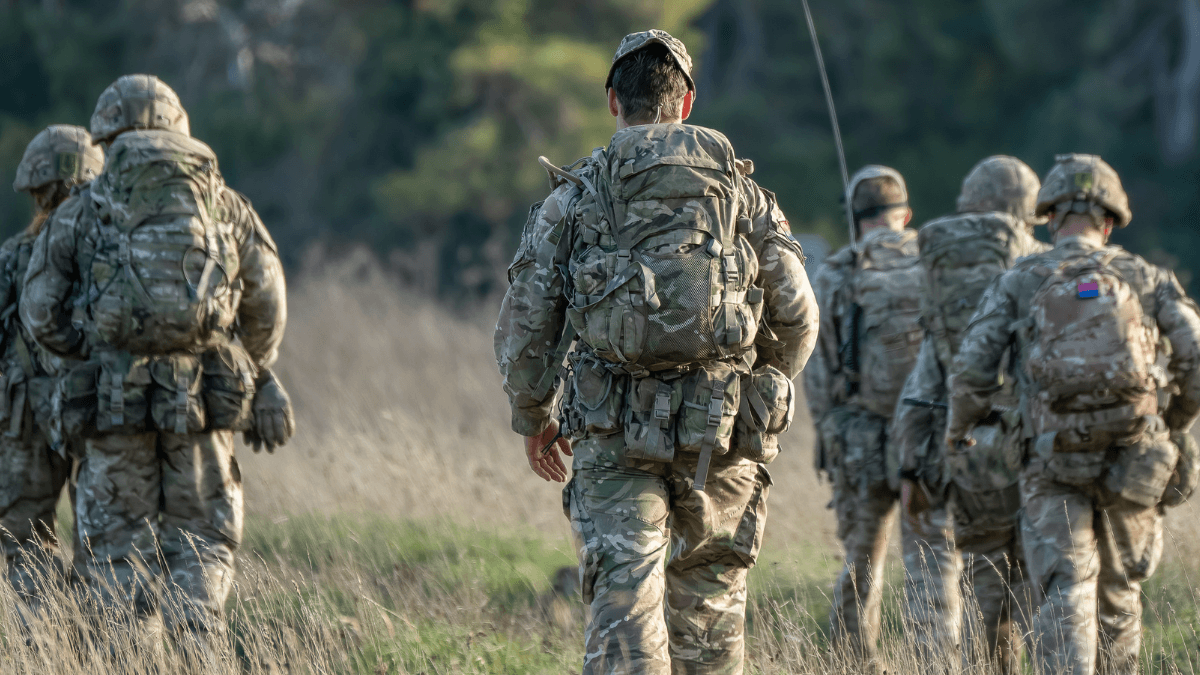
Whether it's down to the Russian invasion of Ukraine, or the growing tensions between Iran and Saudi Arabia in the Middle East, the world feels closer to the next global conflict than it has done for decades, begging the question: if Britain were forced into another serious conflict, what would it mean for me and you?
In the case of another world war, Britain could reinstitute conscription, calling for every able-bodied person to serve some kind of military service for their country.
There have been an increasing amount of calls to expand the UK's armed forces, with former Chief of Army Staff General Sir Patrick Sanders warning last year that Britain could face conscription 'within six years' if the threat from Russia doesn't disappear.
With only one in 10 young Brits saying they would fight for their country, this leaves many questioning what could happen in the case of WW3.
There are a host of possibilities that could take place if we were to go to war again, but it's time to have a run through what it could mean for the average JOE.
When could conscription happen?
Mike Martin, an Afghanistan Veteran and the Lib Dem MP for Tunbridge Wells previously said if we were to go to war with Russia, the country would have to bring back conscription.
He said: “There’s a significant chance that it [war with Russia] might happen so we must be prepared.
“Obviously, if we get involved in a general war with Russia, we’ll be conscripting the population – there’s no question about that.”
However, former British Military Intelligence Colonel Philip Ingram MBE previously told JOE the country is a long way from bringing back mandatory military service.
He said: “There would have to be a massive deterioration in the geopolitical environment across the world [for us to bring in conscription].
“That massive deterioration suggesting that, not just the UK, but multiple organisations are on a path to war, possibly a declaration of war, or us getting directly involved in some heavy shooting conflicts.
“Now, I’ve been at this game for over 40 years, up until last year, I never saw a clear path. There’s always barriers in the way to there being a large conflict. I can now see clear paths. So that’s the slightly worrying thing.”
The former Army officer, who joined the forces as an 18-year-old in the Royal Electrical Mechanical Engineers before transferring to the Intelligence Corps, set out what would need to happen first before the general population would be asked to step up.
“Before we start to see any emergency legislation being put into parliament, we’d see the regular forces have their increased readiness.
“We’d see elements of them being deployed overseas, and we’d see the reserve forces starting to be called up, and not just in the way that they’ve been called up to support operations beforehand in Iraq, Afghanistan, the Balkans and the rest of it. It would be a massive call up of the reserve forces.
“Then you’ve got an additional element to the reserve, which are those regular military who have recently retired and still remain with a liability for call up, and we start to hear discussions about them being called in. This is all before there’d be anything that would say to the general population, ‘right folks, you’re next!’”
There's lots of different factors that go into deciding who could be conscripted in the case of another war.
Some professions may be exempt, with people who worked in baking, farming, medicine, coal mining and engineering all being exempt during WW2.
If we were to go to war again though, these exemptions would have to reflect the modern era.
Colonel Ingram told JOE that exemptions could include those who work in running our critical national infrastructure, such as power plants and railways.
Nurses, doctors, police and other emergency services could also be exempt, as well as those working in the defence industry.
What ages would be conscripted if WW3 were to break out?
Conscription in WW2 initially only applied to men aged between 20 and 21. However, it was quickly expanded to include all men between the ages of 18 and 41.
The British government introduced the National Service Act in 1948 to cover conscription in peacetime.
That meant that men aged between 17 and 21 had to do military service for 18 months and were also put on the reserve list for four years.
We can only go off what has happened in the past, but obviously things could be a lot different in a 21st century war.
While the pressure to volunteer —or at the least fulfil a mandatory obligation to serve —will be immense, throughout history there have always been those who refused the call.
During WW1 (1914-18) a group known as the 'conscientious objectors' refused to fight for Britain for moral reasons, and so were targeted by a group of women remembered by history as members of the "White Feather Campaign."
Whenever they were seen in public, objectors would be handed white feathers by campaigners, as an attempt at mocking or shaming them into service.
During the Second World War (1939-45), the pressure put on 'conscientious objectors' was taken even further.
Those who refused conscription had to to attend court tribunals where they would argue their reasons for refusing to serve.
Those who were successful in their argument would then be granted a "category of exemption" and given a non-combat job.
In the decades since those two conflicts ended, the rights of conscientious objectors have been recognised by European courts, as explained by a report on conscription issued by the UK Government in March of this year.
It reads: "Most countries obligate men to serve, offering opportunities for women to volunteer if they wish. Many also offer an alternative civilian option for conscientious objectors.
"Some use a lottery model, meaning that only a small proportion of eligible men are required to serve.
"The European Parliament’s research service briefing on mandatory military service says all EU Member States with an active conscription system have recognised the rights of conscientious objectors through national law."
As a result, it seems more than likely that any individual seeking to avoid conscription for WW3 as a conscientious objector would be protected by European law.
While thousands could potentially take up the option of a non-combat role instead of one on the frontline, this wouldn't prevent a newer iteration of the "White Feather Campaign" from rising up and shaming objectors into service.
Households are being urged to buy one appliance to prepare for the potential outbreak of WW3, or other mass disruptions like another pandemic, internet outages, and extreme weather conditions.
The government runs a website to prepare the public for national disruptions including war, extreme weather and cyber attacks.
As part of its list of advice for households, people are being told to buy one crucial item – battery or wind-up radios.
This is because this type of radio doesn’t need power from the National Grid, which may be disrupted during a crisis.
You can get a wind-up radio from Amazon here for your home emergency kit. And it can be used for activities such as hiking and camping.
This article contains affiliate links. We may earn a commission on any sales generated from it.
Explore more on these topics:

News

News

News

Historic pier partially collapses into sea as Storm Austen batters UK
The first named storm of the season has lived up to expectations A historic pier has collapsed into the sea as Storm Austen batters the UK with winds beyond 100mph. Strong wind and heavy rain have caused plenty of chaos across the country, from closed airports and disrupted train services to felled trees and even […]
News
2 days ago
Vincent Kompany taken to hospital after collapsing at Bayern Munich training ground
He collapsed while watching the second team train Bayern Munich manager Vincent Kompany has been rushed to hospital after collapsing at the club’s training ground on Friday. The former Man City centre-back had been battling a virus, subsequently missing a news conference on Tuesday ahead of the German club’s show down with Arsenal. A club […]
News
2 days ago
News
Rheinmetall’s new Telford factory brings tank barrel production back to the UK
News