






Business

Share
Published 06:24 4 Oct 2026 BST
Updated 06:28 5 Oct 2026 BST
For generations, starting a business had a fairly recognisable beginning.
You had an idea. You wrote a business plan. You found some money. You registered a company. Then, if everything went to plan, you found some customers.
For a growing number of Britain’s newest entrepreneurs, things don't look quite like that.
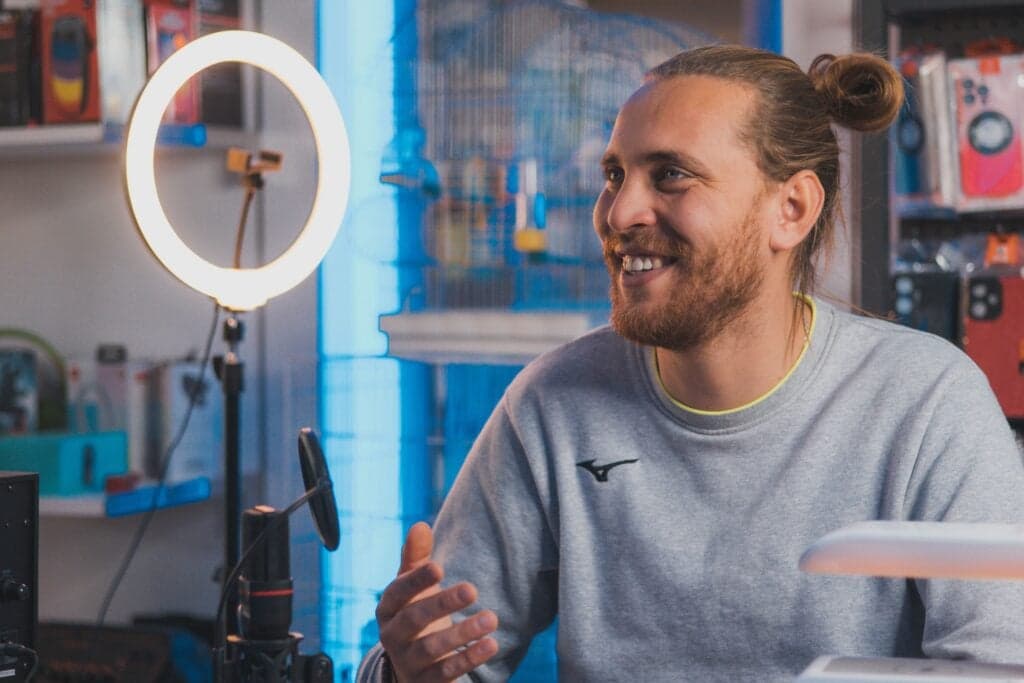
They start a YouTube channel. A TikTok account. A podcast. Maybe an Instagram page about fitness, football or personal finance. At some point, people start watching. Then a brand gets in touch. Money changes hands.
Before long, something that began as a hobby has an accountant, invoices, commercial partnerships and perhaps even employees.
Somewhere along the way, a creator has quietly become a business owner.
And while the creator economy can still be dismissed as influencers selling things on Instagram, the numbers increasingly suggest something much bigger is happening.
New research from IAB UK estimates that investment in UK creator partnerships will reach £1.217 billion this year, growing 26 per cent in 12 months. In 2025, the sector was already growing at more than twice the rate of the wider digital advertising market.
YouTube, meanwhile, says its UK creator ecosystem contributed £2.8 billion to GDP and supported more than 60,000 full-time equivalent jobs, according to its latest Oxford Economics impact research.
Those aren't particularly small numbers.
Yet there is an interesting disconnect between the economic activity creators are generating and how we traditionally think about entrepreneurship.
Even official statistics struggle to put creators into a neat box. The Office for National Statistics has previously said influencers do not fit easily into one occupational category. A vlogger could be classified alongside actors and presenters, for example, while another influencer could fall under marketing. As a result, the ONS does not hold statistics that specifically identify this workforce.
In other words, an increasingly significant type of British entrepreneur can be surprisingly difficult to see through the traditional lens of the economy.
And new Santander UK research suggests the route creators take into business might not be as unusual as it sounds.
A survey of 1,000 SME owners found that 35 per cent describe themselves as “accidental entrepreneurs”, while almost two-thirds (62 per cent) had no previous experience in their chosen industry when they started.
Crucially, one in five said turning a side hustle into a full-time business was what triggered them to take the plunge.
It isn't difficult to see the parallels with creators.
Someone who starts making videos after work probably doesn't think of themselves as launching a media company. Someone posting fitness content at university may not imagine that they will eventually have to negotiate commercial contracts or manage cash flow.
But audiences can grow quickly. And once money follows the audience, the skills required start looking remarkably similar to those needed to run any other small business.
That transition isn't necessarily straightforward. Santander found 39 per cent of entrepreneurs didn't understand the basics of running a business when they started, while 79 per cent said they learned almost everything on the job.
Creators themselves have identified a similar gap. In YouTube's consultation of almost 10,000 UK creators, just 17 per cent felt adequately supported with skills and training and only 7 per cent felt adequately supported when it came to accessing capital and business loans.
Perhaps, then, we need to update our picture of what a British entrepreneur looks like.
The next generation may not begin with a business plan, an office or even particularly grand entrepreneurial ambitions.
They might simply begin with a phone, an idea and something they think other people might want to watch.
Explore more on these topics:
Business

Business
Business
Business
Details revealed as millions of drivers to receive £700 compensation
More details have been confirmed. Millions of drivers across the UK are set to find out how they could claim hundreds of pounds in compensation after being mis-sold car finance, as the Financial Conduct Authority (FCA) confirms the final details of a major redress scheme. The watchdog has now outlined how the compensation process will […]
Business
6 months ago
Millions of drivers to receive £700 compensation verdict from today
A verdict on the scheme is set for this afternoon Millions of drivers in the UK will find out how they could claim on average £700 back in compensation for mis-sold car finance. This comes as the Financial Conduct Authority (FCA) is expected to publish today (Monday, 30 March) its final decision on the matter […]
Business
6 months ago

Business
Pornhub reveals how much its website traffic has dropped since introduction of Online Safety Act
Business