






News

Share
Published 15:01 2 Feb 2022 GMT
Updated 09:06 4 Feb 2022 GMT
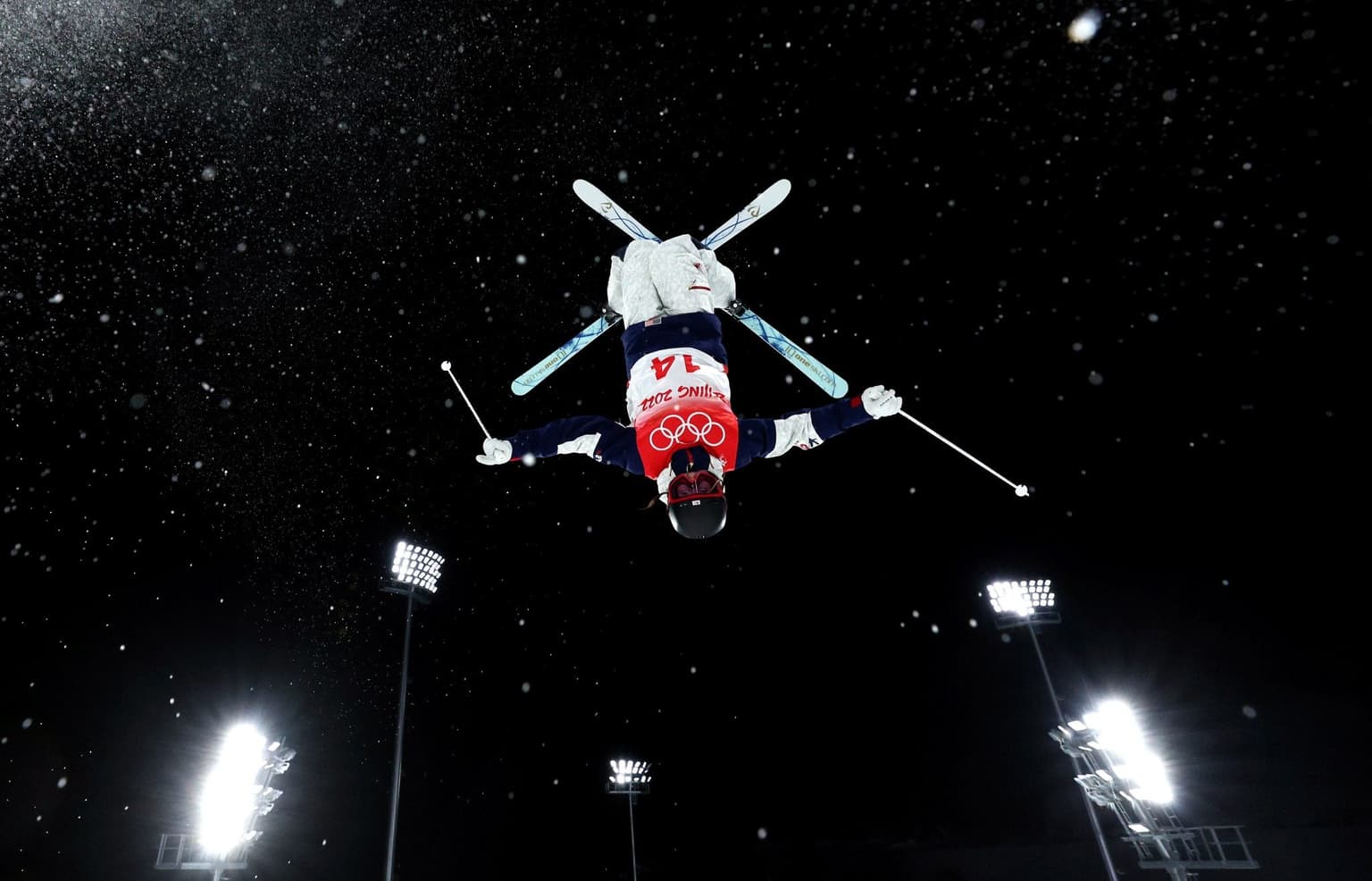
 Beijing will become the first ever location to host both a summer and winter Olympics (Richard Heathcote/Getty) [/caption]
This year, Beijing will become the first city to have ever hosted both the Summer and Winter Olympics.
Remarkably, it will also be only the second capital city to host the winter games, after Oslo did in 1952.
Due to the climate and geographical requirements needed to host events such as Alpine skiing and snowboarding, the games have travelled to a more eclectic mix of destinations than the summer editions. Locations to have hosted a Winter Olympics in the past include Grenoble in France, Palisades Tahoe in the US, and Lillehammer in Norway.
Beijing will become the first ever location to host both a summer and winter Olympics (Richard Heathcote/Getty) [/caption]
This year, Beijing will become the first city to have ever hosted both the Summer and Winter Olympics.
Remarkably, it will also be only the second capital city to host the winter games, after Oslo did in 1952.
Due to the climate and geographical requirements needed to host events such as Alpine skiing and snowboarding, the games have travelled to a more eclectic mix of destinations than the summer editions. Locations to have hosted a Winter Olympics in the past include Grenoble in France, Palisades Tahoe in the US, and Lillehammer in Norway.
 Norway have won more Winter Olympic gold medals than other nation (Agence Zoom/Getty)[/caption]
Norway may be a small country of just five million, but they are the undisputed powerhouses of the Winter Olympics, with 368 medals (132 gold, 125 silver, and 111 bronze) - far outpacing the United States, their nearest rivals, on 305.
The likes of Austria, Sweden and Switzerland all feature in the top 10 of the all-time medal table as well, with the obvious link being that these countries are all pretty mountainous and snowy.
As you may expect then, countries with hotter climates don't fare so well. Australia are the only southern hemisphere nation to have won a gold at the games, with short track speed-skater Steven Bradbury winning their only gold in 2002. Only one other southern hemisphere nation has won a medal of any colour, this was New Zealand in 1992.
The exception to this 'cold = success' rule though? Iceland, a nation that has never won a medal of any colour at the Winter Olympics.
Norway have won more Winter Olympic gold medals than other nation (Agence Zoom/Getty)[/caption]
Norway may be a small country of just five million, but they are the undisputed powerhouses of the Winter Olympics, with 368 medals (132 gold, 125 silver, and 111 bronze) - far outpacing the United States, their nearest rivals, on 305.
The likes of Austria, Sweden and Switzerland all feature in the top 10 of the all-time medal table as well, with the obvious link being that these countries are all pretty mountainous and snowy.
As you may expect then, countries with hotter climates don't fare so well. Australia are the only southern hemisphere nation to have won a gold at the games, with short track speed-skater Steven Bradbury winning their only gold in 2002. Only one other southern hemisphere nation has won a medal of any colour, this was New Zealand in 1992.
The exception to this 'cold = success' rule though? Iceland, a nation that has never won a medal of any colour at the Winter Olympics.
 Marit Bjørgen is the most successful athlete in Winter Olympic history (Quinn Rooney/Getty)[/caption]
Some quick-fire pieces of trivia for you now. The oldest person to receive a medal at the Olympic Winter Games is Anders Haugen, who also holds the record for the longest wait for a medal. He competed in the ski jumping for the US in 1924 but didn't become a medallist until 1974 when a Norwegian sports historian noticed a scoring error from the games. So at the age of 85 he was finally awarded his bronze in a special ceremony in Oslo, more than 50 years after he competed.
The youngest ever competitor at the Winter Olympics was Great Britain's Cecilia Colledge, who competed in the figure skating at the 1932 Lake Placid games at the age of just 11 years and four months.
And the most successful winter Olympian of all time is the mighty Marit Bjoergen. She has won a remarkable 15 medals (8 gold, 4 silver and 3 bronze) for Norway in cross-country skiing.
Marit Bjørgen is the most successful athlete in Winter Olympic history (Quinn Rooney/Getty)[/caption]
Some quick-fire pieces of trivia for you now. The oldest person to receive a medal at the Olympic Winter Games is Anders Haugen, who also holds the record for the longest wait for a medal. He competed in the ski jumping for the US in 1924 but didn't become a medallist until 1974 when a Norwegian sports historian noticed a scoring error from the games. So at the age of 85 he was finally awarded his bronze in a special ceremony in Oslo, more than 50 years after he competed.
The youngest ever competitor at the Winter Olympics was Great Britain's Cecilia Colledge, who competed in the figure skating at the 1932 Lake Placid games at the age of just 11 years and four months.
And the most successful winter Olympian of all time is the mighty Marit Bjoergen. She has won a remarkable 15 medals (8 gold, 4 silver and 3 bronze) for Norway in cross-country skiing.
 The US bobsled team receives the Olympic trophy in 1932. William Fiske is receiving the trophy, with Eddie Eagan just to the right of him (New York Times/Getty)[/caption]
Five different athletes have won medals at both the Summer and Winter Olympics. But only one person has won gold at both the games.
American Eddie Eagan won gold in the light-heavyweight boxing event at the 1920 Antwerp Summer Games, before deciding to mix it up a little 12 years later by being a member of the four-man bobsled team that won gold at the 1932 Winter Olympics in Lake Placid.
The US bobsled team receives the Olympic trophy in 1932. William Fiske is receiving the trophy, with Eddie Eagan just to the right of him (New York Times/Getty)[/caption]
Five different athletes have won medals at both the Summer and Winter Olympics. But only one person has won gold at both the games.
American Eddie Eagan won gold in the light-heavyweight boxing event at the 1920 Antwerp Summer Games, before deciding to mix it up a little 12 years later by being a member of the four-man bobsled team that won gold at the 1932 Winter Olympics in Lake Placid.
 Ice hockey made its Olympic debut at the 1920 Summer Olympics in Antwerp (Ronald Martinez/Getty)[/caption]
Figure skating and ice hockey used to be part of the Summer Olympics. The first Winter Olympics wasn't held until 1924, 28 years after the first summer games.
So in 1908, figure skating was first contested at the London Olympics, and then again 12 years later in Antwerp, where ice hockey made its debut.
But when the Winter Olympics was first held in Chamonix in 1924, the International Olympic Committee (IOC) made the wise decision to move both sports to the winter programme.
Ice hockey made its Olympic debut at the 1920 Summer Olympics in Antwerp (Ronald Martinez/Getty)[/caption]
Figure skating and ice hockey used to be part of the Summer Olympics. The first Winter Olympics wasn't held until 1924, 28 years after the first summer games.
So in 1908, figure skating was first contested at the London Olympics, and then again 12 years later in Antwerp, where ice hockey made its debut.
But when the Winter Olympics was first held in Chamonix in 1924, the International Olympic Committee (IOC) made the wise decision to move both sports to the winter programme.
 Austrian soldiers carrying baskets of snow to the ski slopes in preparation for the Winter Olympics at Innsbruck where there was a shortage of snow and ice (Central Press/Getty)[/caption]
Weather can often cause an issue at the Winter Olympics, with events having to be postponed if conditions aren't right.
At the 1964 Innsbruck games there was not enough snow to properly set up the events. This was such an issue that the Austrian army had to be called in to haul giant blocks of snow and ice from the Austrian mountains for the ski slopes and luge events.
The tables were turned in Nagano 34 years later though. In 1998, the Alpine ski competition had to be rescheduled several times because there was too much snow.
Austrian soldiers carrying baskets of snow to the ski slopes in preparation for the Winter Olympics at Innsbruck where there was a shortage of snow and ice (Central Press/Getty)[/caption]
Weather can often cause an issue at the Winter Olympics, with events having to be postponed if conditions aren't right.
At the 1964 Innsbruck games there was not enough snow to properly set up the events. This was such an issue that the Austrian army had to be called in to haul giant blocks of snow and ice from the Austrian mountains for the ski slopes and luge events.
The tables were turned in Nagano 34 years later though. In 1998, the Alpine ski competition had to be rescheduled several times because there was too much snow.
 The 'Miracle on Ice' is arguably the most famous moment in the history of the Winter Olympics (B Bennett/Getty)[/caption]
One of the greatest moments in American sport and undoubtedly one of the most incredible upsets the world has ever seen.
It was the 1980 Lake Placid games in New York state, and the US were taking on the Soviet Union in the medal round of the men's ice hockey.
The Soviet Union were the four-time defending gold medallists. They'd won five of the last six Olympic titles and had a team made up of professionals and experienced international players. The US on the other hand had the youngest team at the tournament, made up mostly of amateurs. Only four of their players had
But in front of a partisan crowd, and against the backdrop of growing political tensions between the US and the Soviet Union, the impossible happened - the US claimed a thrilling 4-3 win, going on to win the gold two days later.
The victory became known as the 'Miracle on Ice' thanks to some famous commentary from ABC's Al Michaels, and in 1999 the moment was named the top sports moment of the 20th century.
Just look at the scenes:
The greatest moment in the history of the games, and a fitting way to round off this list.
Who knows what Beijing 2o22 has in store for us. If there is one thing you can count on with the Winter Olympics though, it's that it certainly won't be boring.
https://twitter.com/PoliticsJOE_UK/status/1489372600178458627?s=20&t=EFzEna1jS9T1bhWhqxG6_A
Related links:
The 'Miracle on Ice' is arguably the most famous moment in the history of the Winter Olympics (B Bennett/Getty)[/caption]
One of the greatest moments in American sport and undoubtedly one of the most incredible upsets the world has ever seen.
It was the 1980 Lake Placid games in New York state, and the US were taking on the Soviet Union in the medal round of the men's ice hockey.
The Soviet Union were the four-time defending gold medallists. They'd won five of the last six Olympic titles and had a team made up of professionals and experienced international players. The US on the other hand had the youngest team at the tournament, made up mostly of amateurs. Only four of their players had
But in front of a partisan crowd, and against the backdrop of growing political tensions between the US and the Soviet Union, the impossible happened - the US claimed a thrilling 4-3 win, going on to win the gold two days later.
The victory became known as the 'Miracle on Ice' thanks to some famous commentary from ABC's Al Michaels, and in 1999 the moment was named the top sports moment of the 20th century.
Just look at the scenes:
The greatest moment in the history of the games, and a fitting way to round off this list.
Who knows what Beijing 2o22 has in store for us. If there is one thing you can count on with the Winter Olympics though, it's that it certainly won't be boring.
https://twitter.com/PoliticsJOE_UK/status/1489372600178458627?s=20&t=EFzEna1jS9T1bhWhqxG6_A
Related links:
Explore more on these topics:

News
News

News

News
Here’s everything we know as rumours circulate that Kim Jong-un ‘has died’
Unconfirmed rumours have spread around the world suggesting that North Korean leader Kim Jong-un may have died after suffering a brain haemorrhage. Rumours have circulated on social media claiming that North Korean leader Kim Jong-un may have died after reportedly suffering a brain haemorrhage and falling into a coma. However, the claims remain unverified. Much […]
News
10h
Priest dies after massive crucifix falls onto him during livestreamed mass
There were gasps and screams inside the church A priest in Ecuador has died following fall of a massive crucifix onto his head, as the mass was being livestreamed. The large wooden cross fell onto Father Sánchez Molinari, 53, while he was giving a sermon inside the church. The incident, in which Molinari was crushed […]
News
12h

News
Brits are apologising for their dodgy Wi-Fi almost twice a week, new research reveals
News