





Science

Share
Published 12:39 8 Apr 2022 BST

 Via Unsplash[/caption]
Liverpool John Moores University lecturers Ruth Ogden and Catharine Montgomery suggest that the reason might be because alcohol can affect the way our brain monitors time, changing the speed of our "internal clock."
They also proposed the idea that the activities we engage in whilst drunk could help distract us from looking at ticking clocks - hence making time feel like it's moving quicker.
To find out whether this was the case, the pair conducted a study that tried to find out whether time still "flew" when participants weren't doing things usually associated with alcohol consumption.
Speaking to The Psychologist in 2012, they explained that participants were asked to complete a word classification task, and afterwards, asked how long the task lasted. They were also quizzed on whether they felt time passed the same as normal, faster than normal, or slower.
Next, those in the study were asked to guess the length of short audible tones.
[caption id="attachment_328510" align="alignnone" width="2048"]
Via Unsplash[/caption]
Liverpool John Moores University lecturers Ruth Ogden and Catharine Montgomery suggest that the reason might be because alcohol can affect the way our brain monitors time, changing the speed of our "internal clock."
They also proposed the idea that the activities we engage in whilst drunk could help distract us from looking at ticking clocks - hence making time feel like it's moving quicker.
To find out whether this was the case, the pair conducted a study that tried to find out whether time still "flew" when participants weren't doing things usually associated with alcohol consumption.
Speaking to The Psychologist in 2012, they explained that participants were asked to complete a word classification task, and afterwards, asked how long the task lasted. They were also quizzed on whether they felt time passed the same as normal, faster than normal, or slower.
Next, those in the study were asked to guess the length of short audible tones.
[caption id="attachment_328510" align="alignnone" width="2048"]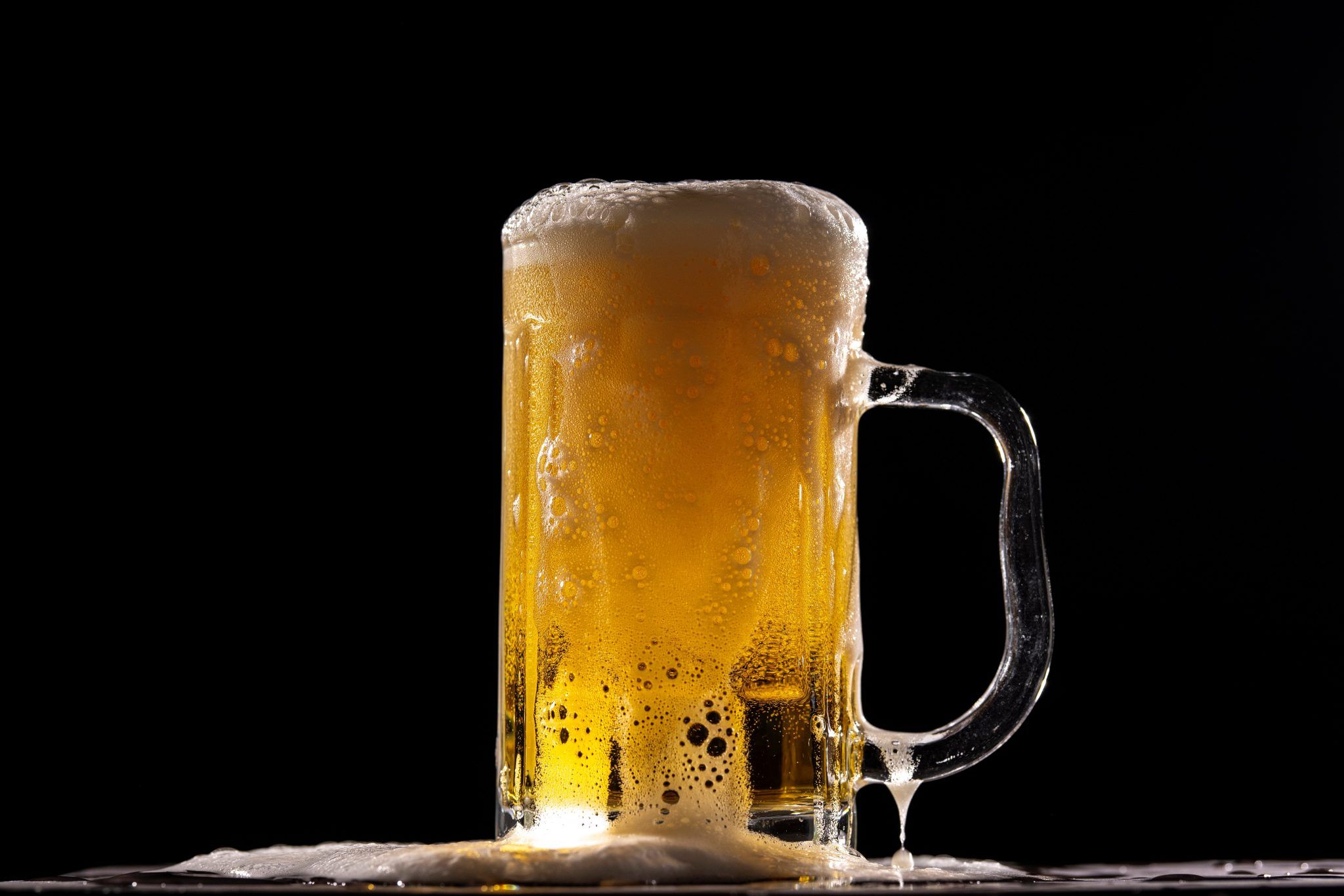 Via Unsplash[/caption]
They found that their participants' ability to work out the duration of the word-classification task was unaffected by alcohol consumption - however, a higher dose of booze did result in participants reporting that time flew by quicker.
The study ultimately suggests that alcohol alone is enough to change our perception of time, and actually, social activity has nothing to do with it.
So basically, next time the day seems never-ending, get yourself to the pub or better yet, a bottomless brunch.
Via Unsplash[/caption]
They found that their participants' ability to work out the duration of the word-classification task was unaffected by alcohol consumption - however, a higher dose of booze did result in participants reporting that time flew by quicker.
The study ultimately suggests that alcohol alone is enough to change our perception of time, and actually, social activity has nothing to do with it.
So basically, next time the day seems never-ending, get yourself to the pub or better yet, a bottomless brunch.
Science

Science
Science
Science
Supercomputer predicts exactly when humans will become extinct
That doesn’t sound good A supercomputer has predicted when humans will become extinct. Though climate change is always in the news and becoming a priority for governments to tackle, its long term impacts could be devastating not just on the environment but on our species as well. With this in mind, a supercomputer has analysed […]
Science
9 months ago
You need to ejaculate this many times in a month to prevent prostate cancer, experts say
Bashing the bishop is a scientifically proven way of staying healthy Regular ejaculation is something of a cheat code when it comes to shielding yourself from cancer. In a study published by European Urology, which followed 32,000 men for 18 years, scientists discovered the magic number of 21 times per month will reduce the chances […]
Science
9 months ago
Science
The world could end in 25 years, says Oxford scientist
Science