






News

Share
Published 14:11 11 Feb 2026 GMT
Updated 14:11 11 Feb 2026 GMT
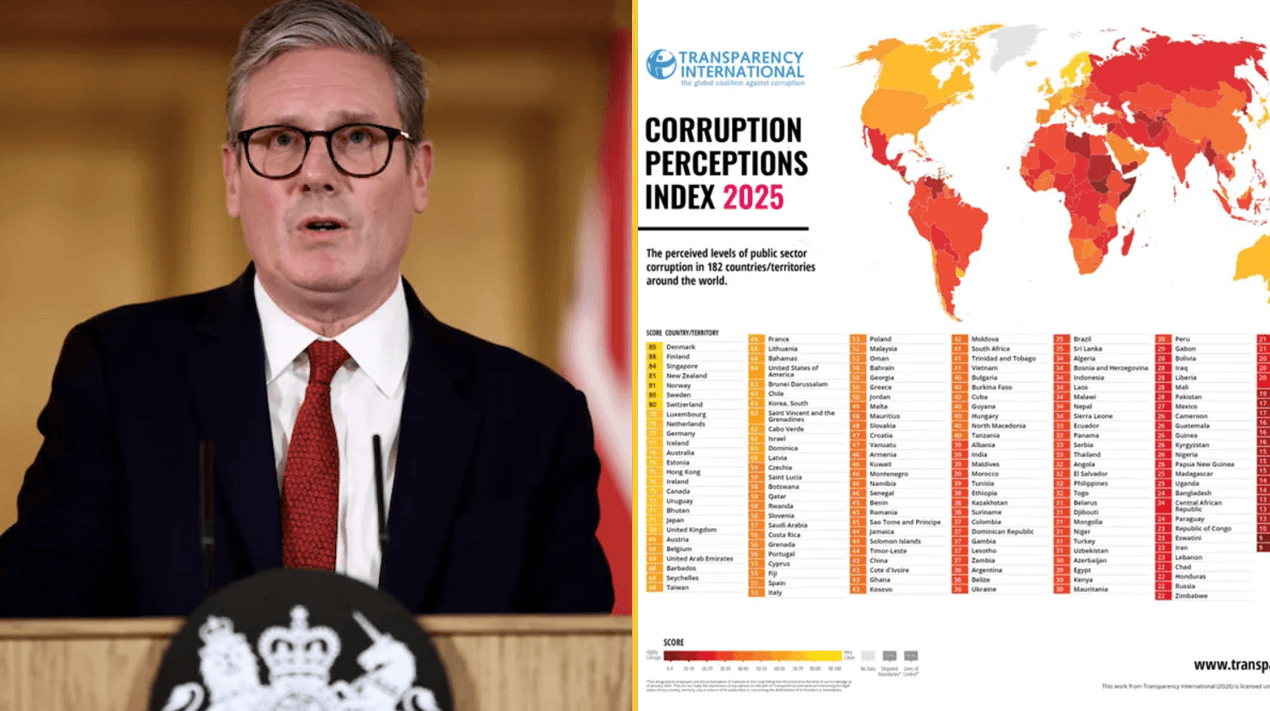
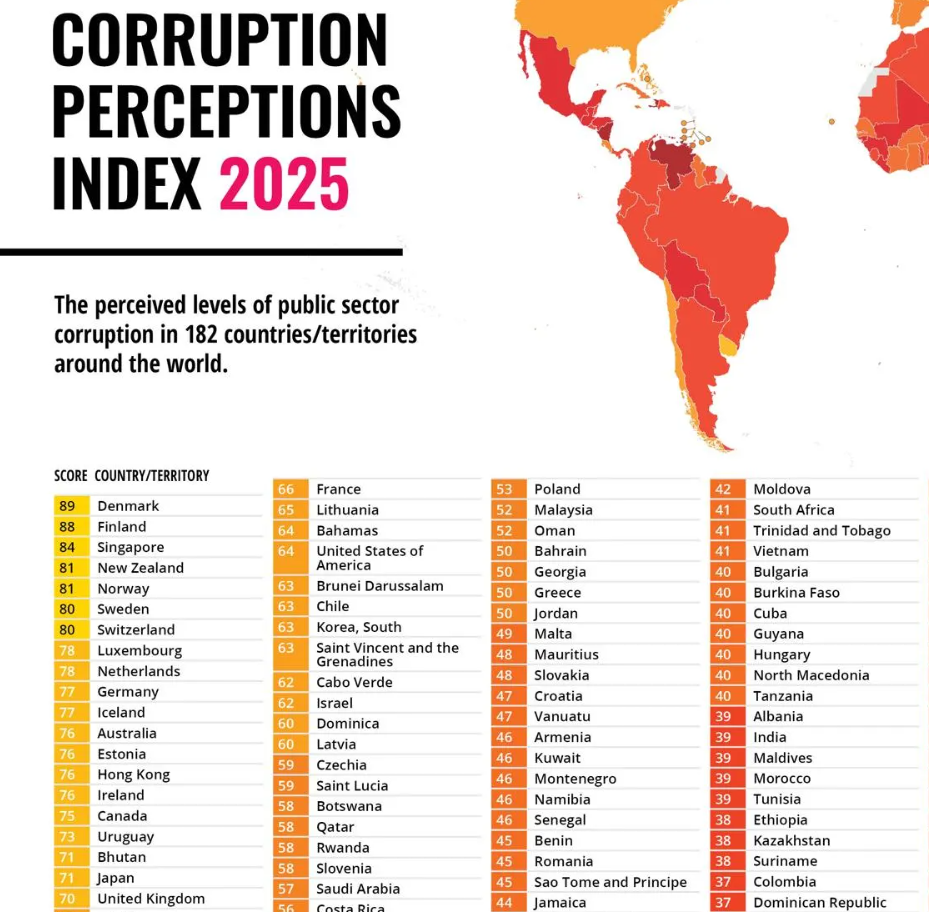
Britain has fallen to a new low on a global corruption index, as it has now slipped to 70 on a scale of 0 to 100.
It comes amid political turmoil over party donations and as Keir Starmer’s government is struggling to recover from the Epstein-Mandelson scandal.
This marks the lowest point for the UK since the major revamp of the Corruption Perceptions Index in 2012.
On the list, Britain remains 20th for the third year in a row, while in the past it ranked in the top ten positions.
A total of 182 countries are rated on their perceived levels of public sector corruption by Transparency International, a campaign group which is dedicated to exposing corruption.
“In the UK, the past decade has seen major domestic scandals, the awarding of favours and honours to political donors, and MPs working as lobbyists for paying clients and corrupt regimes”, Transparency International said in a statement.
The report comes as the UK government finds itself “mired in scandal” over the relationship between convicted sex offender Jeffrey Epstein and the former UK ambassador to the US, Peter Mandelson, the authors highlighted.
Political parties that spend record amounts on election campaigning are other issues that damaged Britain’s corruption levels.
Over his appointment of Peter Mandelson as ambassador to the US, Prime Minister Keir Starmer has come under heavy scrutiny and there were calls for his resignation.
Mandelson was appointed in the role in spite of his friendship with the late sex offender, Jeffrey Epstein.
In the report, it is also noted that the world’s richest man, Elon Musk, had considered a $100 million (£85m) donation to Reform UK, Nigel Farage’s party.
Meanwhile, the Labour Party has been accused of soliciting cash in return for political access, with donor Waheed Alli receiving a privileged pass to Downing Street.
“For three years running, the UK has been stuck at 20th place in the Corruption Perceptions Index with a score that continues to deteriorate. This persistent decline is not a temporary blip – it risks becoming a defining feature of our political culture”, Daniel Bruce, chief executive of Transparency International UK said.
Explore more on these topics:
News

News
News

News
The worst places to live in the UK if you’re young and unemployed
Almost one million young people remain outside work, education or training The number of job opportunities available to young people varies dramatically across the UK, with new research revealing that some areas have far fewer suitable vacancies than others. A study by the Institute for Public Policy Research (IPPR) found that the gap is particularly […]
News
1 day ago
UK council confirms plan to hike council tax by ‘outrageous’ 94%
It would be the highest council tax hike in English history A UK borough’s council has confirmed that it is has plans to increase council tax by 94%, the highest council tax hike in English history, as per The Times. The council said that the increase would be necessary unless the government considered cuts to […]
News
1 day ago
News
UK city street evacuated after bomb squad deployed
News