








News

Share
Published 15:01 13 Oct 2026 BST
Updated 15:01 13 Oct 2026 BST
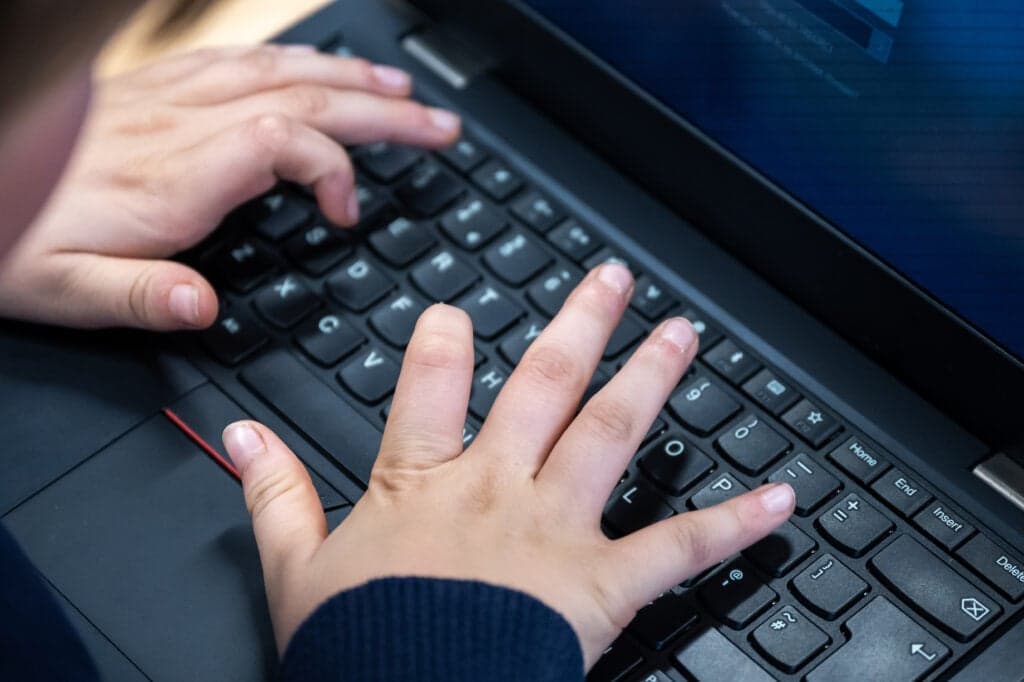
A group of more than 150 doctors has called on the government to limit screen use in schools, raising concerns that children’s vision and development could be suffering as a result.
The medical professionals, including GPs and paediatricians, have written to Education Secretary Lucy Powell and Health Secretary Yvette Cooper, demanding action to reduce pupils’ exposure to tablets and laptops during lessons.
They argue that the long-term health effects of widespread classroom screen use remain unclear, despite almost one million children reportedly using screens for most of their schoolwork.
To support their concerns, the doctors highlighted an international review of 276 studies involving 5.4 million people.
The research found that short-sightedness among children increased from roughly one in four in 1990 to almost 36% in 2023.
The signatories say health professionals are already seeing children who require glasses, hearing aids and speech therapy, and fear that the way technology is being used in schools could be adding to these problems.
They want ministers to reduce the time pupils spend looking at screens and respond to the issues doctors say are increasingly presenting in GP surgeries.
Their warning comes as the government prepares new guidance on the use of screens in classrooms.
Ministers have argued that technology can support learning when it is used appropriately.
The issue also forms part of a broader debate over children’s relationship with digital tools, following the government’s new rules on young people using ChatGPT in the UK.
Becky Foljambe, an NHS GP who set up the campaign group Health Professionals for Safer Screens, raised the issue during an appearance on BBC Radio 4’s Today programme.
She said parents had not been given the choice to “opt out” of what she considers excessive screen use in schools, warning that the approach could prevent children from “just not thriving” in their education.
She also challenged the suggestion that children need to spend long periods using screens to prepare for working life, dismissing it as a “lazy argument”. She stated: "They also need their sleep, their eyesight, they need rest, they need ability to critically think and appraise."
Foljambe also questioned whether genetics alone could explain the sharp increase in childhood short-sightedness, describing the rise as an “explosion” that “cannot be put down to genetics alone”.
Explore more on these topics:

News

News

News

News
Flight operations suspended at Nuremberg airport after plane signalled it was being hijacked
The aircraft transmitted the code to signal a hijacking Nuremberg Airport in Germany has suspended all flight operations due to an “aviation emergency”. The aircraft involved in the incident is reported to be a Corendon Airlines Boeing 737 coming from the Greek island of Corfu, as per German media. This plane landed at 12.16pm as per […]
News
2h
Man dies after horror fall from rollercoaster at US theme park
The incident was caught on the ride’s souvenir camera A man has died and several others have been injured following a horrifying incident on a rollercoaster at Six Flags in Georgia. The man was riding Goliath when he reportedly fell from his seat, hitting the coaster several times before landing on the roof of a […]
News
4h

News
UK entertainment giant shuts down website and cancels orders after entering administration
News