





News

Share
Published 16:06 2 Mar 2026 GMT
Updated 16:31 2 Mar 2026 GMT
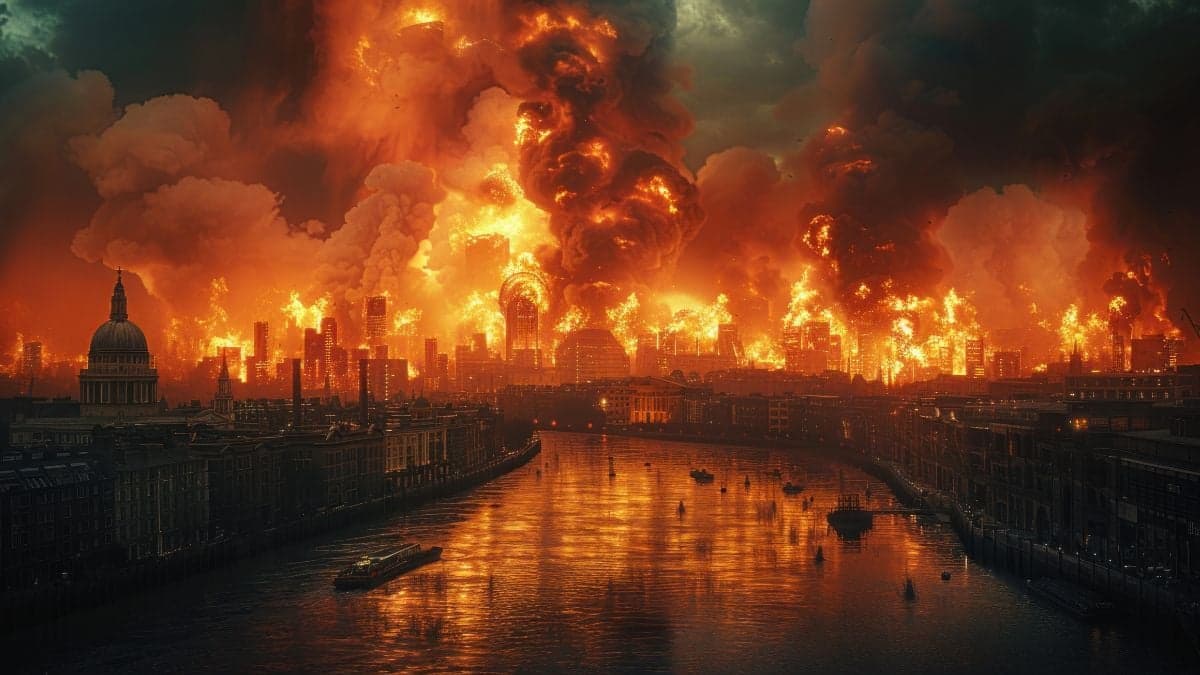
Many people have been wondering where in the UK the safest place would be when confronted with a nuclear attack.
The US and Israel launched attacks on Iran over the weekend, with Trump claiming this was to "ensure that Iran does not obtain a nuclear weapon".
"We're going to destroy their missiles and raze their missile industry to the ground. It will be totally again obliterated," he said.
Amid the outbreak of conflict, anxieties are growing about what this could mean for those in the UK.
In the case of things escalating, it's clear that you would want to know how best to protect yourself, particularly in the case of a nuclear threat.
The best way to protect yourself and your loved ones before, during, and after a nuclear attack is "getting inside the centre of a building or basement," according to the International Commission on Radiological Protection (ICRP).
They said: "On August 6, 1945, Mr Eizo Nomura was in the basement of a building in Hiroshima, about 170 meters from ground zero. He survived the atomic bombing and died in 1982 at the age of 84. Most people within a few hundred metres of a nuclear detonation are not likely to survive, especially if unprepared.
"Be inside before the fallout arrives. After a detonation, you will have 10 minutes or more to find an adequate shelter before fallout arrives. If a multi-story building or a basement can be safely reached within a few minutes of the explosion, go there immediately. The safest buildings have brick or concrete walls. Underground parking garages and subways can also provide good shelter."
Taking this advice into account, it would seem logical for Londoners to seek refuge in its extensive underground network, with the tube tunnels providing shields from the blast. This is also where Londoners took cover during the Blitz in World War II, per the Mirror.
However, some people claim that modern nuclear weapons are much more powerful than the bombs of World War II, suggesting that even the 58-metre-deep Hampstead station might still be too close to the surface.
There are many factors to bear in mind, including radiation, fireball, air blast, and thermal radiation, with varying radii of up to 153 km2, 197 km2, 1,420 km2, and 12,960 km2 respectively. While these distances are subject to change depending on weather conditions, property researchers have identified 20 locations that might be safer than major UK cities, as listed by EMoov in 2017.
The safest location in the UK is believed to be the remote island of Foula in the Shetland Isles in the event of a nuclear attack.
Below is the full list of the safest places in the UK:
This article contains affiliate links. We may earn a commission on any sales generated from it.
Households are being urged to buy one appliance to prepare for the potential outbreak of WW3, or other mass disruptions like another pandemic, internet outages, and extreme weather conditions.
The government runs a website to prepare the public for national disruptions including war, extreme weather and cyber attacks.
As part of its list of advice for households, people are being told to buy one crucial item – battery or wind-up radios.
This is because this type of radio doesn’t need power from the National Grid, which may be disrupted during a crisis.
You can get a wind-up radio from Amazon here for your home emergency kit. And it can be used for activities such as hiking and camping.
Explore more on these topics:
Bluetongue outbreak hits record high on British farms
Why warmer weather is fuelling the bluetongue outbreak A bluetongue outbreak has produced 2,485 cases across Britain this year, already more than the combined total of the previous three seasons, Defra figures show. Defra recorded 2,031 cases in England, 414 in Wales and 40 in Scotland. That is in the three months since the 2026-27 […]
News
2 days ago
Flydubai axe attack: UAE says co-pilot tried to seize jet
Flydubai axe attack investigation widens The Flydubai axe attack saw an Omani co-pilot attack the captain mid-flight, UAE prosecutors say, in a bid to seize control of the jet to Tel Aviv. The co-pilot attacked the captain with a crash axe mid- flight trying to force his way into the cockpit, prosecutors in the United […]
News
2 days ago
News
First British service death in Ukraine named by coroner
News