








News

Share
Published 11:20 29 Jan 2023 GMT
Updated 11:27 29 Jan 2023 GMT
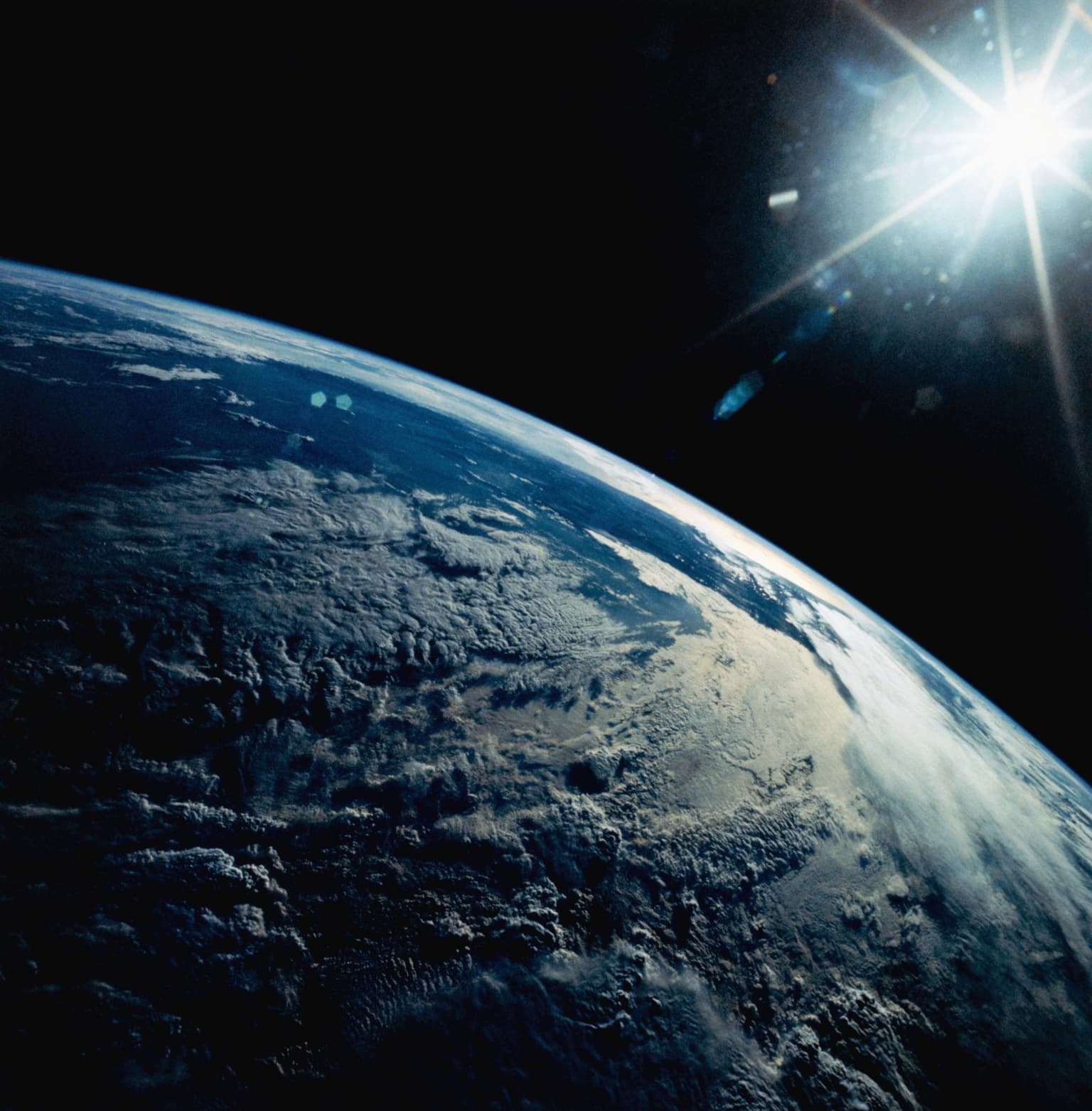
The Earth is formed of the crust, the mantle and the inner and outer cores. The solid inner core is situated about 3,200 miles below the Earth’s crust and previous research has found that it is separated from the semi-solid mantle by the liquid outer core.
This allows the inner core to rotate at a different speed from the rotation of the Earth itself.
With a radius of almost 2,200 miles, Earth’s core is about the size of Mars. It consists mostly of iron and nickel, and contains about about one-third of Earth’s mass.
The speed of the inner core's rotation - which is driven by the magnetic field generated in the outer core - and whether this changes over time has remained unclear though.
Knowing how the inner core rotates could shed light on how these layers interact and other processes deep in the Earth, CNN reports.
[caption id="attachment_375850" align="alignnone" width="2048"] A NASA image illustrating the structure of the Earth's core (iStock)[/caption]
In research published in the journal Nature Geoscience, Yi Yang, associate research scientist at Peking University, and Xiaodong Song, Peking University chair professor, studied seismic waves from earthquakes that have passed through the Earth’s solid inner core.
In particular, they looked at the difference in the waveform and travel time of these quakes. They found that since 2009, the paths of the seismic waves – that previously showed significant travel time variation – exhibited “little change”.
“Here we analyse repeated seismic waves from the early 1990s and show that all of the paths that previously showed significant temporal changes have exhibited little change over the past decade,” they wrote in the study.“We show surprising observations that indicate the inner core has nearly ceased its rotation in the recent decade and may be experiencing a turning-back."
“When you look at the decade between 1980 and 1990 you see clear change but when you see 2010 to 2020 you don’t see much change,” added Song.
This indicated that the Earth's inner core rotation has slowed. This may be linked to an overall slowing down of the inner core rotation as part of a seven-decade oscillation caused by a tug and war between two forces acting on the inner core - electromagnetic force and gravity force. The variations in the Earth's core rotation are associated with changes in observations on the Earth’s surface, like the length of a day, according to the study. “This multidecadal periodicity coincides with changes in several other geophysical observations, especially the length of day and magnetic field,” they noted. Speaking to Vice, Yang and Song said: “The mantle and inner core are both highly heterogeneous, so the gravity between their structures tends to drag the inner core to the position of gravitational equilibrium, so called gravitational coupling.”Explore more on these topics:

News

News

News

News
Loch Lomond crash: boy, 16, and man, 80, killed in light aircraft crash near Drymen
Major incident declared after fatal plane crash Two people have died following a light aircraft crash in Stirlingshire, prompting a major emergency response and an investigation into the circumstances surrounding the incident. The victims were a 16-year-old boy and an 80-year-old man, who were both found dead after the aircraft came down near Drymen on […]
News
13h
White House press secretary Katie Zacharia fired after five days in position
It comes after Trump said she should ‘reconsider’ her job White House press secretary Katie Zacharia has been fired after five days in the position, as per reports. Zacharia had a tough start to life in the role, hosting a briefing on Tuesday which caused a lot of criticism and raised a number of questions. […]
News
1 day ago
Piers Morgan urges Trump to side with Ukraine against ‘modern-day Hitler’ Putin
News