







News

Share
Published 12:52 29 Jun 2022 BST
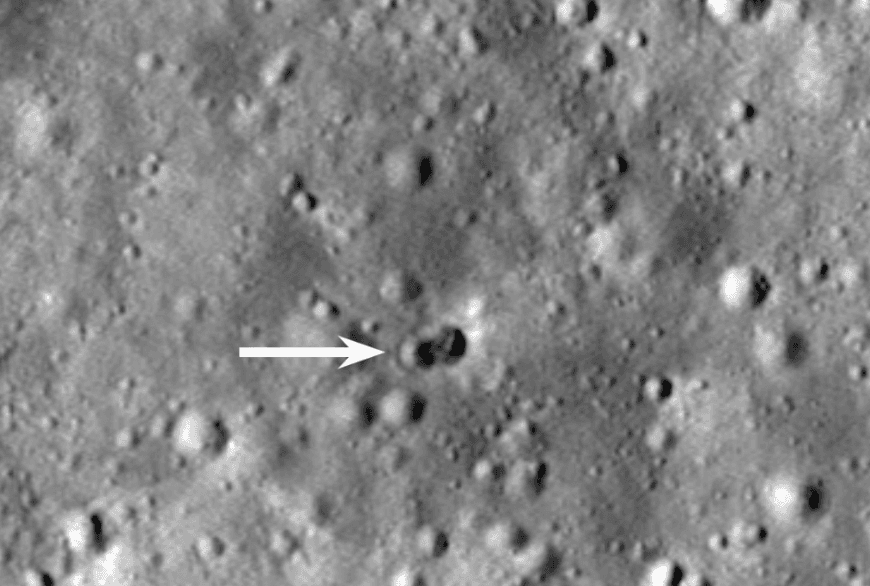
 A rocket body impacted the Moon on March 4, creating a double crater roughly 28 meters wide in the longest dimension. (Photo: NASA/Goddard/Arizona State University)[/caption]
Confirming the news on Friday, NASA explained: "Surprisingly the crater is actually two craters, an eastern crater (18-meter diameter, about 19.5 yards) superimposed on a western crater (16-meter diameter, about 17.5 yards).
"The double crater was unexpected and may indicate that the body had large masses at each end. Typically a spent rocket has mass concentrated at the motor end; the rest of the rocket stage mainly consists of an empty fuel tank."
A rocket body impacted the Moon on March 4, creating a double crater roughly 28 meters wide in the longest dimension. (Photo: NASA/Goddard/Arizona State University)[/caption]
Confirming the news on Friday, NASA explained: "Surprisingly the crater is actually two craters, an eastern crater (18-meter diameter, about 19.5 yards) superimposed on a western crater (16-meter diameter, about 17.5 yards).
"The double crater was unexpected and may indicate that the body had large masses at each end. Typically a spent rocket has mass concentrated at the motor end; the rest of the rocket stage mainly consists of an empty fuel tank."
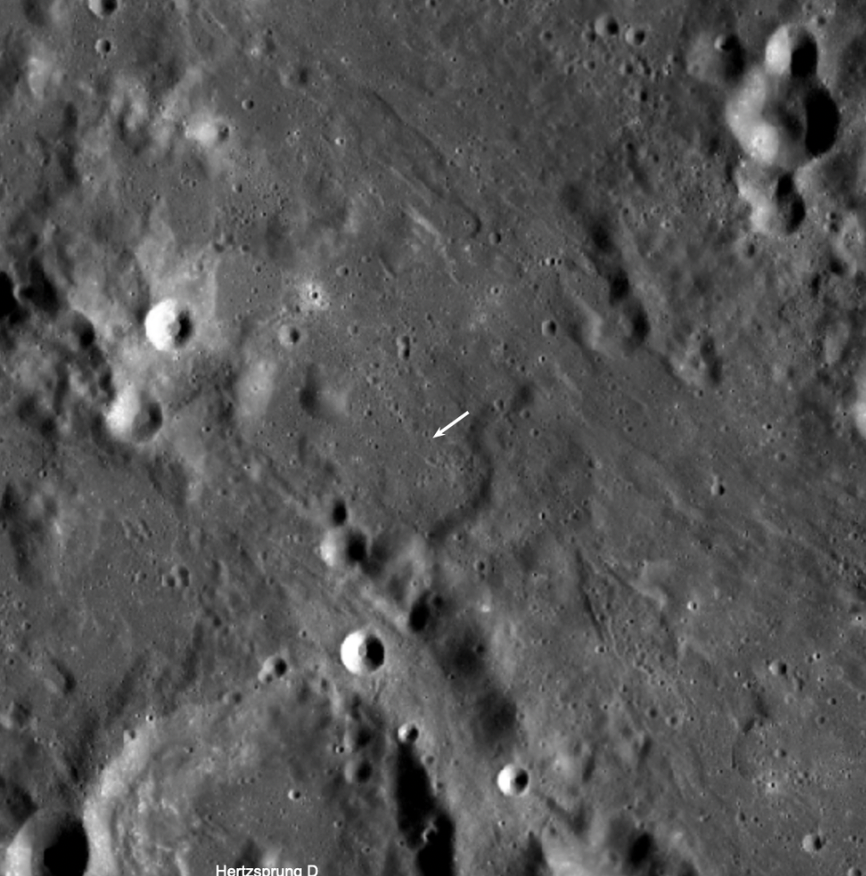 The new crater is not visible in this view but its location is indicated by the white arrow (Credits: NASA/Goddard/Arizona State University)[/caption]
While the spacecraft is yet to be claimed, Astronomer Bill Gray believes he knows where the spacecraft came from.
Speaking to the BBC last year shortly after the rocket was identified, he said: "I'm 99.9 percent sure it's the China 5-T1," though China has denied this claim.
Related links:
The new crater is not visible in this view but its location is indicated by the white arrow (Credits: NASA/Goddard/Arizona State University)[/caption]
While the spacecraft is yet to be claimed, Astronomer Bill Gray believes he knows where the spacecraft came from.
Speaking to the BBC last year shortly after the rocket was identified, he said: "I'm 99.9 percent sure it's the China 5-T1," though China has denied this claim.
Related links:

News

News
News

News
Rejoining EU could boost UK economy by £150bn – Goldman Sachs
Analysts from the bank reckon a ‘Breturn’ would boost the UK economy by 2-5% by the start of the next decade. Goldman Sachs has said rejoining the European Union could boost the UK economy by as much as £150 billion. In a note to clients, the Wall Street bank voiced its support for Andy Burnham’s […]
News
1 day ago
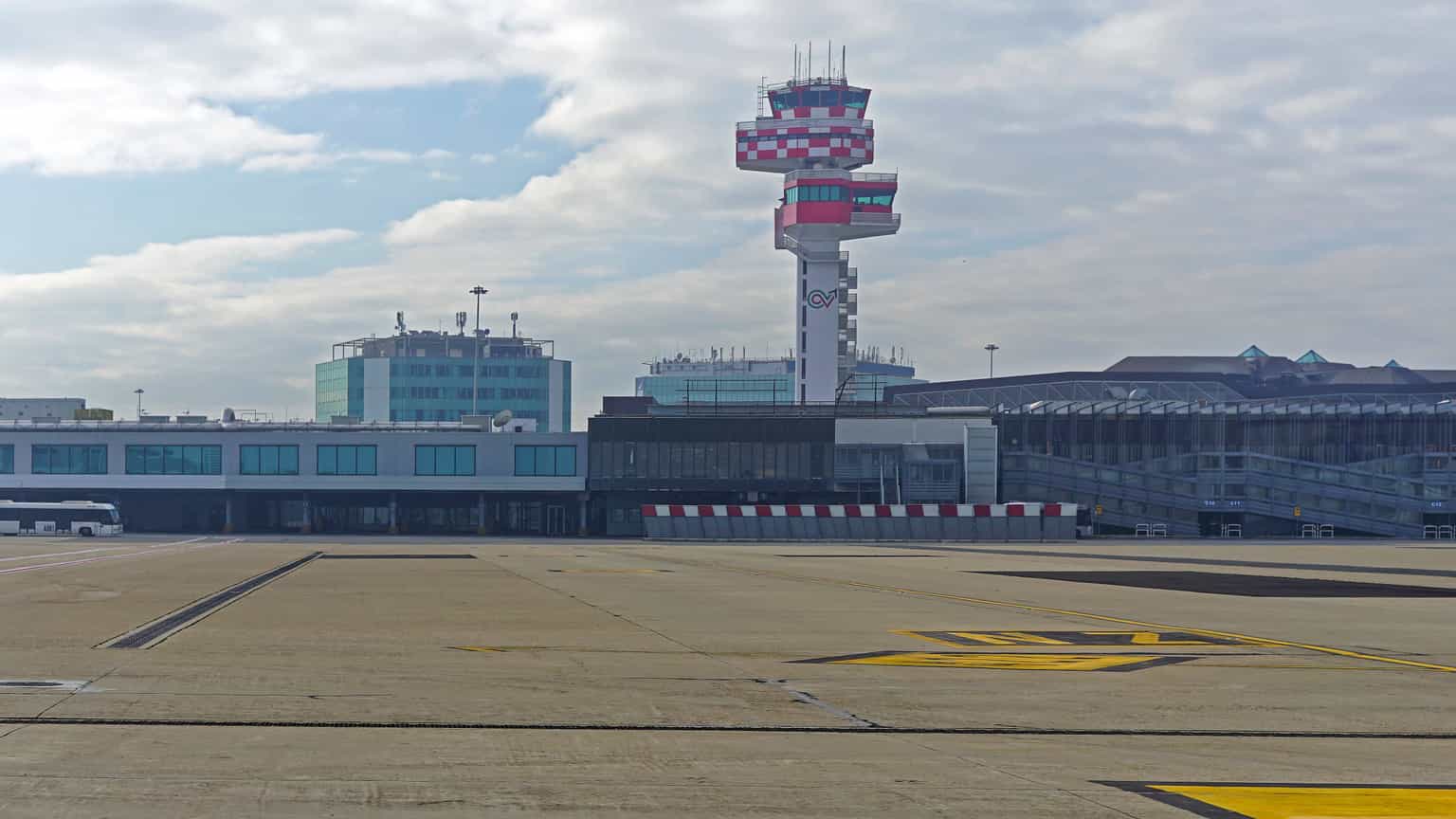
Travel chaos across Italian airports after air traffic control failure
Air traffic management capacity has been slashed in half Travel chaos has struck Italy’s major airports after an air traffic control failure left capacity halved on Friday. Hundreds of flights across Italy have been delayed and over 100 cancelled due to “anomalies” with air traffic control (ATC) services. The Italian air navigation service provider, ENAV, […]
News
1 day ago

News
Abu Dhabi Royal was found passed out on street in London after ‘cocaine binge’
News