








News

Share
Published 10:25 14 Aug 2026 BST
Updated 10:55 14 Aug 2026 BST
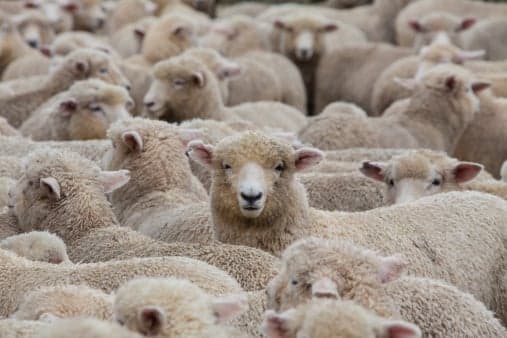
After Scotland’s first ever case was discovered last week, two more cases were detected on a second farm yesterday, STV News reports.
This comes after the Kirkmabreck farm in Dumfries and Galloway found an infected lamb last Saturday, 8 August.
Both farms are now under restrictions while other animals are being tested. All three infected animals have been euthanised.
It is said that midges likely infected with the disease were carried from Northern Ireland, the Republic of Ireland, Isle of Man or northern England.
Scotland’s Chief Veterinary Officer, Sheila Voas, said that the cases weren’t “particularly surprising.”
She added: “If it is an infected plume of midges which have blown in from affected areas, it would have been very unlikely it would just be one midge and one animal that was affected.
"What we do know is that having looked closely at the first farm, we haven't found anything else, and we are hoping that will be the same with the second."
The Johnson family, who run the Kirkmabreck farm, assured in a Facebook post that the infected lamb was confined from other animals.
“During the visit the vet noticed ulceration inside her mouth,” said the family
“We all agreed that even though the closest reported case of Bluetongue was a long distance from us, the sensible and responsible thing to do was to report it as a possibility.”
The family also clarified that “all the stock we have was purchased locally, within 20 miles (32 km) of where we live.”
The family, crestfallen, stated that they “literally cannot believe that we have only been here four months and this is what we are faced with.”
“This is not at all how we wanted to introduce ourselves to the locals but like the vet said, we haven't done anything wrong and it is all a case of rather bad luck,” they added.
It is notable to inform that there have been 353 cases of bluetongue in the UK in the 2026-27 season alone.
Voas said nearby the infected and nearby farms are being investigated, however they show “quite a small number” of infected animals.
“Vaccination remains the best way of preventing disease in animals and I encourage all farmers to discuss this with their vets,” said a Scottish Government spokesperson.
Signs of infected animals typically include nasal discharge, redness and swelling of the lips and nose area, reluctance to stand, and decreased production of milk.
The disease does not affect people or food, however farmers with infected livestock are forced to euthanise the animals.
With surging food prices and animal products caused by soaring heat and droughts, farmers are met with yet another thwart.
Farmers and livestock owners are encouraged to report any suspicion of disease to local authorities.

News

News

News

News
Piers Morgan urges Trump to side with Ukraine against ‘modern-day Hitler’ Putin
‘Give this guy the support he needs to defeat the modern-day Hitler.’ Piers Morgan has urged Donald Trump to side with Ukraine and Volodymyr Zelensky in their war against Russia. There have been strained tensions this week between Ukraine and the US as Trump has cosied up to Vladimir Putin with diesel deals and sham […]
News
1 day ago
Execution of mass killer will not be livestreamed, Trump says
The US president has done a U-turn The execution of a Nidal Malik Hasan will no longer be livestreamed, US President Donald Trump has said. Last week, it was announced that the execution of Hasan, the man behind the Fort Hood shooting, would be livestreamed. The shooting, which happened in Texas in 2009, killed 13 […]
News
1 day ago
Royal Mail ‘on brink of collapse’ as 400 workers reportedly quit every week
News