







News

Share
Published 08:23 25 Feb 2026 GMT
Updated 08:51 25 Feb 2026 GMT
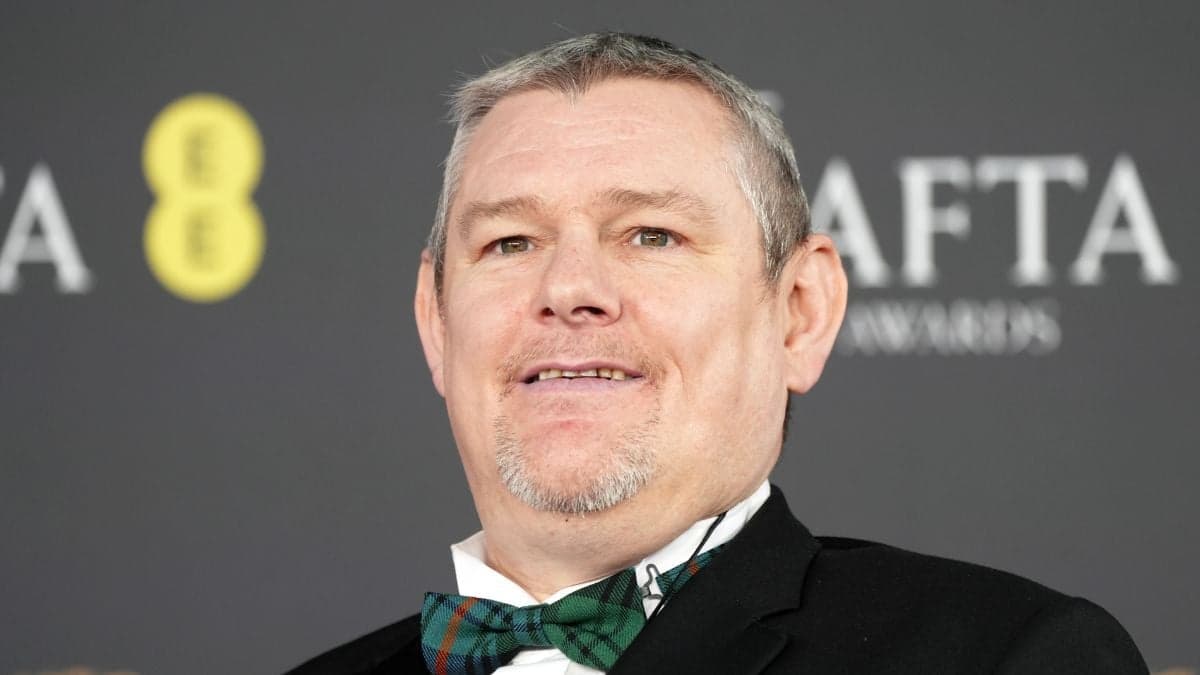
Scottish Tourette's syndrome activist and the real-life inspiration for I Swear, John Davidson, made headlines at the 79th BAFTA Awards when his involuntary vocal tics interrupted the ceremony, most notably during an outburst of racial slurs. At the same time, Sinners stars Michael B. Jordan and Delroy Lindo were presenting an award.
Now, Davidson has spoken out, offering his perspective on the incident in an email interview with Variety.
Davidson has also since reached out to the studio handling "Sinners" to directly apologise to Jordan, Lindo, and production designer Hannah Beachler.
When asked how he would explain Tourette's to people who think it's 'just swearing', John Davidson said the media often focuses on coprolalia, the involuntary use of obscene or offensive language, which affects only 10–30% of people with Tourette’s and that it's not a criterion for diagnosis.
Davidson emphasised that the real challenge is the widespread misconceptions surrounding the condition.
"Understanding the full range of Tourette’s helps reduce stigma and supports everyone living with the condition," he wrote.
He went on to describe it as one of the hardest tics to manage, causing distress and leading to discrimination and isolation. He then admitted that he can't even begin to explain how upset and distraught he has been as the impact from Sunday sinks in.
On whether he knows a tic is coming, Davidson explained that he has almost no ability to suppress them. In stressful situations, tics can burst out involuntarily, like “a gunshot,” leaving him with no control over the timing or content.
When tics involve slurs or taboo words, he stressed that they “have absolutely nothing to do with what I think, feel or believe.” He described them as involuntary neurological misfires that do not reflect his character or values.
He explained that Tourette’s can make your body or voice do things you don't mean, and sometimes those tics land on the worst possible words.
He wrote: "I want to be really clear that the intent behind them is zero. What you’re hearing is a symptom — not my character, not my thought, not my belief.
"Tourette’s can feel spiteful and search out the most upsetting tic for me personally and for those around me. What you hear me shouting is literally the last thing in the world I believe; it is the opposite of what I believe.
"The most offensive word that I ticked at the ceremony, for example, is a word I would never use and would completely condemn if I did not have Tourette’s."
He also explained the circumstances surrounding his tics at the ceremony that took place this past Sunday.
"I would appreciate reports of the event explaining that I ticked perhaps 10 different offensive words on the night of the awards.
"The N-word was one of these, and I completely understand its significance in history and in the modern world, but most articles are giving the impression I shouted one single slur on Sunday."
Considering what went into the decision to attend in person, Davidson wrote: "This was an awards ceremony that featured six nominations connected to a film that told the story of my life living with Tourette’s. This has been a three-year project for me, working with the writer, director, production and cast. I am also an active executive producer on the film. I had as much right to attend as anyone," per Variety.
Reflecting on the BAFTA Awards, Davidson said that StudioCanal and BAFTA should have anticipated his tics and edited the broadcast accordingly.
He also noted that being seated close to a microphone was not ideal, especially taking into account that he might tic.
When he realised the room could hear his tics, he explained he felt a wave of shame and embarrassment.
"Initially, my tics were noises and movements, but the more nervous I got, the more my tics ramped up. When my coprolalia tics came out, my stomach just dropped," Anderson wrote.
"As always, I felt a wave of shame and embarrassment hit me all at once. You want the floor to swallow you up. I wanted to disappear. I wanted to hide — just get away from all the eyes."
He ultimately left the auditorium and watched the rest of the awards from a private room when he realised his tics could be heard on stage.
Asked about progress in public understanding of Tourette’s, Davidson said education has improved, but misunderstandings remain. He pointed to negative reactions after the BAFTAs as evidence of how much work is still needed to raise awareness, per Variety.
Explore more on these topics:

News

News

News
News
The worst places to live in the UK if you’re young and unemployed
Almost one million young people remain outside work, education or training The number of job opportunities available to young people varies dramatically across the UK, with new research revealing that some areas have far fewer suitable vacancies than others. A study by the Institute for Public Policy Research (IPPR) found that the gap is particularly […]
News
1 day ago
UK council confirms plan to hike council tax by ‘outrageous’ 94%
It would be the highest council tax hike in English history A UK borough’s council has confirmed that it is has plans to increase council tax by 94%, the highest council tax hike in English history, as per The Times. The council said that the increase would be necessary unless the government considered cuts to […]
News
1 day ago

News
UK city street evacuated after bomb squad deployed
News