






News

Share
Published 11:50 16 Sept 2026 BST
Updated 11:51 16 Sept 2026 BST
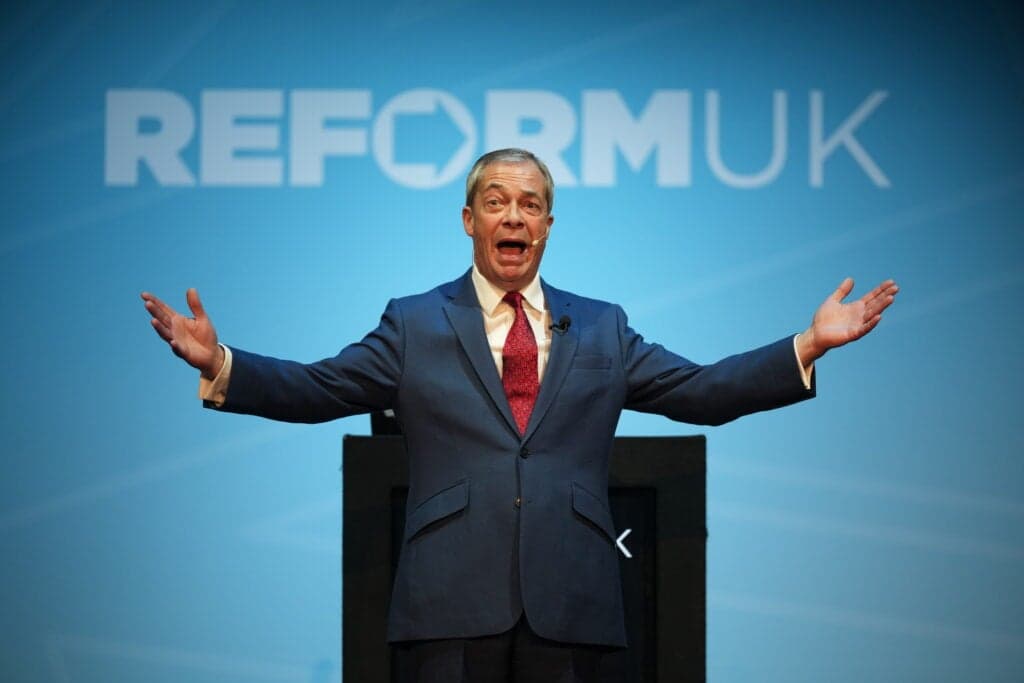
A think tank helping shape Reform UK’s economic agenda is preparing to publish a major blueprint focused on cutting taxes, reducing financial regulation and reshaping how the government approaches economic growth.
The Centre for a Better Britain is expected to call for inheritance tax to be scrapped altogether and capital gains tax to be gradually phased out, according to people familiar with the draft.
According to Bloomberg, the report is also expected to push for greater freedom for the City to take financial risks, with the aim of encouraging investment and boosting growth.
Such changes could have a significant impact on the Treasury’s finances. Inheritance tax raised £8.5 billion in the last financial year, while capital gains tax brought in a record £24 billion in 2024-25.
The proposals are set out in a roughly 200-page draft, which is due to be published next Wednesday.
Dubbed “Big Bang 2.0”, the document takes its name from the major financial deregulation introduced under Margaret Thatcher during the 1980s.
Reform deputy leader Richard Tice commissioned the report last year, setting up four groups to look at regulation, growth finance, tax and pensions.
The work has also involved business figures from sectors including private equity and investment banking.
One of the blueprint’s central proposals concerns the Treasury itself, with the think tank considering whether the department should be split up and its responsibility for economic growth transferred elsewhere in government.
That could create tensions within Reform, particularly with Robert Jenrick, the party’s Treasury spokesman, who has repeatedly argued that the department should retain a clear growth remit.
He made the case for this during Reform’s conference in Birmingham earlier this month.
Jenrick also set out his own tax plans at the conference, proposing to increase the tax-free personal allowance, which he said would benefit millions of people.
He also ruled out further changes to inheritance tax, arguing that it affects only around 36,000 families.
The proposals would extend beyond tax and financial regulation, with the blueprint also expected to address the Bank of England and the UK’s pension system.
Farage and Tice have previously raised the possibility of reducing the interest commercial banks receive on the reserves they hold with the Bank of England.
The report is expected to return to the issue, with one possible recommendation being a tiered payment system based on the model used by the European Central Bank.
Pension reform is another key area under consideration. One proposal would see the government guarantee local government pension schemes, provided they commit to investing some of their funds in local projects.
The plan has reportedly faced resistance from industry figures, but is understood to remain a priority for Tice.
The blueprint’s plans for the Treasury also have similarities to ideas considered earlier this year by Prime Minister Andy Burnham.
Since entering office in July, Burnham has kept the Treasury in place while establishing a new Manchester base for the prime minister’s office, known as No. 10 North. He described the new operation as the government’s “situation room for growth”.
Although CFABB was created last year with Reform’s economic programme in mind, it is not working exclusively with the party and is expected to hold discussions with other political parties too.
The recommendations have not yet been finalised, however, and the roughly 200-page report could still be changed before its publication.
Explore more on these topics:


News

News
News

News
UK city street evacuated after bomb squad deployed
Residents were evacuated overnight A UK city neighbourhood had to be evacuated overnight after a bomb squad was deployed to a property. Following a forensic search which began last week, a 35-year-old woman was charged under the Explosive Substances Act on Monday and had been remanded in custody. Police say a cordon is expected to […]
News
1 min
Who is Robert Kraft, the American billionaire who dropped Macklemore from Ed Sheeran tour
Ed Sheeran was put in a position to drop the American rapper ahead of the Boston show Macklemore recently got dropped by fellow artist and musician Ed Sheeran during his Loop Tour for the release of his latest in 2025. The Loop Tour began early this year in January in Auckland, New Zealand, and is […]
News
32 min
UK household bills forecast to rise substantially next January, experts reveal
News