





News

Share
Published 18:47 9 Jul 2025 BST
Updated 08:18 10 Jul 2025 BST
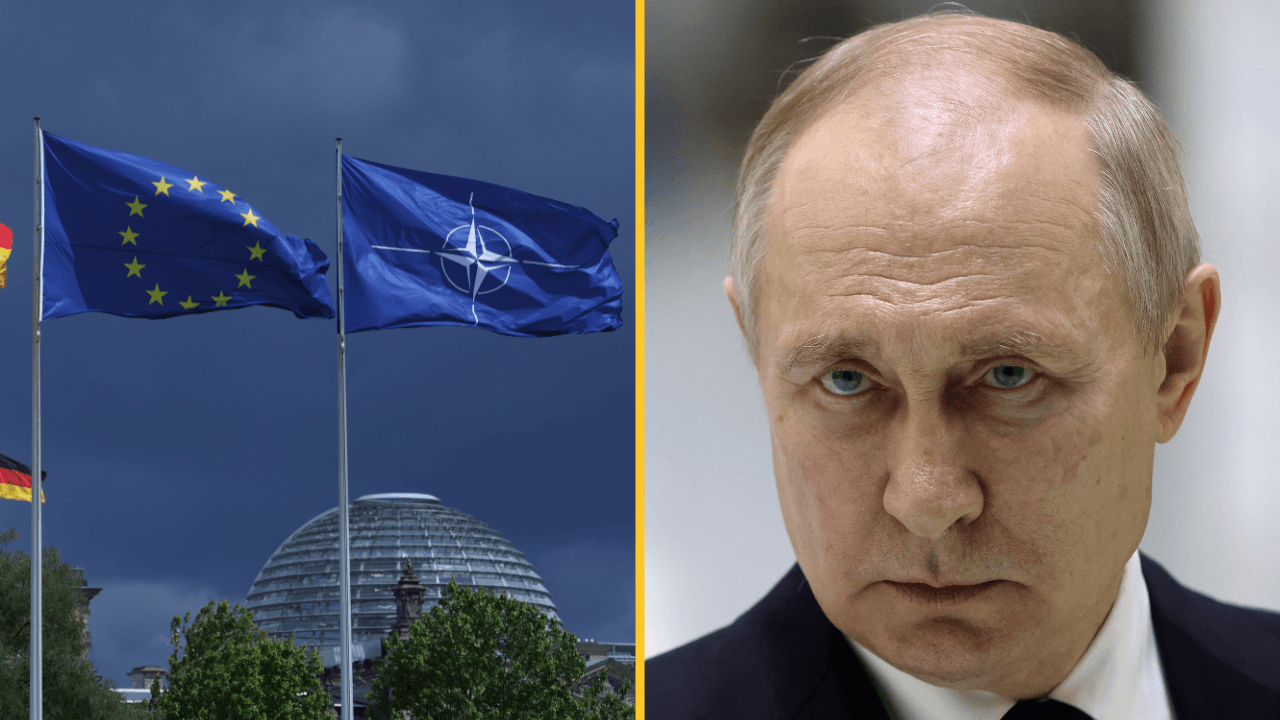
The EU have announced today that it is to begin stockpiling essentials such as food, water, fuel and medicine amidst fears of a Putin led invasion of Europe.
The European bloc is concerned that the Russian leader could launch an invasion within just five years and therefore are taking measures in foresight of such a scenario.
EU crisis management commissioner Hadja Lahbib said: "The goal is very simple to make sure that essential supplies that keep our societies running, especially the ones that save lives, are always available.
"The more we prepare, the less we panic."
It was emphasised that the plan will allow the EU to navigate moments of crisis "such as energy blackouts, natural disasters, conflicts or pandemics."
This will involve establishing a network between nations to allow for better coordination or resources.
Levels of preparedness vary amongst EU nations, notably depending on proximity or importance in opposition to Russia.
Member states, such as Finland, living under Moscow's shadow on the EU's eastern border, have long worked on having society ready for potential conflict.
Lahbib said: "Of course, if you have a 1,000 kilometres border with Russia, you will feel threatened potentially by a war.
"But it is normal, that in Spain, they feel that wildfires are more likely to happen. There is no one size fits all."
She insisted that regardless of the crisis being one of Russia's threat, wildfires or blackouts, the impact on citizens can be similar.
"People are without energy, and that's why we need to stockpile items everywhere in the European Union," she said.
Only a few months ago, the EU advised all households to keep a three-day survival kit which includes water, food and flashlights ready to go in emergency situations.
Other threats the EU have identified includes natural disasters, human-induced disasters and health emergencies (like industrial accidents and pandemics), and hybrid threats (like cyberattacks and disinformation campaigns).
No longer part of the EU, Britain appears to be lagging behind its European neighbours in terms of civil planning.
In November, the chief of the UK defence staff said that Britain does not have "some of the civil aspects or planning aspects" that other allies have "as part of their traditions".
However, the country has since begun taking measures to bring itself up to speed with the its NATO allies.
In June, the government published its National Security Strategy 2025, looking at "Security for the British People in a Dangerous World".
The report noted: "For the first time in many years, we have to actively prepare for the possibility of the UK homeland coming under direct threat, potentially in a wartime scenario."
It pledged a multitude of new measures which include stronger border, more robust critical national infrastructure and the promotion of economic ties with the EU and US.
Furthermore it intended to rebuild a defence industrial base and protecting other sovereign capabilities.
Meanwhile, the government is also investing £1bn to prepare the UK for "biological incidents, accidents and attacks".

News
News

News
News
UK airport faces potential shutdown as staff prepare for three-day walkout
Union blames airport management for ongoing dispute Anyone flying from Leeds Bradford Airport this weekend might want to keep an eye on their booking, as a three-day strike could throw a spanner in the works. The planned walkout is due to take place from Friday, October 16, through to Sunday, October 18, with check-in staff, […]
News
just now
Sally Rooney’s books pulled from UK shelves over her backing of Palestine Action
Rooney and her publisher end supply of books to UK retailers Sally Rooney’s books are set to gradually disappear from the UK market after the Irish novelist and her publisher, Faber, agreed to stop supplying new copies. The decision follows the UK government’s move to proscribe Palestine Action as a terrorist organisation in July 2025. […]
News
4 min
Trump blasted for sharing AI video of himself fighting tiger that killed man
News