







News

Share
Published 11:24 16 May 2024 BST
Updated 11:24 16 May 2024 BST
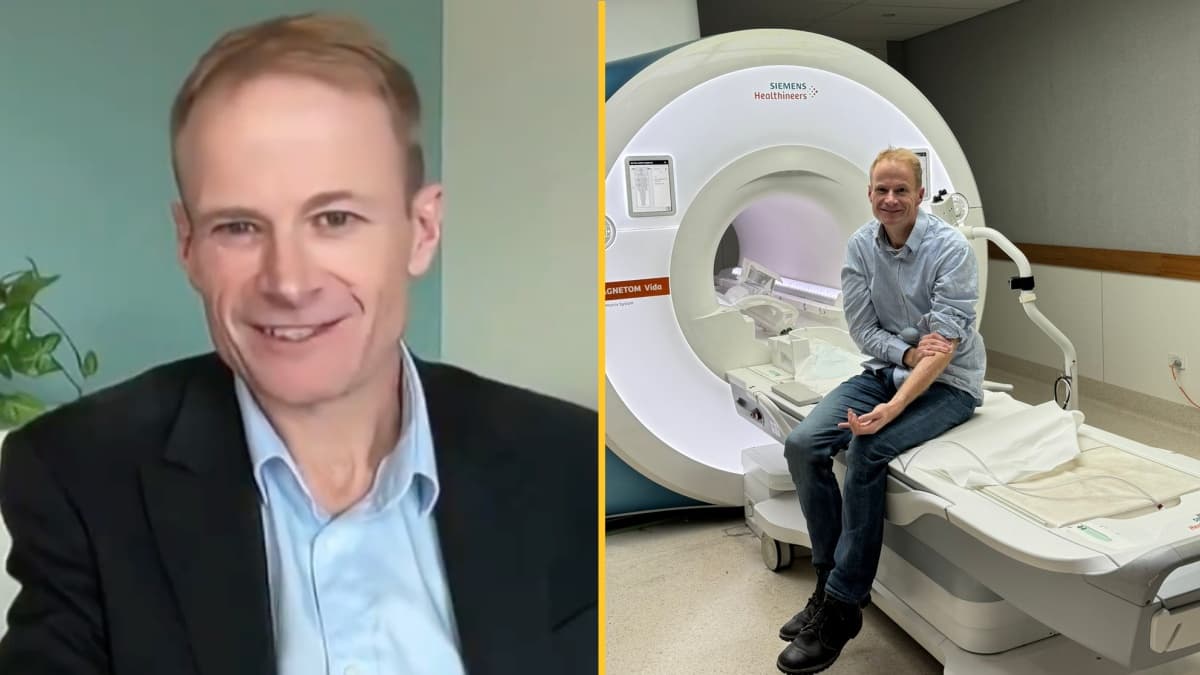
A doctor is still cancer-free a year after using a treatment based on his own research.
Australian pathologist Richard Scolyer underwent a world-first treatment for glioblastoma - a highly invasive form of brain cancer - which was based on his own ground-breaking research on melanoma.
Prof Scolyer's cancer is so aggressive that most patients survive less than a year.
But his latest MRI scan showed there had been no recurrence of the tumour.
In a post on X, he wrote: "I had brain #MRI scan last Thursday looking for recurrent #glioblastoma (&/or treatment complications).
"I found out yesterday that there is still no sign of recurrence. I couldn’t be happier!!!!! Thank you to the fabulous team looking after me so well especially my wife Katie & wonderful family!"
Speaking to the BBC this week, the 57-year-old said: "To be honest, I was more nervous than I have been for any previous scan.
"I'm just thrilled and delighted... couldn't be happier."
Prof Scolyer and his colleague and friend Georgina Long are two of Australia's most respected medical minds, and were together crowned Australian of the Year in January. Their work on melanoma and how immunotherapy has had a transformational impact on the prospects for melanoma patients across the world.
Immunotherapy uses the body's immune system to attack cancer cells. Thanks to the pair's research, half of melanoma patients globally are now effectively cured, up from less than 10 per cent.
Prof Long is now using the same research to treat Prof Scolyer in the hope of finding a cure for his cancer.
Prof Long and her team found that immunotherapy works better when a combination of drugs is used, and administered before surgery to remove a tumour. So, Prof Scolyer became the first brain cancer patient ever to have combination, pre-surgery immunotherapy last year.
At the same time, he was the first person to be given a vaccine personalised to his tumour's characteristics, in turn boosting the effectiveness of the drugs administered.
Although the first two months were difficult as he experienced epileptic seizures, liver issues and pneumonia, Prof Scolyer now says he feels the best he has "in yonks."
Whilst his brain cancer is not "cured", he said it is "just nice to know that it hasn't come back yet, so I've still got some more time to enjoy my life with my wife Katie and my three wonderful kids."
And his progress is giving hope to the medical community that Profs Long and Scolyer could be on the verge of another incredible breakthrough in cancer research.
The duo have a scientific paper under review, and hope the experimental treatment will soon translate into clinical trials for glioblastoma patients.
Speaking about their research, Prof Long said: "We've generated a whole heap of data, to then make a foundation for that next step, so that we can help more people.
"We're not there yet. What we have to really focus on is showing that this pre-surgery, combination immunotherapy type of approach works in a large number of people."
Related links:

News

News

News

News
Macklemore’s ‘Free Palestine Tour’ date in Dublin sells out in just five minutes
Dublin fans had minutes to grab Macklemore tickets Macklemore’s Dublin show has completely sold out, with fans claiming tickets for the rapper’s Free Palestine tour disappeared within minutes. The 3Arena gig, set for 26 October, was announced last week alongside dates in Paris and London. But anyone hoping to grab a ticket had to move […]
News
4h
Ferry passengers travelling from UK to Ireland face passport checks for first time in 100 years
New checks cover several major Ireland to Britain routes Anyone catching a ferry between Ireland and Great Britain now needs to think twice before heading to the port, with passengers on several routes being asked to have their passports ready. The new requirement came into effect on Monday and covers sailings from Dublin and Rosslare, […]
News
5h

News
USS Klakring sunk off Scotland during joint UK-US drill
News