






News

Share
Published 13:38 2 Jan 2026 GMT
Updated 15:49 2 Jan 2026 GMT
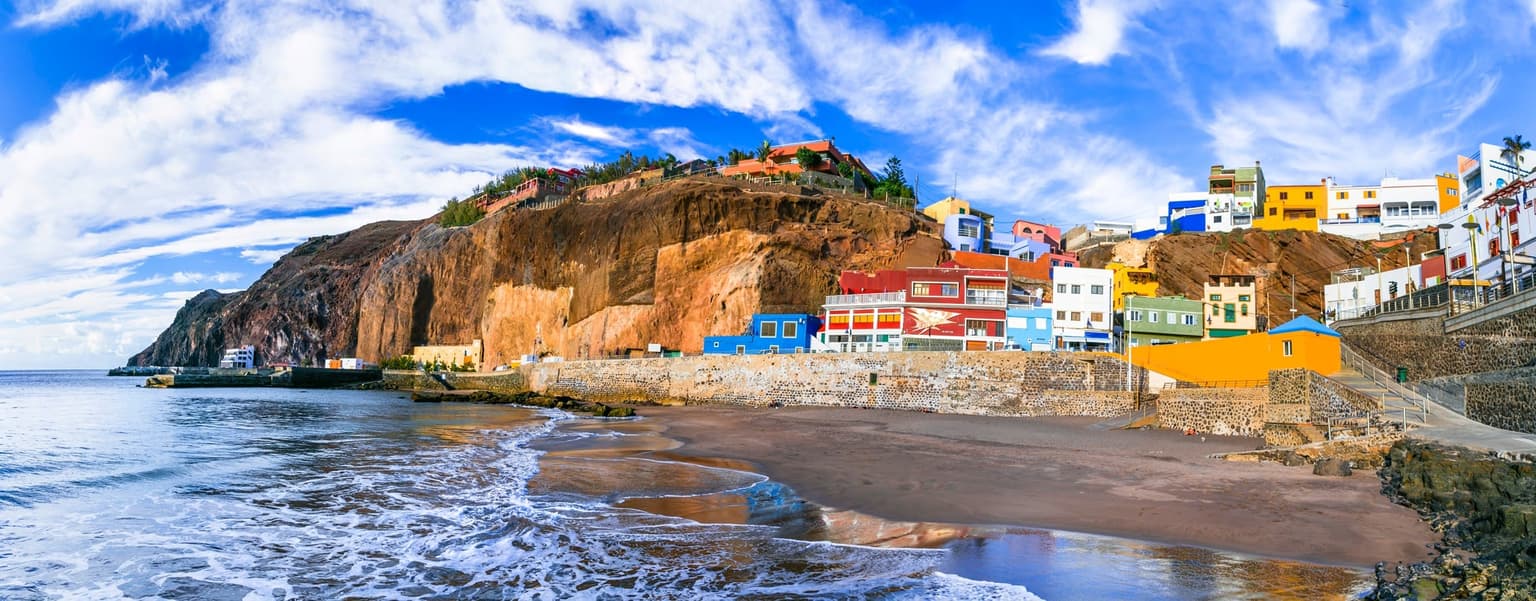
A travel guide has placed the Canary Islands in the ‘No List’ for next year, while it highlights the destinations facing pressure on the land and the local communities.
The annual list by Fodor’s serves as a travel guide which encourages travelling, but at the same time also warns about restraint by tourists.
It must be said, however, that a boycott is not what this annual list is calling for.
Its main purpose is to make you really consider your next destination as a tourist, and skip the places which most definitely need a break from people.
In fact, the locals are wondering about how much more tourism they can handle.
During the first six months of 2025, the eight islands saw more than 7.8 million tourists visiting and there were more than 27 million airport passengers. Compared with 2024, this was a 5% increase.
Some 35% of GDP is accounted for by the tourism in the archipelago of 2.2 million people, and 40% of the population is employed because of it. However, the popularity can prove costly.
Unregulated property development, in addition to mass tourism, has led to thousands of people protesting in the streets of Tenerife, Gran Canaria and Lanzarote, over the past two years.
Locals have said that they have had enough, while marching under the banner ‘Canarias tiene un límite‘ (The Canaries have a limit).
That being said, this is a problem that exists elsewhere.
Southern Europe, too, is facing similar issues, particularly places such as Venice, Barcelona and the islands of Santorini and Mykonos in Greece, that seem to struggle with overtourism.
According to experts, the problem lies with people not varying their holiday destinations.
A senior lecturer at the Institute of Tourism and Hospitality at the University of East London, Zoe Adjey, told Metro that “one of the issues coming up time and again for Spain, Portugal and Italy in particular is that most tourists go to very few destinations”.
Further, she claimed that most of these countries, in fact, do not see much benefit from tourists.
As far as Canarians are concerned, for them, tourism is a lifeline but a burden at the same time.
Residents can now rent properties on sites such as Airbnb and Booking.com thanks to new government regulations, but rental prices and property values have risen to such a level that young locals can’t afford their own homes anymore.
While this makes things cheaper for tourists, it prices Canarians out of their homes.
Beaches, too, are often closed as a result of sewage runoff and pollution.
According to a report published by France24 earlier this year, wastewater with the amount equaling 40 Olympic-sized swimming pools is discharged each day into the sea around the Canary Islands, alarming environmental groups in Tenerife.
ATAN, one of the oldest such groups, told Fodor’s that “they are losing their identity, culture, and, ultimately, their right to exist as a community”.
Explore more on these topics:
Nottingham city centre closed after police officer shooting
BREAKING Police have confirmed that an officer has been shot in Nottingham city centre. According to Nottinghamshire Police, a man and woman have fled the scene while a firearm has been recovered. The two suspects have not been found yet, police said. They were approached by the officer in Angel Row shortly before the incident, […]
News
1 day ago
Wainwright fire kills several at Canada military base
A nearby hospital declared a mass-casualty emergency A fire at a Canadian military base has caused the deaths of several people and left dozens of others injured. The fire broke out at Canadian Forces Base Wainwright on Saturday evening, as per the BBC. According to Canadian broadcaster Global News, which cited unnamed military sources, at […]
News
1 day ago

News
Homes evacuated after ‘pipe bomb’ explosion in Belfast
News