








Lifestyle

Share
Published 11:40 7 Aug 2026 BST
Updated 13:28 7 Aug 2026 BST
For up to one minute and 40 seconds next Wednesday, the middle of the day will slip into an eerie dusk across a narrow slice of Europe and a lucky few British holidaymakers will be standing right underneath it.
The solar eclipse 2026 is Europe’s first mainland total eclipse since 1999, and it is now just days away.
Here is why it matters. Total eclipses are not, in themselves, vanishingly rare, one happens somewhere on Earth roughly every 18 months.
What makes this one stand out is where its shadow falls. For the first time in more than a century, the path of a total eclipse will cross mainland Spain, and for the UK it will be the deepest eclipse since 1999.
For anyone whose summer break happens to coincide with the right patch of southern Europe, the timing could hardly be better, a reminder of the UK's best solar eclipse in 30 years.
On Wednesday 12 August, the Moon will pass directly between the Sun and Earth, blocking out some or all of the Sun’s light and casting a dramatic shadow across parts of the Northern Hemisphere. Exactly how much of the Sun disappears depends entirely on where you are standing.
A total eclipse, where the Moon completely covers the Sun’s visible disc, will be visible from northern Spain, the north-east corner of Portugal, eastern Greenland, western Iceland, northern Russia and out over the Atlantic Ocean.
Those standing inside the narrow “path of totality” will see the landscape plunged into daytime darkness and the Sun’s glowing outer atmosphere, the corona, revealed around the black disc of the Moon. According to the European Space Agency, that spectacle will last for up to one minute and 40 seconds before daylight floods back in.
It is the moment of totality that draws eclipse chasers from around the world to the path each time, and this year northern Spain and Portugal put it within reach of a straightforward European holiday rather than a long-haul expedition.
Most of the UK will not fall inside the path of totality, but it will still get a striking show. Much of Europe, along with parts of Canada, the northern United States and north-west Africa, will experience a partial eclipse.
In many locations, including London, around 90 per cent of the Sun will be covered by the Moon. That is more than enough to be worth stepping outside for, with the Sun reduced to a thin, bright crescent at the peak of the event.
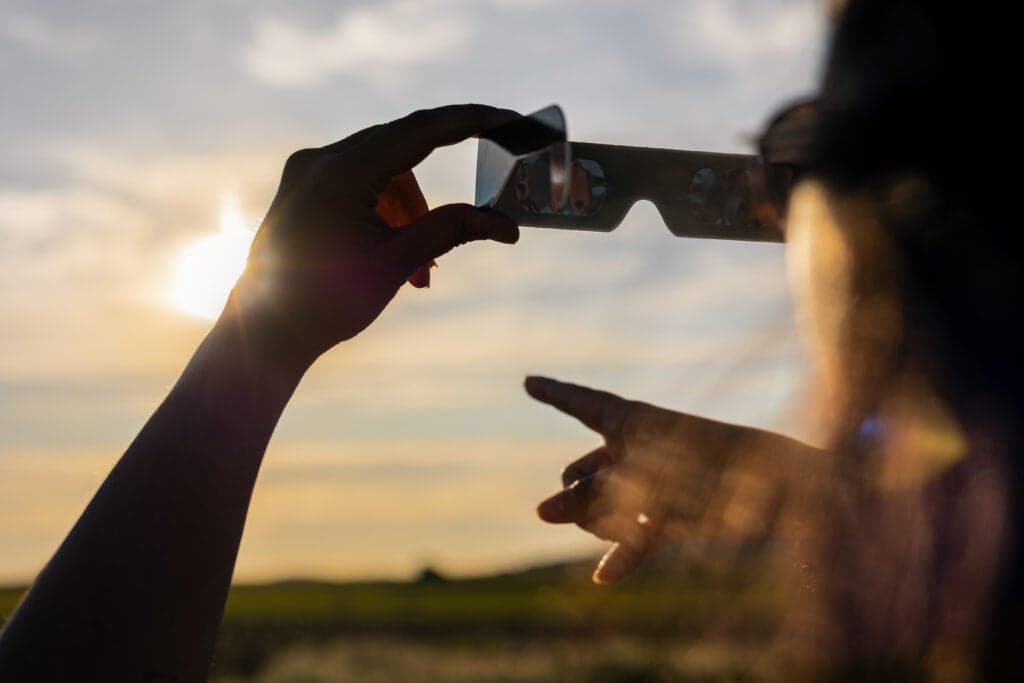
Whether you are chasing totality abroad or catching the partial eclipse from a back garden in Britain, the safety advice is the same: never look directly at the Sun without proper eclipse glasses or a certified solar filter. Ordinary sunglasses will not protect your eyes, no matter how dark they seem.
After 1999, Britons have waited more than a quarter of a century for an eclipse this deep, and a summer holiday in northern Spain or Portugal could put you in prime position, the Mirror reports. For the fortunate few in the path of totality, those 100 seconds of daytime darkness could prove the holiday memory of a lifetime.
Explore more on these topics:

Lifestyle
Lifestyle

Lifestyle

12 new conditions pharmacist can treat instead of your GP
Your local pharmacist may be the new go-to for these conditions The NHS has confirmed 12 conditions that pharmacists across the UK can now advise, treat and prescribe medication for before seeing your GP first. The Pharmacy First scheme comes as an alternative to the traditional process of treatment for certain conditions, aiming to ease […]
Lifestyle
5 days ago
Experts settle age-old debate: Is it cheaper to leave the heater on low all day?
Consumer rights activist Martin Lewis weighs on debate of which method is lighter on your pockets Weather in the UK has dropped significantly as we bid farewell to one of the hottest recorded summers to date, but it might not mean that we’re out of temperature issues. Many households are questioning once again which heating method […]
Lifestyle
5 days ago
Lifestyle
New mattress designed for sleeping through heatwaves is cheaper than you think
Lifestyle