









Lifestyle

Share
Published 16:32 3 Aug 2026 BST
Updated 09:07 4 Aug 2026 BST
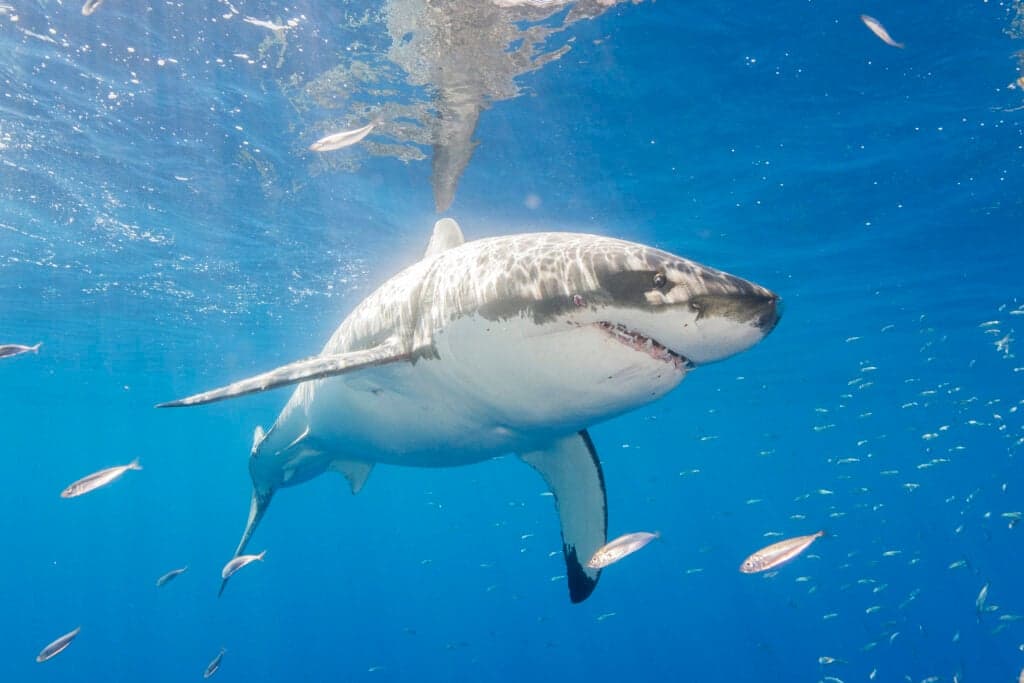
When lifeguards ordered swimmers out of the water at St Ouen's Bay in Jersey on 1 August, after a reported sighting of a shark thought to be between 10 and 12ft long, it sounded like a scene from a summer blockbuster.
But according to scientists, the reality is less dramatic and rather more permanent. Great white sharks, one expert warns, are "already here".
New research shows great white sharks are moving further north than ever before, part of a wider, climate-driven shift in where the ocean's top predators choose to live.
Experts even suggest we may start to see more hammerheads in UK waters, joining the great whites that are, in their words, already in the neighbourhood.
Two "bold carnivores" tracked by scientists at OCEARCH have travelled towards the northern tip of Newfoundland, off the eastern coast of North America.
A 9ft male great white named Quint has been moving north through the Strait of Belle Isle since 26 July, while a 10ft female called Bella was tracked in the area on 29 June.
Each summer, around 2,000 great whites are predicted to migrate from the North Atlantic to feed in Atlantic Canadian waters, drawn by plentiful food and conservation efforts that scientists say are helping numbers recover.
Data scientist John Tyminiki says that while great white numbers dwindled between 1970 and 1990, the northward push could be a sign of the population "rebuilding" and "expanding their range".
It is not all good news, though. The move is tied to a broader trend that sees marine animals edging towards the poles in search of their preferred temperatures as the climate changes.
"As the seas warm, things start to migrate. A shark who used to live at however many degrees of latitude can't stay there anymore because it's too hot. So they need to move somewhere typically cooler that's now increased to the temperature they like."
Tom 'The Blowfish' Hird, marine biologist
Hird, who bills himself as the world's only heavy metal biologist, says warming waters are steadily redrawing the map of where species can survive, nudging cold-water animals into seas that were once too chilly for them.
Despite the eye-catching headlines, experts are keen to stress this is not a reason to abandon the beach.
As one put it, "just because we don't see them doesn't mean they're not there", which is a reminder that these animals have long shared our waters largely unnoticed.
With Britons flocking to the coast during the UK heatwave, the message from scientists is one of respect rather than fear. The northward drift of great white sharks, first reported by Metro, may be one of the clearest signs yet of how quickly our warming seas are changing.
Explore more on these topics:

Lifestyle

Lifestyle

Lifestyle

Lifestyle
Experts settle age-old debate: Is it cheaper to leave the heater on low all day?
Consumer rights activist Martin Lewis weighs on debate of which method is lighter on your pockets Weather in the UK has dropped significantly as we bid farewell to one of the hottest recorded summers to date, but it might not mean that we’re out of temperature issues. Many households are questioning once again which heating method […]
Lifestyle
4 days ago
Ever felt guilty calling in sick for work? New research shines light on ‘presenteeism’
UK sees a wave of young workers feeling guilt for calling in sick when unwell The wave of young workers feeling ‘guilty’ to call in sick when unwell has raised a few questions on the matter and why so many in the age group feel this way. Are you part of the few that get […]
Lifestyle
4 days ago
Why more dads in England should consider Tom Life Insurance
Lifestyle