






Entertainment

Share
Published 12:01 6 Nov 2020 GMT
Updated 12:01 6 Nov 2020 GMT

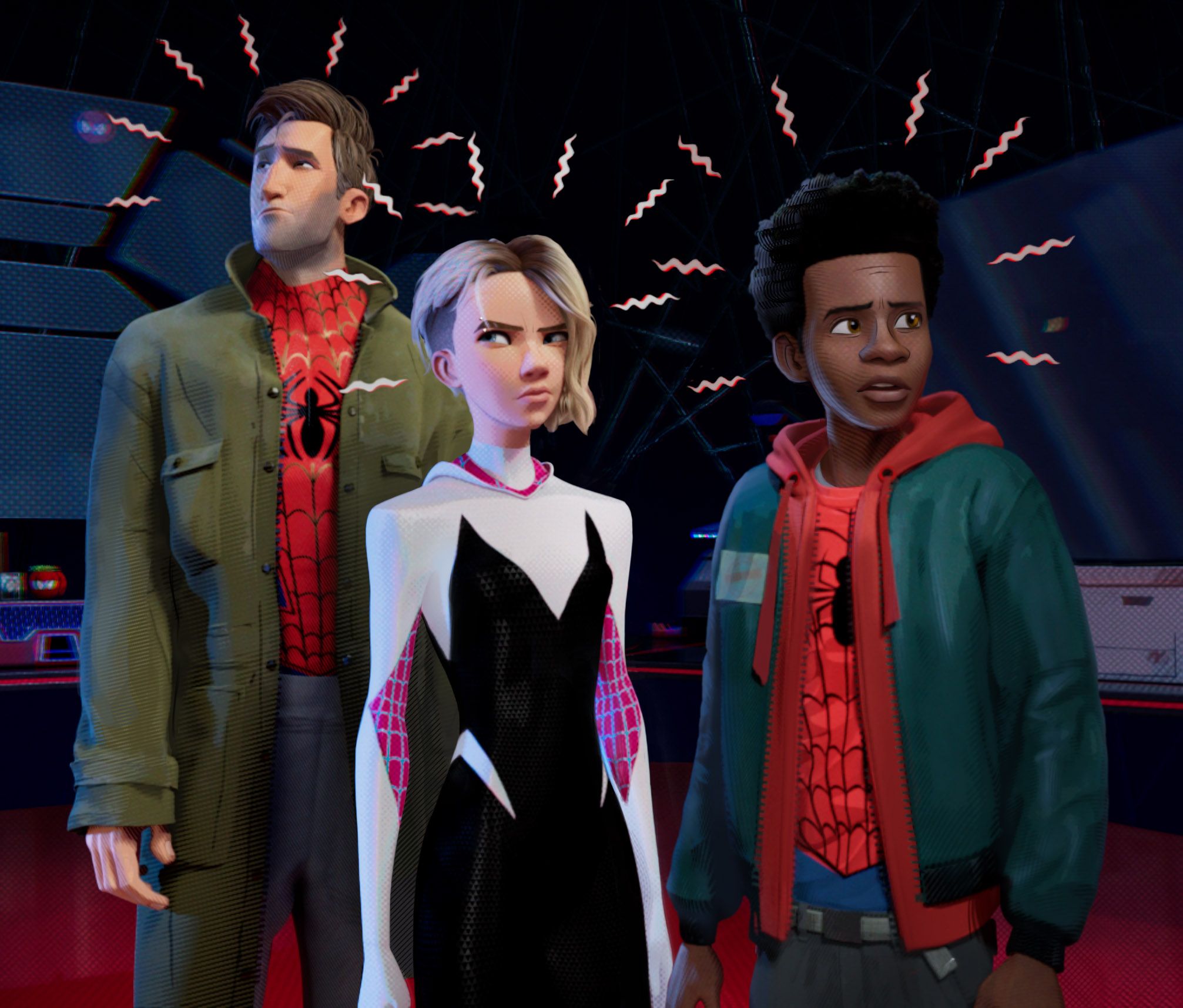 Spidey is more than just a comic book character now - for proof, you just have to look at how the scene from Avengers: Infinity War where Tom Holland turns into dust became one of Twitter‘s biggest memes.
And the idea of the character being adapted and remixed to become more than just what’s on the page or screen is something Into The Spider-Verse tackles head on.
“We live in a culture that for the last 30 years has been all about reinterpreting and remixing everything,” Rothman says. “It has reached just about every part of culture. So I think the idea of the multiverse is something we’ve all been living with for a while now.”
That approach extends to not just the film’s story, but also to its design. The animation is unique – three-dimensional and computer-generated, but with character design that resembles a tradition 2D cartoon, along with strange, jerky movement that feel almost like stop motion. The art style changes on a whim, with comic-book style panels and sound effects also littering the screen.
Spidey is more than just a comic book character now - for proof, you just have to look at how the scene from Avengers: Infinity War where Tom Holland turns into dust became one of Twitter‘s biggest memes.
And the idea of the character being adapted and remixed to become more than just what’s on the page or screen is something Into The Spider-Verse tackles head on.
“We live in a culture that for the last 30 years has been all about reinterpreting and remixing everything,” Rothman says. “It has reached just about every part of culture. So I think the idea of the multiverse is something we’ve all been living with for a while now.”
That approach extends to not just the film’s story, but also to its design. The animation is unique – three-dimensional and computer-generated, but with character design that resembles a tradition 2D cartoon, along with strange, jerky movement that feel almost like stop motion. The art style changes on a whim, with comic-book style panels and sound effects also littering the screen.
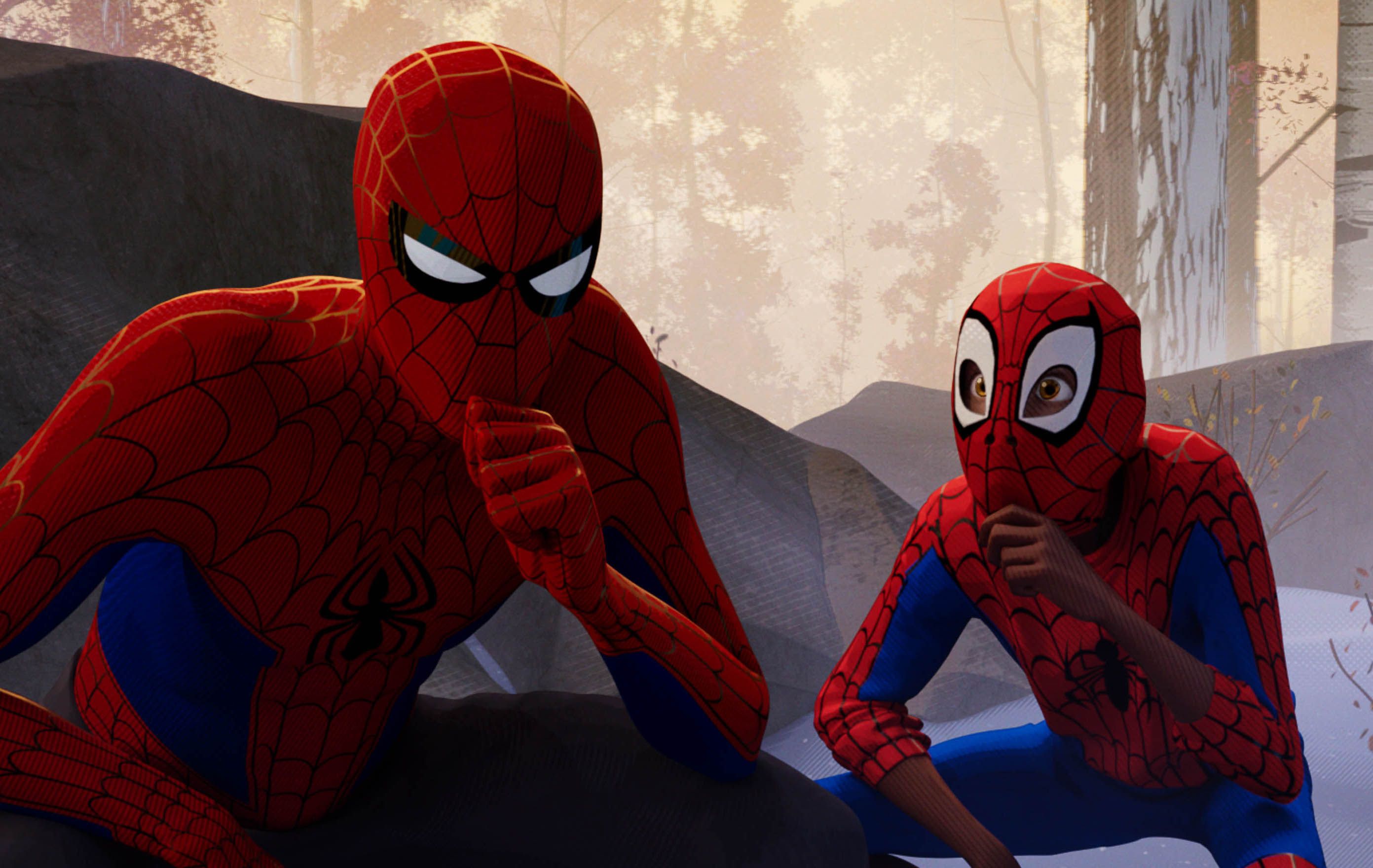 The filmmakers cite everything from fine art to anime as influences, but one of the most important was Miles and Peter’s home of New York.
Something that made Spider-Man and his alumni of Marvel Comics heroes stand out when they were created in the 1960s was that unlike the Superman of Metropolis or the Batman of Gotham, they were set in a recognisable, real world. Peter Parker was a regular kid from Queens.
Capturing this was vital for the filmmakers and they visited the city very early in production, taking hundreds of photos. “If I was a 13-year-old kid in Brooklyn walking down the street, what I would I see?” says Peter Ramsey, the film’s third and final director. “What would have an impact on me? What are touchstones? The details that are going to make this movie really feel like it is taking place in a real world.”
“We really tried to imbue it with the texture, and tone, and life, of the city,” adds Persichetti.
Nowhere is this better portrayed than by the Air Jordan 1 trainers that Miles wears in the film, which caused a sensation online when the first trailer was released.
One item of clothing told you so much about Miles’ character. “We don’t have any endorsement or sponsorship,” Rothman points out. “But it’s amazing how that simple choice helped a lot of people immediately identify with Miles.”
The filmmakers cite everything from fine art to anime as influences, but one of the most important was Miles and Peter’s home of New York.
Something that made Spider-Man and his alumni of Marvel Comics heroes stand out when they were created in the 1960s was that unlike the Superman of Metropolis or the Batman of Gotham, they were set in a recognisable, real world. Peter Parker was a regular kid from Queens.
Capturing this was vital for the filmmakers and they visited the city very early in production, taking hundreds of photos. “If I was a 13-year-old kid in Brooklyn walking down the street, what I would I see?” says Peter Ramsey, the film’s third and final director. “What would have an impact on me? What are touchstones? The details that are going to make this movie really feel like it is taking place in a real world.”
“We really tried to imbue it with the texture, and tone, and life, of the city,” adds Persichetti.
Nowhere is this better portrayed than by the Air Jordan 1 trainers that Miles wears in the film, which caused a sensation online when the first trailer was released.
One item of clothing told you so much about Miles’ character. “We don’t have any endorsement or sponsorship,” Rothman points out. “But it’s amazing how that simple choice helped a lot of people immediately identify with Miles.”
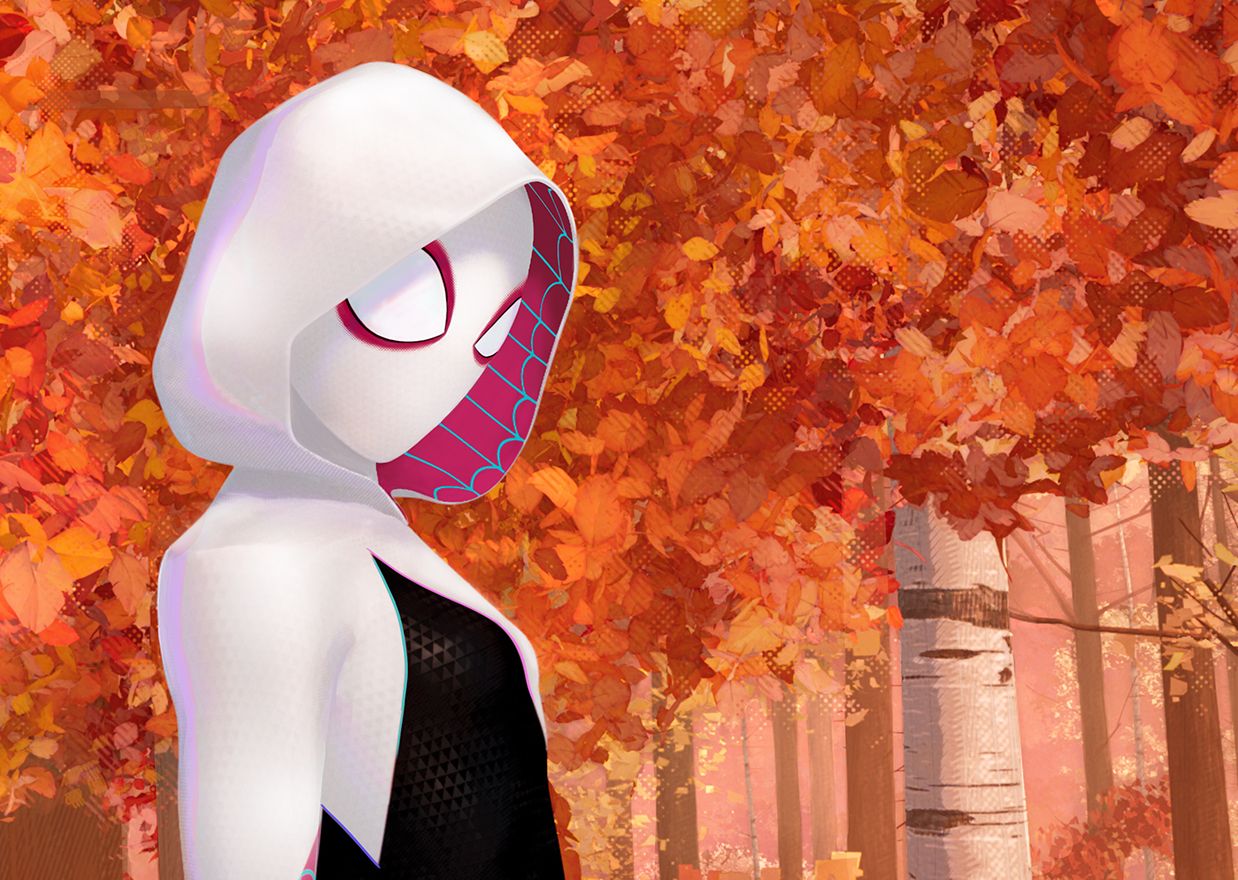 “New York being the birthplace of not just Spider-Man, but also Hip-Hop - so much of current culture has flowed through the prism of [the city],” adds Ramsey. “We just thought it was a great place to bring all these things together, that had their genesis in New York City.”
Yet what also made Spider-Man such a revolutionary character was his relatability.
Superheroes had previously provided power fantasies for their readers, but Spider-Man was a character for who great power didn’t solve everything. Peter Parker was always a working-class kid trying to do his best, coming to terms with his new responsibilities, and often failing along the way.
“The thing that always appealed to me was that he was an ordinary everyman under the mask, even with the powers. He’s got all the same problems that any of us have,” explains Rotham.
“In the comics, they were merciless on Peter Parker. Girl problems, money problems, just constant insecurity and self-doubt. And at the same time, he is able to act selflessly, and rise above it on behalf of other people. It is wish fulfilment, but it is also a recognition of how human nature really works.”
“New York being the birthplace of not just Spider-Man, but also Hip-Hop - so much of current culture has flowed through the prism of [the city],” adds Ramsey. “We just thought it was a great place to bring all these things together, that had their genesis in New York City.”
Yet what also made Spider-Man such a revolutionary character was his relatability.
Superheroes had previously provided power fantasies for their readers, but Spider-Man was a character for who great power didn’t solve everything. Peter Parker was always a working-class kid trying to do his best, coming to terms with his new responsibilities, and often failing along the way.
“The thing that always appealed to me was that he was an ordinary everyman under the mask, even with the powers. He’s got all the same problems that any of us have,” explains Rotham.
“In the comics, they were merciless on Peter Parker. Girl problems, money problems, just constant insecurity and self-doubt. And at the same time, he is able to act selflessly, and rise above it on behalf of other people. It is wish fulfilment, but it is also a recognition of how human nature really works.”
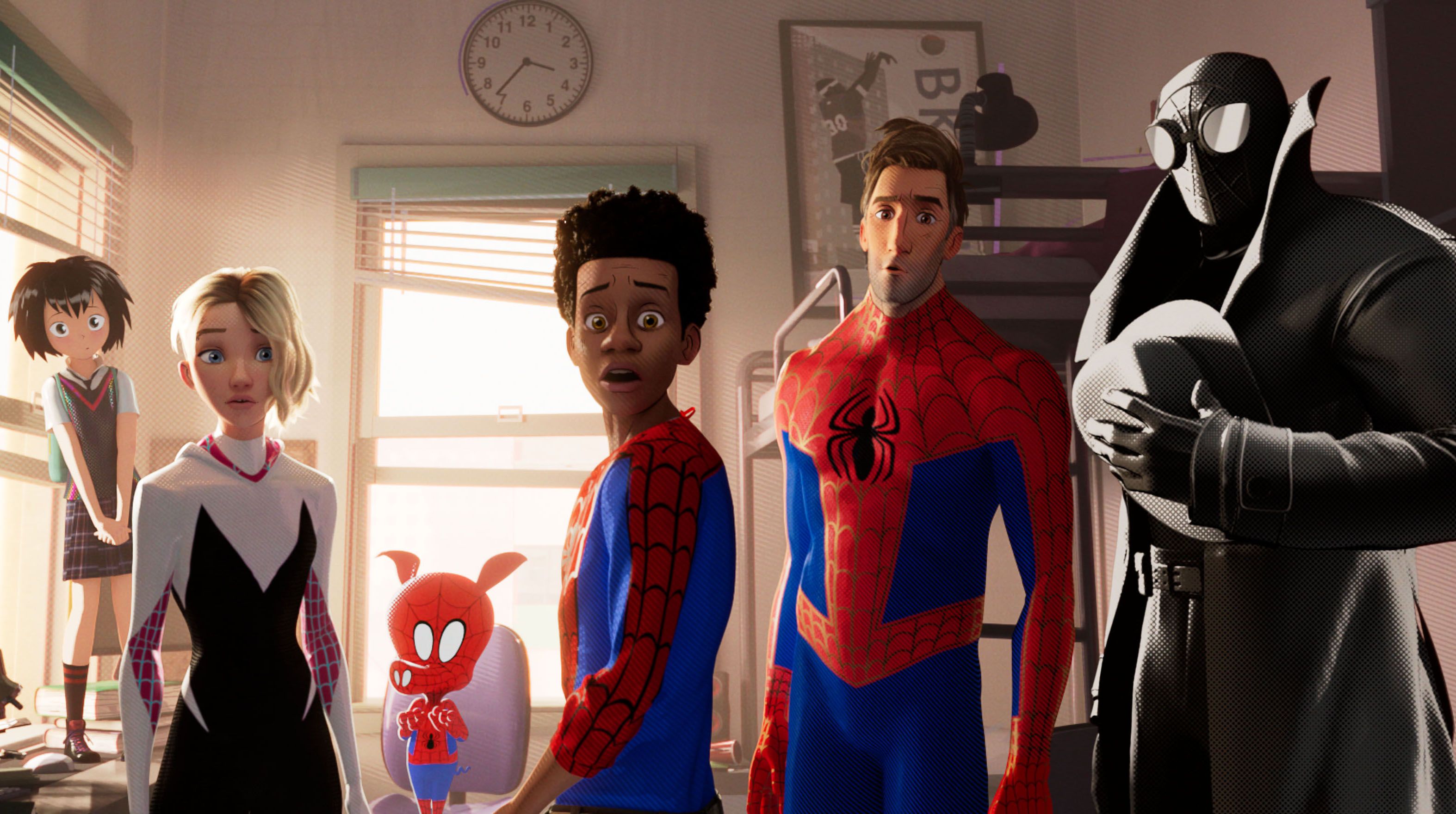
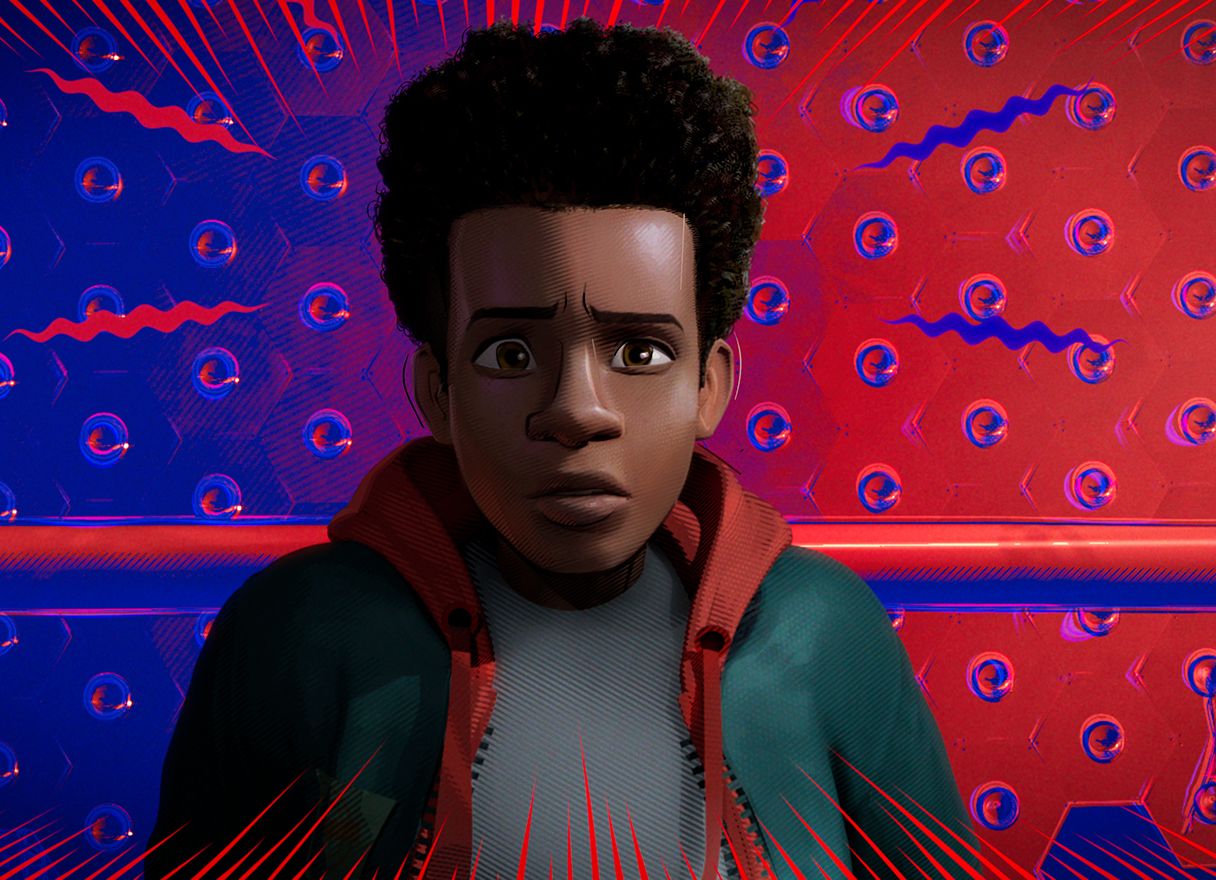 But for all the sense that he could be anybody, until now the character was still always a white, straight dude. Into The Spider-Verse, however, really opens up the idea that anyone could be Spider-Man, regardless of age, gender, race – and in Spider-Ham’s case – even species.
“As we started to adapt it, that was our mantra: ‘Anyone can wear the mask’. And hopefully, anyone will. When Peter Parker was introduced, he was so relevant, and he captured the youth in a way that felt really accurate. And as I walk around every single city in US and around the world, what I see is diversity," Persichetti says.
“And that’s all we were trying to do – make a film that represents the people that are on this planet.”
But for all the sense that he could be anybody, until now the character was still always a white, straight dude. Into The Spider-Verse, however, really opens up the idea that anyone could be Spider-Man, regardless of age, gender, race – and in Spider-Ham’s case – even species.
“As we started to adapt it, that was our mantra: ‘Anyone can wear the mask’. And hopefully, anyone will. When Peter Parker was introduced, he was so relevant, and he captured the youth in a way that felt really accurate. And as I walk around every single city in US and around the world, what I see is diversity," Persichetti says.
“And that’s all we were trying to do – make a film that represents the people that are on this planet.”
 Into The Spider-Verse was the Spider-Man movie to be released into a world without his creators Stan Lee and Steve Ditko, who both died in June. And as sad as that is to realise, there’s something fitting about it.
Comic book superheroes have now reached the level of Robin Hood or Greek legends – where there is no one ‘true’ version, and with each generation taking apart and rebuilding the myth. Into The Spider-Verse is a film about how a character can exist in an infinite variety of ways.
Lee and Ditko might not be around anymore, but the film shows how Spider-Man can live on, evolving into different forms and inspiring generations to come.
Spider-Man: Into The Spider Verse is on Netflix now.
Into The Spider-Verse was the Spider-Man movie to be released into a world without his creators Stan Lee and Steve Ditko, who both died in June. And as sad as that is to realise, there’s something fitting about it.
Comic book superheroes have now reached the level of Robin Hood or Greek legends – where there is no one ‘true’ version, and with each generation taking apart and rebuilding the myth. Into The Spider-Verse is a film about how a character can exist in an infinite variety of ways.
Lee and Ditko might not be around anymore, but the film shows how Spider-Man can live on, evolving into different forms and inspiring generations to come.
Spider-Man: Into The Spider Verse is on Netflix now.Explore more on these topics:

Johnny Marr’s guitars sold for almost £4m at auction
Entertainment

Entertainment

Entertainment
Entertainment

Entertainment
David Walliams’ books dropped by publisher following misconduct claims
Children’s author and Britain’s Got Talent judge David Williams’ books dropped Multinational publishing conglomerate HarperCollins is set to phase out the remainder of David Williams’ books following last year’s statement that they would no longer be publishing the author. The decision came after reports surfaced, accusing Williams of inappropriate behaviour toward young women. The children’s […]
Entertainment
8h
Organiser confirms Oasis will not headline Glastonbury 2027
Oasis will not headline Glastonbury 2027 Oasis will not be headlining Glastonbury next summer, co-organiser Emily Eavis has confirmed, closing down speculation about a conveniently shaped gap in the band’s touring diary. The band announced a run of 2027 gigs across the UK, Ireland, Europe and the US last week, after a cryptic video had […]
Entertainment
9h

Entertainment
Hayden Panettiere’s ‘cause of death revealed’ after actress’ death aged 36
Entertainment