
Politics


Share
4th June 2018
11:47am BST

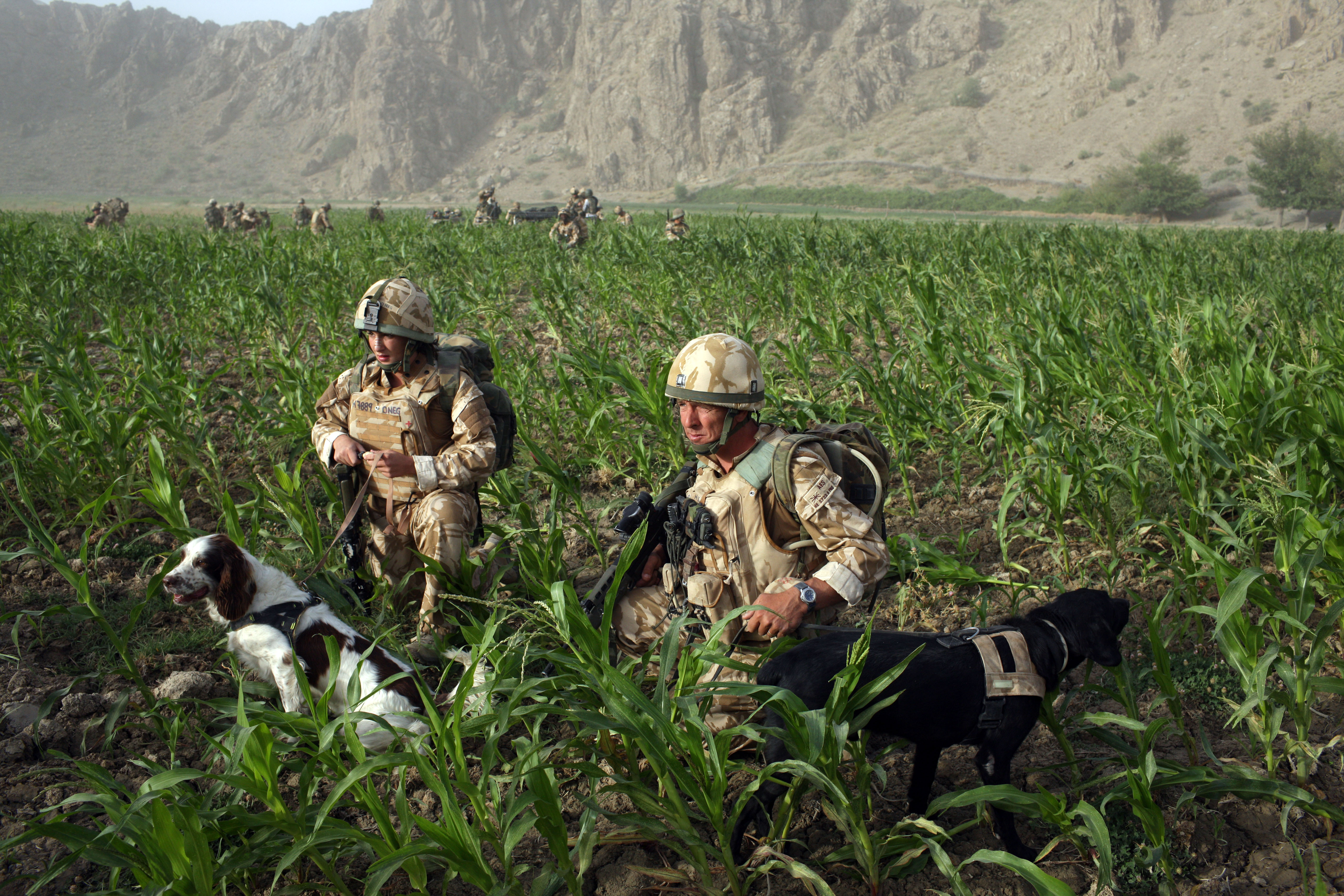 British soldiers in Kandahar, Afghanistan (Credit: Marco Di Lauro)[/caption]
Deployments at the direction of belligerent US leaders must be at least forcefully opposed. With a UK military reduced in manpower due to austerity and a series of epic vanity projects – carriers, submarines, fighter jets – being built largely to support US, not British, global reach the time is ripe to consciously uncouple from the US.
The UK must use legislation and diplomacy to reshape its relationship with the US, for the sake of global and domestic security.
British soldiers in Kandahar, Afghanistan (Credit: Marco Di Lauro)[/caption]
Deployments at the direction of belligerent US leaders must be at least forcefully opposed. With a UK military reduced in manpower due to austerity and a series of epic vanity projects – carriers, submarines, fighter jets – being built largely to support US, not British, global reach the time is ripe to consciously uncouple from the US.
The UK must use legislation and diplomacy to reshape its relationship with the US, for the sake of global and domestic security.
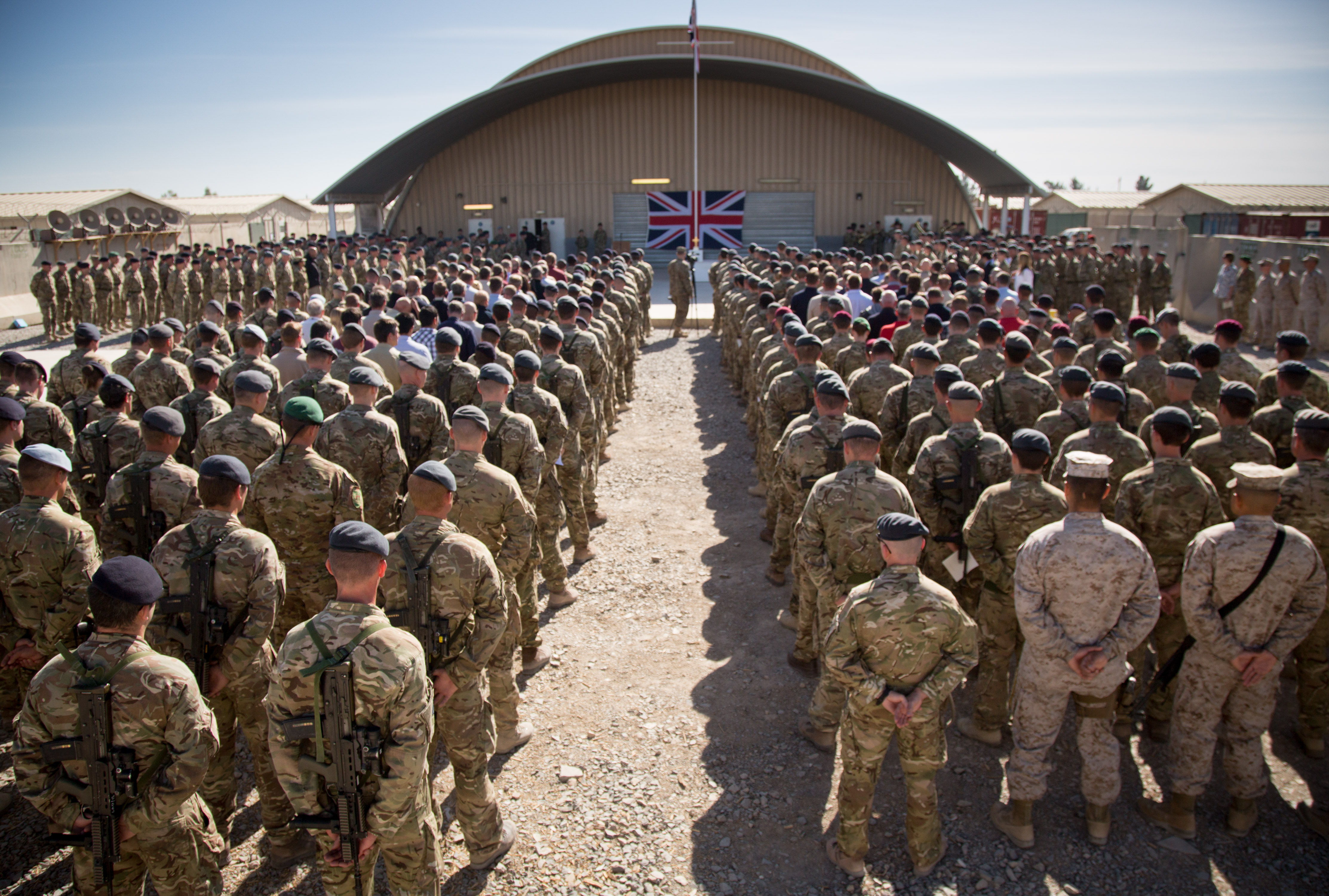 A Remembrance Day service in Afghanistan (Credit: Matt Cardy)[/caption]
In pubs, streets and living rooms across the country there is a broad understanding that recent wars were fought at the expense of UK security.
This reality has given rise, among more savvy politicians, to talk of a War Powers Act which would enshrine in law the requirement for a parliamentary vote on any military intervention.
In a conventional sense it has been the case since 2003 that MPs should vote on deployments. However, prime minister's have continued to decide alone when smaller military actions like the bombing of Syria earlier this year and the ongoing use of special forces go ahead. These virtually always occur in support of US, not UK, goals.
A War Powers Act would democratise this process and mean that elected officials would be held to account. It might also involve the formation of a proper parliamentary committee to oversee special forces operations which up until now have been kept obscure from those paying for them, the public, despite that fact that most mature democracies are comparatively open about special forces operations - even the US.
Support for a War Powers Act has been found on the right of politics through more independent-minded Tories like Crispin Blunt, himself a former soldier, and even, briefly, one time foreign secretary William Hague. But in terms of coherent party policy only Labour, in its new left wing iteration, have really pushed the case for democratising the decision process.
In the wake of the last round of bombing, this time of the Syrian regime, the party released a statement arguing that:
A Remembrance Day service in Afghanistan (Credit: Matt Cardy)[/caption]
In pubs, streets and living rooms across the country there is a broad understanding that recent wars were fought at the expense of UK security.
This reality has given rise, among more savvy politicians, to talk of a War Powers Act which would enshrine in law the requirement for a parliamentary vote on any military intervention.
In a conventional sense it has been the case since 2003 that MPs should vote on deployments. However, prime minister's have continued to decide alone when smaller military actions like the bombing of Syria earlier this year and the ongoing use of special forces go ahead. These virtually always occur in support of US, not UK, goals.
A War Powers Act would democratise this process and mean that elected officials would be held to account. It might also involve the formation of a proper parliamentary committee to oversee special forces operations which up until now have been kept obscure from those paying for them, the public, despite that fact that most mature democracies are comparatively open about special forces operations - even the US.
Support for a War Powers Act has been found on the right of politics through more independent-minded Tories like Crispin Blunt, himself a former soldier, and even, briefly, one time foreign secretary William Hague. But in terms of coherent party policy only Labour, in its new left wing iteration, have really pushed the case for democratising the decision process.
In the wake of the last round of bombing, this time of the Syrian regime, the party released a statement arguing that:
"In the most serious matters of peace and security, the Prime Minister of Britain should be accountable to Parliament, not to the whims of any other governments. "Labour has called for a ‘War Powers Act’ for the UK, which would enshrine in law that the government must seek parliamentary approval before committing to planned military action."
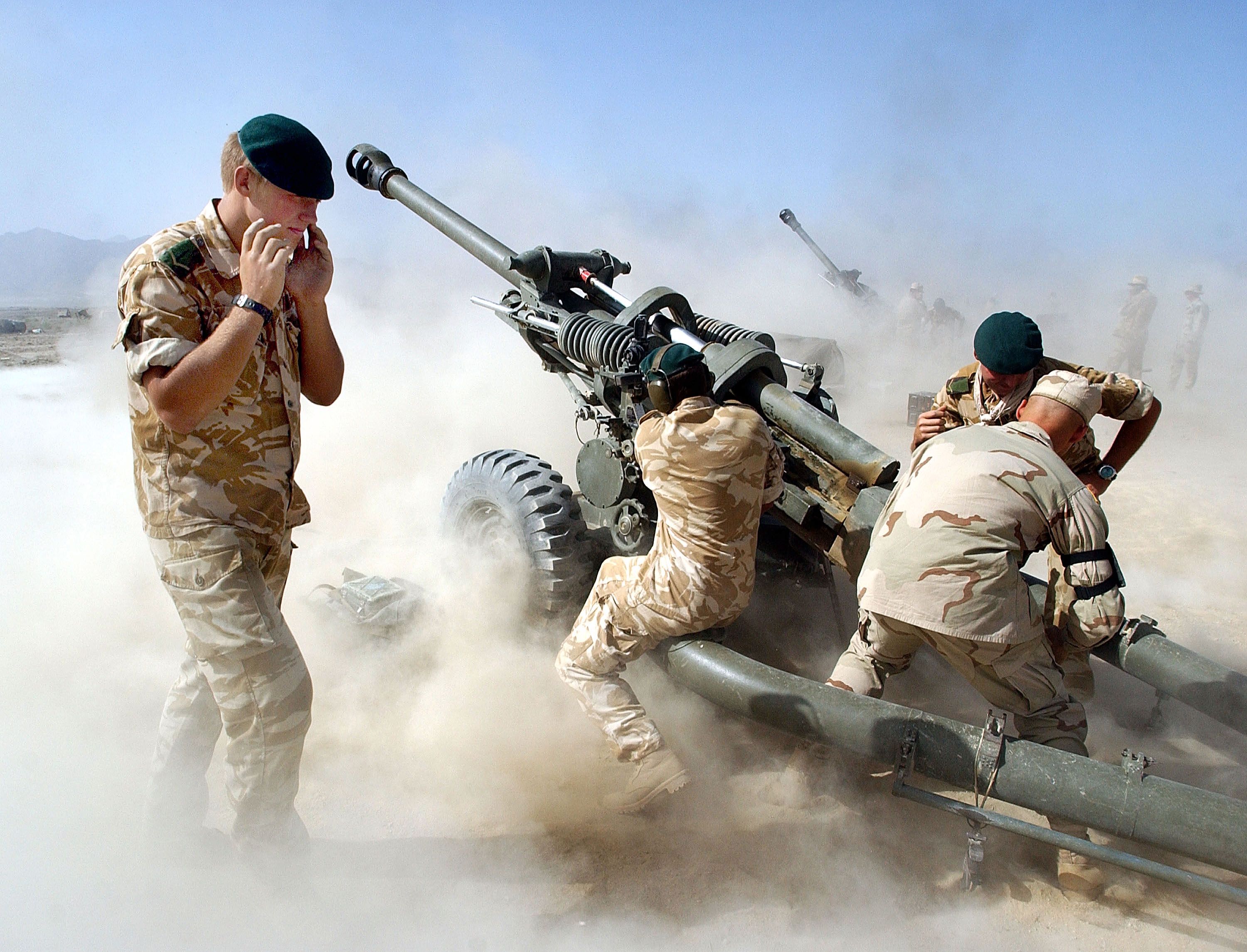 British and American forces during a live fire exercise (Credit: Scott Nelson)[/caption]
Elements of our neutrality could include leaving treaties capable of dragging us into unnecessary wars, closing foreign military bases in the UK and withdrawing our personnel from the 80 nations and 14 permanent bases around the world. Importantly, it would mean coming up with our own independent foreign policy rather than simply taking direction from the US.
Neutrality does not mean disbanding the army or leaving the country defenceless in some woolly-minded outbreak of total pacifism.
The military would remain intact to defend our borders and national territory and the aforementioned vanity projects, like aircraft carriers, could be dropped. That money put into more meaningful activities.
If handled correctly, stepping away from the US would given Britain a new lease of life and, far from diminishing our influence, could allow us to flourish into a serious, respected and even-handed global actor.
British and American forces during a live fire exercise (Credit: Scott Nelson)[/caption]
Elements of our neutrality could include leaving treaties capable of dragging us into unnecessary wars, closing foreign military bases in the UK and withdrawing our personnel from the 80 nations and 14 permanent bases around the world. Importantly, it would mean coming up with our own independent foreign policy rather than simply taking direction from the US.
Neutrality does not mean disbanding the army or leaving the country defenceless in some woolly-minded outbreak of total pacifism.
The military would remain intact to defend our borders and national territory and the aforementioned vanity projects, like aircraft carriers, could be dropped. That money put into more meaningful activities.
If handled correctly, stepping away from the US would given Britain a new lease of life and, far from diminishing our influence, could allow us to flourish into a serious, respected and even-handed global actor.Explore more on these topics:

Politics
Politics

Politics

Politics

Politics

Politics