






Politics

Share
Published 14:08 22 Sept 2026 BST
Updated 14:09 22 Sept 2026 BST
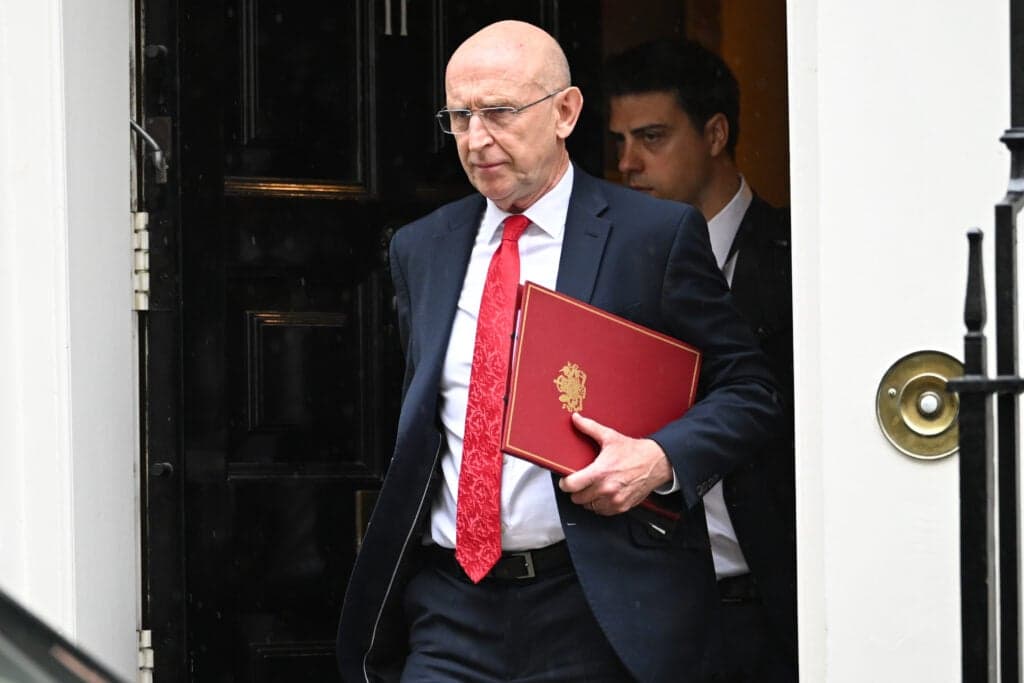
John Healey's delivery of his first Budget at the end of October comes burdened by the UK's borrowing which jumped to £18.3bn in August, almost a fifth higher than a year earlier, adding fresh strain on chancellor.
If you wonder what 'borrowing' means: It is the difference between tax receivables and government expenses, meaning the government has a deficit of £18.3 billion.
The figure, published by the Office for National Statistics, was £3.5bn higher than official forecasters had expected.
Persistently high inflation, driven up by rising petrol and diesel prices, pushed government spending on public services and benefits up faster than tax receipts could keep pace.
The interest bill on the government's debt rose to £8.8bn in August, its highest level for the month since records began in 1997, as the Treasury faces growing demands to spend more on defence and cost-of-living support.
Martin Beck, chief economist at WPI Strategy, warned against reading too much into one month of data but said there were "concerning elements", including that the cost of servicing government debt "is likely to rise in the coming months".
The Institute for Fiscal Studies said debt interest is now "a worryingly large share of overall government spending" and has been pushed up since the last official forecasts.
Research economist Nick Ridpath said "both higher borrowing costs and higher inflation make life harder for a chancellor who is looking to bring down borrowing and to spend more on government priorities."
It's not the only pressure on Whitehall budgets this autumn: the funding crisis already squeezing other government budgets forced the Army to cancel a string of training exercises last month, while opposition tax-cut plans have added to the debate over how any shortfall would be filled.
Explore more on these topics:
Politics

Politics

Politics

Andy Burnham commits an RAF Voyager to refuelling Saudi jets under Houthi attack
The PM ties the decision to the cost of living Andy Burnham has agreed to give Saudi Arabia “defensive air-to-air refuelling” support in response to attacks by the Iran-backed Houthis in Yemen. The prime minister said the decision follows a Saudi request for “military support” which was agreed on the advice of Defence Secretary Wes […]
Politics
2h
More than 99% of UK constituencies would vote to rejoin the EU, new poll shows
The only four constituencies that wouldn’t vote to rejoin the EU all have MPs who stood for Reform at the last election. Go figure… Don’t suppose there’s any more of that ‘will of the people’ stuff going around? Because this would certainly be a good time to take stock of public sentiment regarding Brexit. A […]
Politics
19h
Politics
Politics
Could the UK follow Canada’s path to EU ‘associate membership’?
Politics