





Politics

Share
Published 17:29 26 Oct 2026 GMT
Updated 18:09 26 Oct 2026 GMT
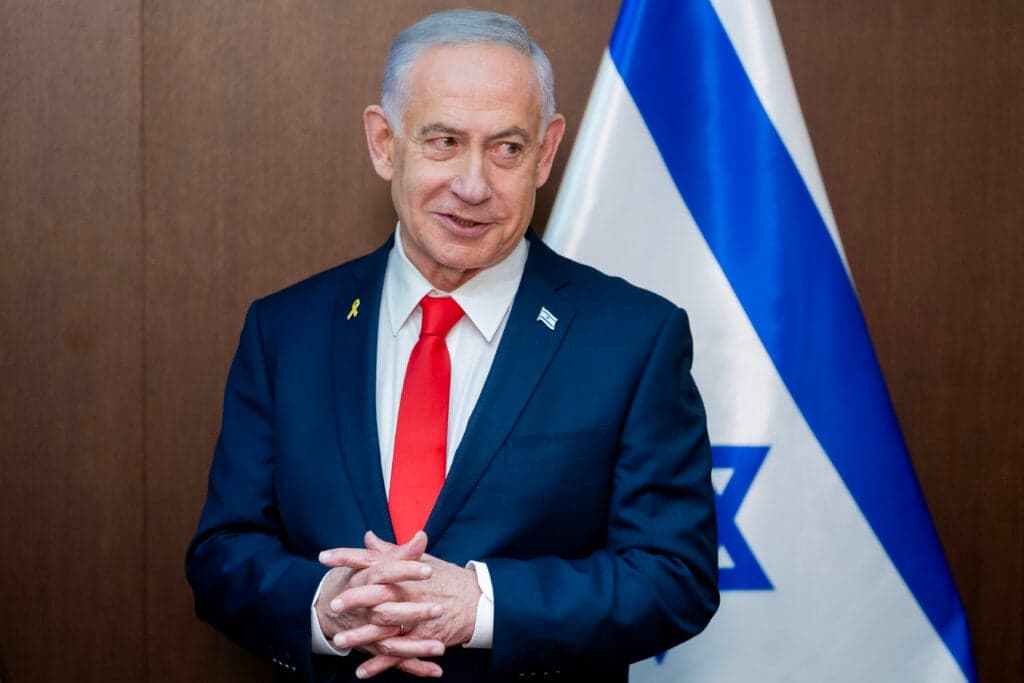
On Tuesday, 27 October, millions of voters are expected to head to the polls across Israel to elect representatives to the country’s 120-seat parliament, the Knesset.
This year's election has brought more attention than any other in modern history.
Incumbent Prime Minister Benjamin Netanyahu's position has come under immense international scrutiny from the international community, amid the findings from an independent UN commission last year that Israel have committed genocide in Gaza since 2023.
The International Criminal Court (ICC) have also issued a warrant for the politician's arrest.
Unlike in the United States, where voters cast ballots in a separate presidential election, Israel’s parliamentary system does not allow voters to directly elect their prime minister.
Instead, they vote for their preferred political party, with seats allocated according to each party’s share of the vote.
An outright majority requires a party to win at least 61 of the Knesset’s 120 seats.
However, no single party has ever achieved this in Israeli electoral history. As a result, parties typically negotiate to form governing coalitions, often bringing together several parties into blocs in order to secure a parliamentary majority and form a government.
For example, current Prime Minister Benjamin Netanyahu, the leader of thirty-seventh government of Israel, represents the Likud party, but is also part of a coalition that includes the Shas, Otzma Yehudit, Religious Zionist and New Hope parties.
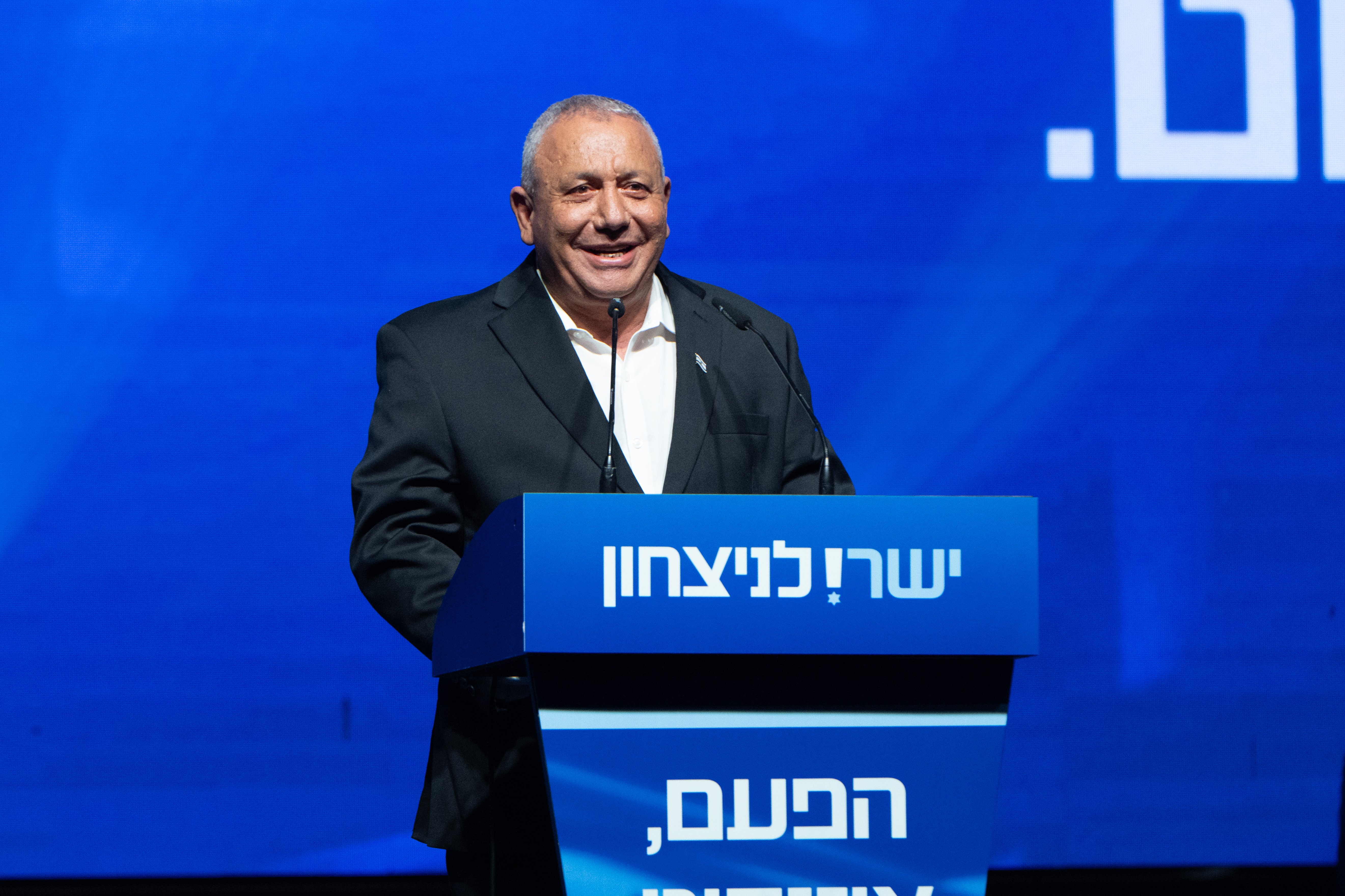
Gadi Eisenkot (Yashar party) is Benjamin Netanyahu's main challenger for power.
Netanyahu's main challenger for power in tomorrow's election is Gadi Eisenkot. He leads the Yashar party who have joined into a bloc alongside Together, The Democrats, and Yisrael Beiteinu.
The Israeli newspaper Haaretz has compiled an average of the final opinion polls published by Channels 11, 12 and 13, using its online election poll tracker to provide an overview of the projected electoral outcome ahead of tomorrow’s vote.
The projections suggest that neither Benjamin Netanyahu’s bloc nor that of his challenger, Gadi Eisenkot, is on course to secure the 61 seats required for a parliamentary majority.
However, Eisenkot’s bloc is projected to emerge with a larger share of Knesset seats, potentially placing him in a stronger position to negotiate the formation of a governing coalition.
According to the poll averages, Eisenkot’s bloc would secure 56 seats, five short of a majority, while Netanyahu’s bloc is projected to win 50.
The remaining seats could therefore prove pivotal in determining which candidate is ultimately able to assemble a governing coalition.
With 16 seats projected to go to parties outside the two blocs, Netanyahu would need to secure the support of 11 of those seats to reach the 61-seat threshold required for a parliamentary majority.
Eisenkot, by contrast, would need the backing of just five additional seats, putting him in a comparatively stronger position to negotiate the formation of a government.
Whether these projections translate into reality remains to be seen, with voters set to head to the polls tomorrow.
The final outcome will depend not only on the distribution of seats, but also on the coalition negotiations that follow.
As detailed in a CNN profile of the candidate, Eisenkot is among a relatively small number of Israelis of Moroccan descent to reach the upper echelons of the country’s political establishment.
His career prior to entering politics was spent in military service with the IDF, where he spent four decades, rising through the ranks to become chief of staff, the country’s highest-ranking military officer.
Although Eisenkot left the service long before the current conflict began in 2023, the IDF have been accused of implementing oppressive policies against Palestinian civilians throughout the past few decades, in both the Gaza Strip and in the occupied West Bank.
One of Eisenkot’s central political commitments is to establish an inquiry into the events leading up to the Hamas-led attack of October 2023, a move Netanyahu has resisted.
On security policy, however, the differences between the two men are less pronounced. As CNN reports, Eisenkot shares many of his rival’s "hawkish positions" and has broadly supported Israeli military operations in Gaza, Lebanon and Iran.
Again, according to CNN, within the IDF, he has been associated with the “Dahiyeh doctrine”, which involves using overwhelming force against civilian infrastructure to deter future militant attacks.
Eisenkot has also sharply criticised Netanyahu’s handling of the Gaza war, accusing the prime minister of prolonging the conflict and endangering Israeli hostages for political reasons. The dispute contributed to his eventual departure from the emergency war cabinet in June 2024.
On the question of Palestinian statehood, Eisenkot has reportedly rejected a two-state solution since 2023.
However, also according to CNN, Eisenkot opposes formal annexation and illegal settlement outposts.
He has also described the Israeli government’s plans to develop the controversial E1 area of the West Bank as a “mistake”, citing the potential international repercussions.
He has further pledged to crack down on settler violence, which he has described as “Jewish terrorism”, accusing the government of restricting the ability of security forces to respond.
The E1 development plan has attracted significant international opposition, and was one of the issues that prompted sanctions against Israel by Ed Miliband earlier in 2026.
Explore more on these topics:
Politics
Politics
Politics
Politics
Angela Rayner Brexit row: Farage brands remarks a ‘betrayal’
Labour refuses to close door on EU freedom of movement The government is facing fresh questions about its plans for Britain’s relationship with the EU after Angela Rayner refused to dismiss the possibility of bringing back freedom of movement, drawing criticism from Reform UK leader Nigel Farage. The exchange comes ahead of next month’s UK-EU […]
Politics
1 day ago
Reform drop to record low in new poll as Labour surge clear
Another polling low for Reform. Reform polling malaise shows no sign of letting up, as the party dropped to a record low in a new poll. The latest data from Find Out Now saw a two-point drop in support for Nigel Farage’s party, as they fell to 20%. This is the lowest vote share Find […]
Politics
3 days ago

Politics
The BBC has given the world a masterclass in standing up to Trump’s bullying
Politics