






News

Share
Published 13:27 2 Jun 2025 BST
Updated 13:27 2 Jun 2025 BST
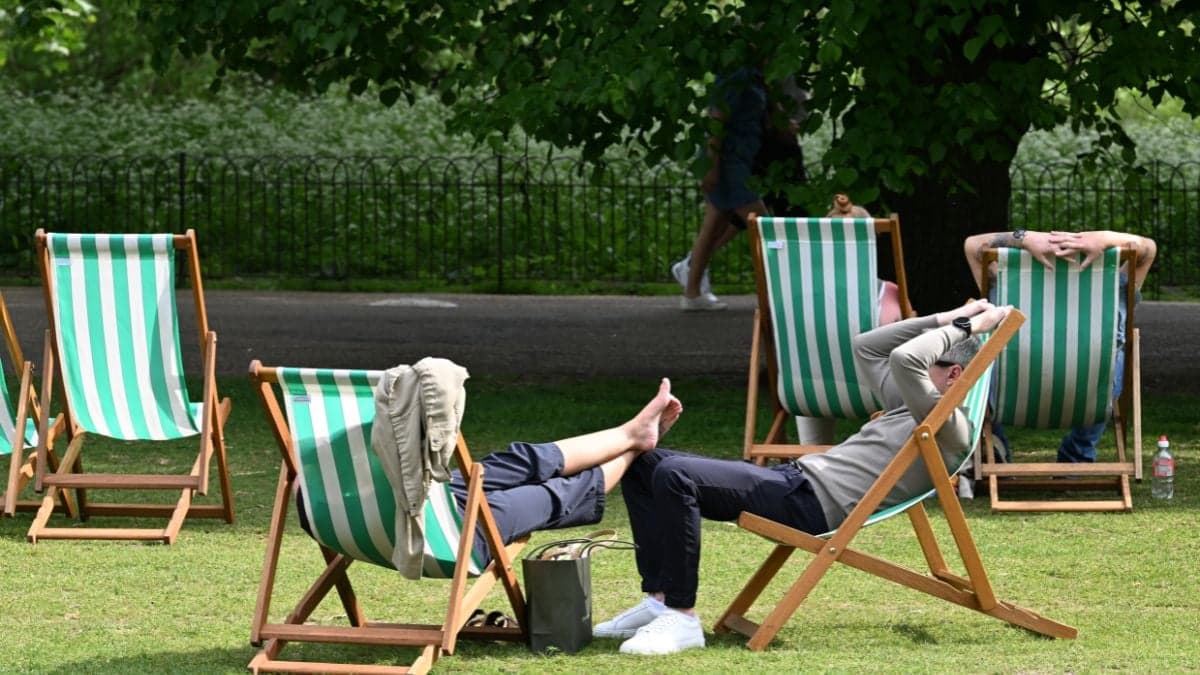
According to the Met Office's most recent three-month outlook, it has predicted that the meteorological summer (1 June to 31 August) is twice as likely to be hotter than usual in 2025.
The prediction is not too surprising as it follows an unprecedented sunny, warm and dry spring.
These long-range, or seasonal forecasts look at the expected general weather patterns over three months. Most big weather agencies run long-range forecasts alongside their detailed daily forecasts.
Unfortunately, due to the time frames and model resolution involved, it's not possible to tell if it will rain on a particular day in two month's time. Still, temperature, rainfall, and wind strengths can be roughly estimated and compared to conditions normally expected over the entire period.
Governments, local authorities and businesses profit greatly from these forecasts as they are helpful planning tools.
When comparing different forecasts from several global forecast centres, it appears to be very likely the UK will experience a summer that is "hotter than normal", with the Met Office saying there is more than double the normal chance of this.
To many, this may not come as a huge surprise, as previous summers have been just as warm and sunny. In reality, the last time the UK experienced a "cool" summer was back in 2015.
However, it is not definite we will experience hot weather and heatwaves this summer. The risk of them occurring and the health impacts they bring along is just greater. Additionally, changes and variations within the summer period are still very likely as well.
The Met Office also said that the expected warmth is largely caused by human-induced climate change.
On top of that, the ongoing marine heatwave in the UK's surrounding seas could help boost the temperatures. However, this added warmth and moisture could lead to more intense summer storms.
Nonetheless, not everyone is hoping on a warm and sunny summer. Due to a spring deficient in rain, the UK is left with low reservoir levels and reduced river flows.
Many water companies will be hoping for a wet summer to help balance the levels again, without needing to introduce restrictions to water usage in the months to come.
Whatever the outcome for the UK summer may be, the often showery nature of summer rains often means there can still be variations from one week to the next, and from one part of the country to the other.
News

News

News

News
Pensioner sepsis death: Coroner warns over unmonitored transfer
Trust ordered to respond after transfer failures Monica Wood, a 66 year-old pensioner who lived with dementia, fell, which left her with a bleed on the brain, and staff admitted her to the Royal London Hospital. A fortnight later, after she was moved 200 miles to Stepping Hill in Stockport, nearer her home, she died […]
News
1 day ago
East Acton shooting: man, 40, shot dead at memorial service
Met Police appeal for witnesses after the shooting East Acton shooting has left a 40 year-old man dead in front of dozens of mourners, as Metropolitan Police hunt the gunman who opened fire. Detectives have launched a murder investigation after the gunman the 40 year-old dead at a memorial service in Braybrook Street, East Acton. […]
News
1 day ago
News
News