








News

Share
Published 15:33 8 Aug 2025 BST
Updated 15:33 8 Aug 2025 BST
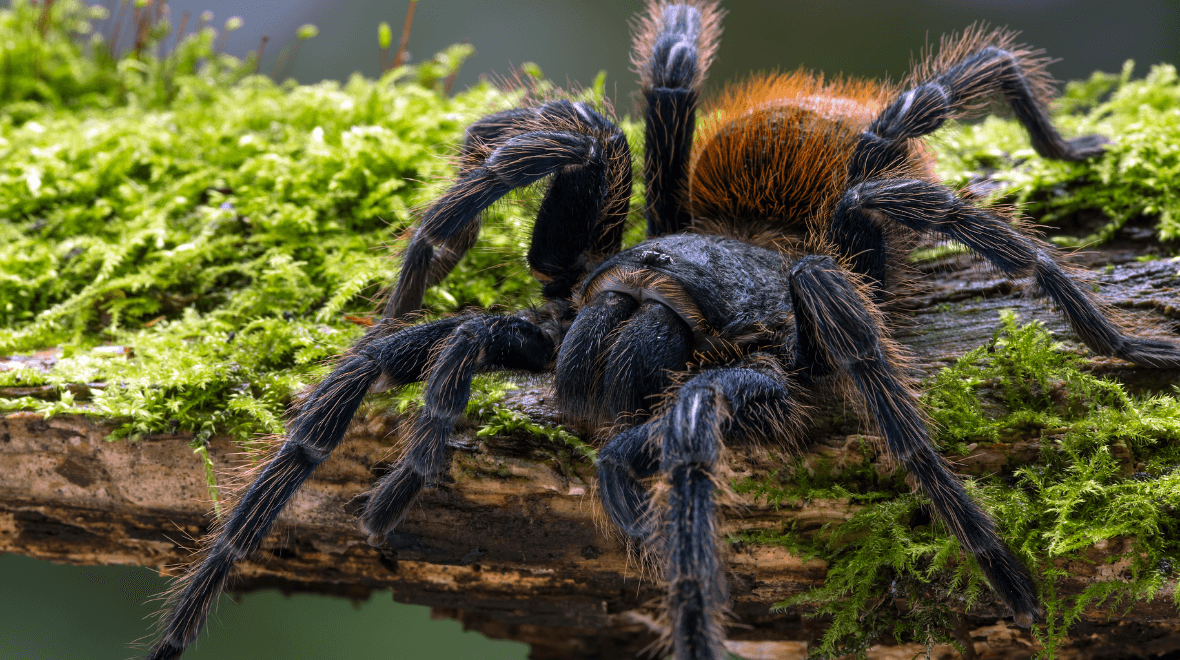
You’d think that the discovery of one new sub-species of tarantulas characterised by their massive penisises would be a terrifying enough prospect, but scientists think they’ve actually uncovered a whopping four new groups of the well-endowed arachnids.
Tarantulas are large and hairy spiders — the largest of which have a leg span of around 30cm — that inhibit hot climates like rainforests and desserts.
The four new species have been found in both the Arabian Peninsula and the Horn of Africa.
The tarantulas’ palps — the scientific name for their reproductive appendage — were the largest ever recoded in the species.
The biggest of the lot, known as the satyrex ferox, has a palp that measures 5cm long.
While this may not seem giant to us, that 5cm length makes the palp, four times the length of the tarantula's head and almost as long as its longest legs.
The long palps give male tarantulas an evolutionary advantage.
They help the creepy crawlies to keep a good and safe distance away from females of the species while mating.
Females are known for being the more dangerous and aggressive members of the species, even to their partners.
The study clears this up, saying the long penises help to “facilitate copulation while minimising the risk of cannibalism, as it allows the male to position himself slightly away from the female rather than directly beneath her.
“This is plausible given the extremely aggressive defence behaviour observed in females of this genus.”
Dr Alireza Zamani of the University of Turku, who led the study, said: "The much longer palps of satyrex longimanus and the four newly described species were among the primary characters that led us to establish a new genus for these spiders, rather than place them in Monocentropus.
"So at least in tarantula taxonomy, it seems that size really does matter."

News

News

News

News
Piers Morgan urges Trump to side with Ukraine against ‘modern-day Hitler’ Putin
‘Give this guy the support he needs to defeat the modern-day Hitler.’ Piers Morgan has urged Donald Trump to side with Ukraine and Volodymyr Zelensky in their war against Russia. There have been strained tensions this week between Ukraine and the US as Trump has cosied up to Vladimir Putin with diesel deals and sham […]
News
2 days ago
Execution of mass killer will not be livestreamed, Trump says
The US president has done a U-turn The execution of a Nidal Malik Hasan will no longer be livestreamed, US President Donald Trump has said. Last week, it was announced that the execution of Hasan, the man behind the Fort Hood shooting, would be livestreamed. The shooting, which happened in Texas in 2009, killed 13 […]
News
2 days ago
Royal Mail ‘on brink of collapse’ as 400 workers reportedly quit every week
News