








News

Share
Published 14:22 31 Aug 2026 BST
Updated 14:22 31 Aug 2026 BST
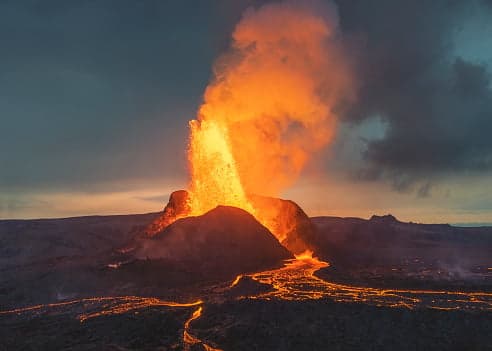
Scientists have uncovered the remains of a supervolcano on England’s east coast as experts believe it explains a huge layer of volcanic ash spread across northern Europe.
Located beneath The Wash, between Norfolk and Lincolnshire, it reached approximately 65km (40 miles) in diameter.
The volcano is said to have erupted with the force of several thousand hydrogen bombs, or a million nuclear bombs, around 454 million years ago.
The term ‘supervolcano’ is given to those that have erupted more than 1000 cubic km (240 cubic miles) of material.
Researchers at the British Geological Survey find that the supervolcano’s eruption could be the reason why volcanic ash can be found throughout Norway, Sweden, Belarus, Poland, and the Baltic countries.
However, if you are concerned that Grimsby or Claxby will turn into the next Pompeii, you can rest assured as the volcano has long been extinct.
The eruption took place 454 million years ago, meaning it was closer to the first dinosaurs than we are to the last dinosaurs.
Dr Tim Pharaoh of the BGS explained that “unlike faults, which can be seismically reactivated, a volcano can't.
"Once it's gone extinct, that's it. Nobody needs to worry about the supervolcano erupting again."
In fact, Dr Pharaoh is more than pleased with the discovery, calling the research a "fantastic result” that helps us understand “England's deep geological past.”
He told the BBC that “it's only now that we've got these precise ages we can make these bold statements and assertions.
"It's extremely satisfying to come up with this very precise result."
Matching crystals that are the width of a human hair, which are formed from molten magma before an eruption, scientists were able to confirm the ones from Norfolk and Lincolnshire were formed at the same time.
Additionally, the findings matched samples found in Norway, which were analysed by researchers at the University of Oslo, implying the eruption covered all of Scandinavian.
Experts believe the samples could be matched to the layer of volcanic ash found in the Baltic region and Belarus.
However, with the current findings, and the sheer scale of the volcano, the BGS believes that it might have been one of the most powerful eruptions in Earth’s long history.
Explore more on these topics:

News

News

News

News
Government plans to expand BBC licence fee with proposed ‘YouTube Tax’
YouTube, Netflix and Disney+ could face new BBC fee rules Watching videos online could soon come with an unexpected cost, as the government considers extending the BBC licence fee to streaming services and digital platforms. The proposed shake-up could bring websites and services such as YouTube, Netflix, Amazon Prime Video and Disney+ under the same […]
News
18h
19 people injured after Channel Tunnel collision between bus and train
The incident happened on the French side of the tunnel. A collision between a bus and a train on the French side of the Channel Tunnel has left 19 people injured. Latest reports from outlets in France say that a minibus transporting passengers hit a stationary train wagon in the loading area at the entrance […]
News
1 day ago
Former DUP leader Jeffrey Donaldson sentenced to 15 years in prison for child sex crimes
News