








News

Share
Published 16:52 13 Nov 2026 GMT
Updated 16:52 13 Nov 2026 GMT
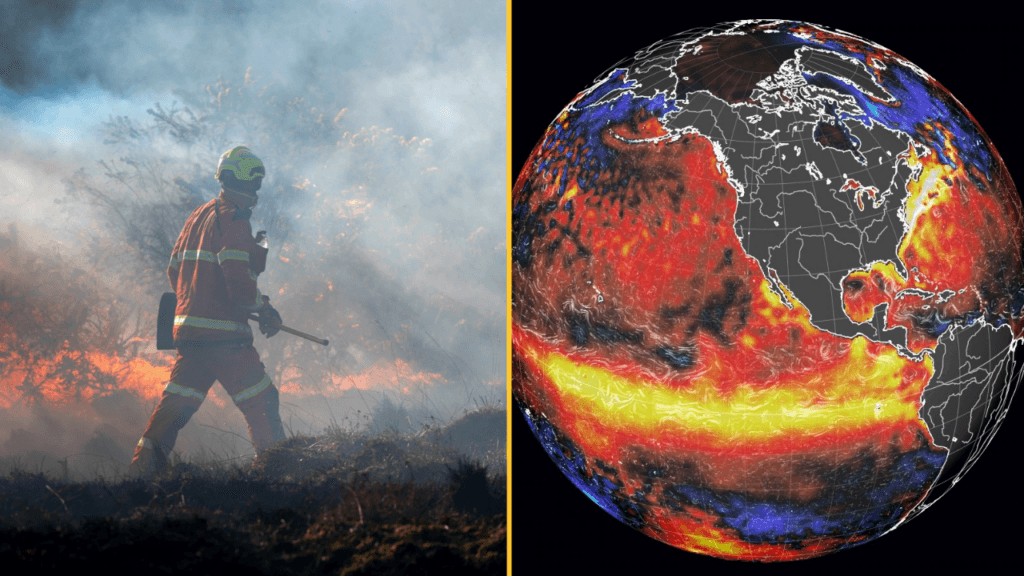
A powerful weather pattern developing in the Pacific could have far-reaching effects on global temperatures and weather conditions over the coming months.
The current El Niño, or a "very strong" El Niño, is already one of the most powerful on record, and the National Oceanic and Atmospheric Administration (NOAA) expects it to continue until at least March.
Its Climate Prediction Center said on Thursday that the event is still intensifying and could have a historic influence on weather patterns over the coming months.
El Niño occurs when surface waters in part of the tropical Pacific become warmer than usual.
NOAA declares an event when temperatures remain at least 0.5°C above average for five consecutive overlapping three-month periods.
The “very strong” classification applies when sea temperatures exceed the average by at least 2°C for five consecutive three-month periods.
According to NOAA's Climate Prediction Center, temperature anomalies had already exceeded 4°C by November 12, as the warmer conditions continued to spread.
El Niño's intensity can influence how severely weather patterns are disrupted around the world.
Scientists have also warned that El Niño events appear to be becoming stronger and lasting longer.
It has also been suggested that these events are becoming stronger and lasting longer, while some have linked the current episode to the record-breaking heat recorded this year. Previous events took place in 2023–24, 2018–19, 2014–16, 2009–10 and 2004–05.
The weather effects have differed from one episode to another, but the 2015 event offers an example of how El Niño can influence tropical storm activity.
That year, the Atlantic recorded just 12 named systems, compared with 18 in the Eastern Pacific, a pattern similar to this year's.
Explore more on these topics:

News

News

News

News
Met Police launch investigation into David Walliams over alleged ‘serious sexual offences’
An investigation has been opened The Metropolitan Police has launched an investigation into David Walliams over alleged “serious sexual offences”. This comes just days after it was revealed that Walliams was the celebrity who had failed in his attempts to get an injunction to prevent reporting around the allegations. In a statement on their website, […]
News
40 min
New interactive doomsday map shows your chances of survival in a WW3 situation
Hopefully, that’s information you’ll never actually need. If the world were to end tomorrow, where would you want to be? It turns out your postcode could make quite a difference. A new interactive map has revealed which parts of the UK might be safest in the event of a national catastrophe, and which areas could […]
News
1h

News
Microsoft issues urgent update as major outage hits Outlook and Teams worldwide
News