






News

Share
Published 10:35 19 Mar 2018 GMT
Updated 12:29 19 Mar 2018 GMT
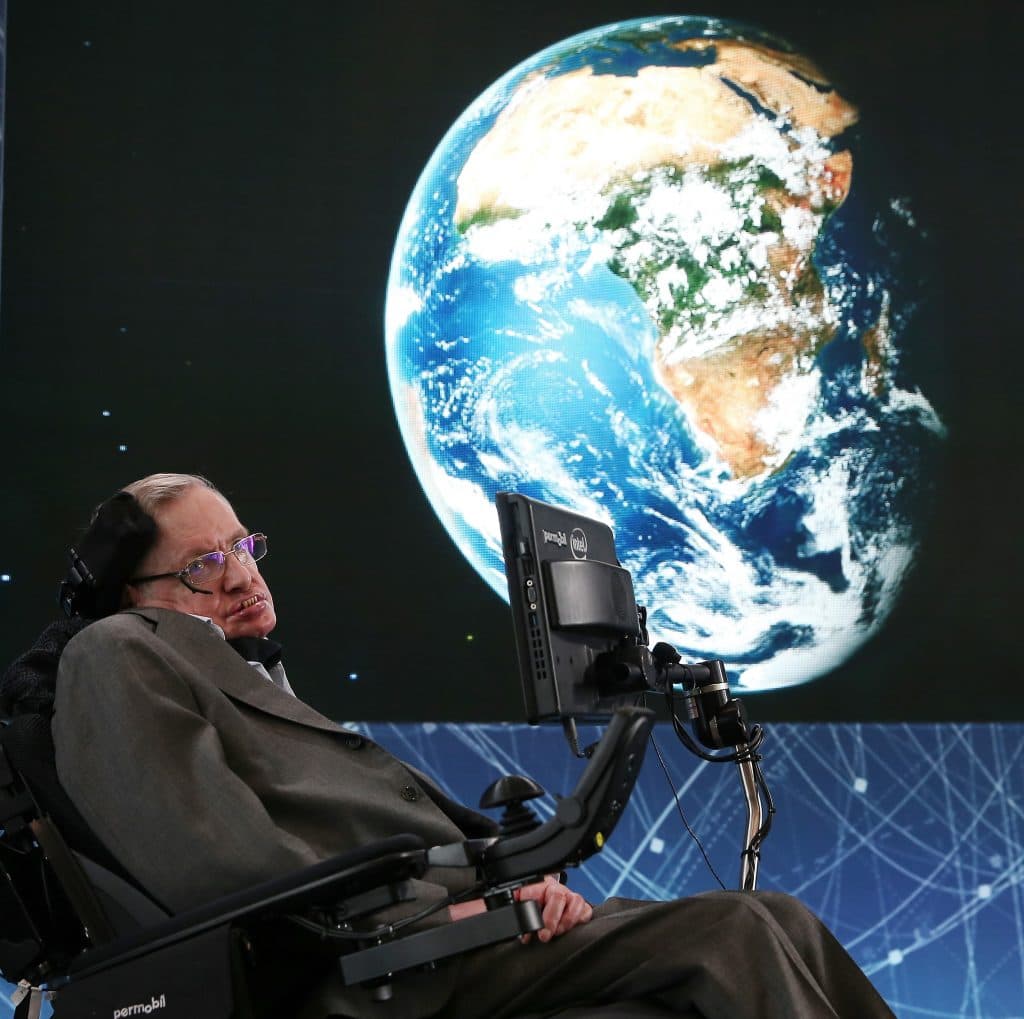
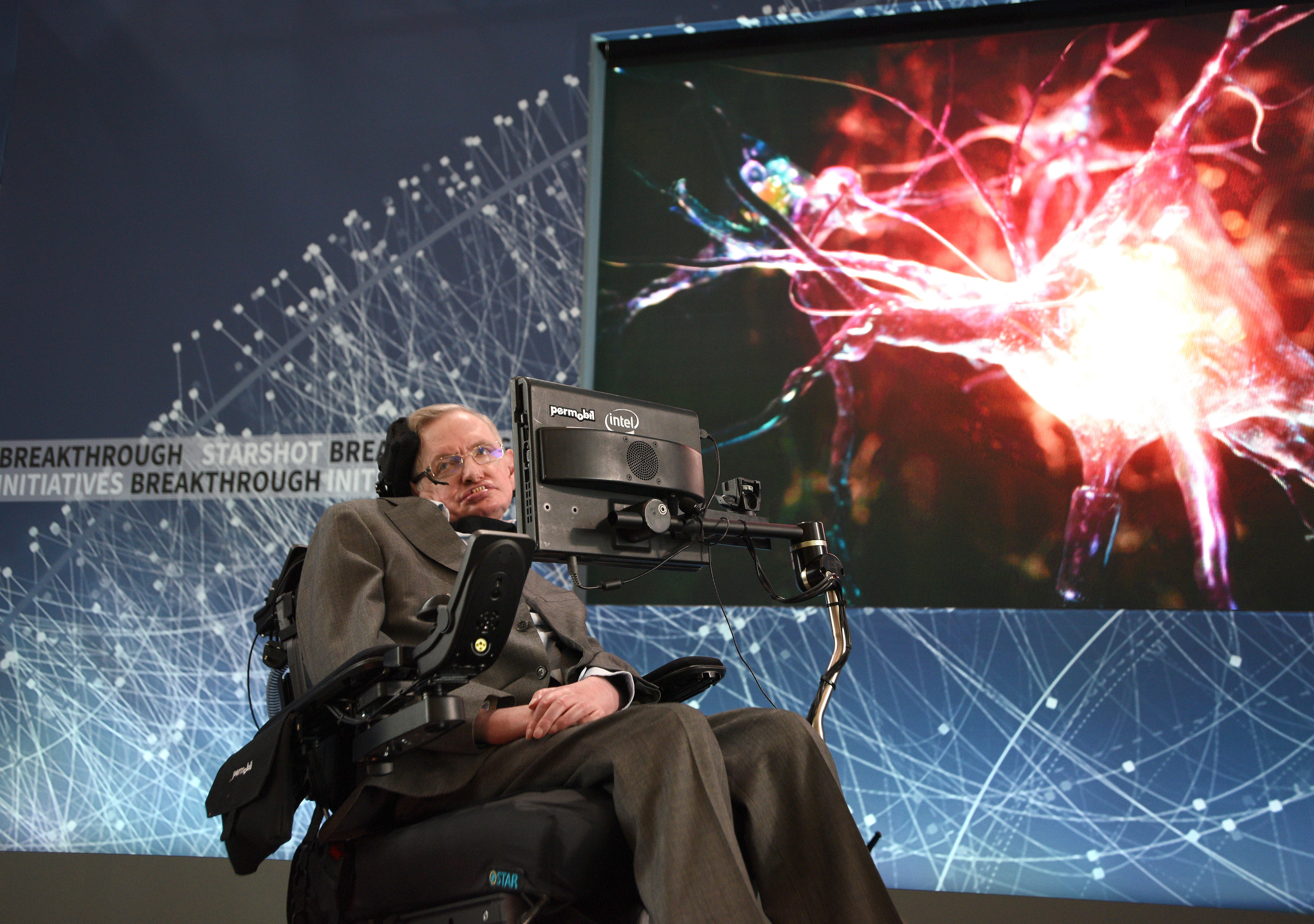 NEW YORK, NEW YORK - APRIL 12: Stephen Hawking, CH, CBE, FRS, Dennis Stanton Avery and Sally Tsui Wong-Avery Director of Research, University of Cambridge as he and Yuri Milner host press conference to announce Breakthrough Starshot, a new space exploration initiative, at One World Observatory on April 12, 2016 in New York City. (Photo by Bryan Bedder/Getty Images for Breakthrough Prize Foundation)[/caption]
Hawking was bothered by the question of the multiverse theory for a number of years, having detailed his 'no boundary theory' back in 1983 alongside James Hartle. This described how the earth came into being through the Big Bang, but also predicted that the event would have been accompanied by numerous other 'Big Bangs', therefore creating the multiverse.
Carlos Frenk, who is a professor of Cosmology at the University of Durham, has argued that the work is exactly "what cosmology needed", stating that finding the evidence would completely change our perception of the cosmos. He also told the Sunday Times that the prospect of finding existence of another universe is "breathtaking" .
It is currently being reviewed by a leading scientific journal and may well prove the astrophysicist's most important scientific discovery, no small feat considering the remarkable body of work he has left behind.
NEW YORK, NEW YORK - APRIL 12: Stephen Hawking, CH, CBE, FRS, Dennis Stanton Avery and Sally Tsui Wong-Avery Director of Research, University of Cambridge as he and Yuri Milner host press conference to announce Breakthrough Starshot, a new space exploration initiative, at One World Observatory on April 12, 2016 in New York City. (Photo by Bryan Bedder/Getty Images for Breakthrough Prize Foundation)[/caption]
Hawking was bothered by the question of the multiverse theory for a number of years, having detailed his 'no boundary theory' back in 1983 alongside James Hartle. This described how the earth came into being through the Big Bang, but also predicted that the event would have been accompanied by numerous other 'Big Bangs', therefore creating the multiverse.
Carlos Frenk, who is a professor of Cosmology at the University of Durham, has argued that the work is exactly "what cosmology needed", stating that finding the evidence would completely change our perception of the cosmos. He also told the Sunday Times that the prospect of finding existence of another universe is "breathtaking" .
It is currently being reviewed by a leading scientific journal and may well prove the astrophysicist's most important scientific discovery, no small feat considering the remarkable body of work he has left behind.Explore more on these topics:
News

News

News

News
Primark issues urgent recall for Halloween products over asbestos risk
Tests have raised concerns over the sand inside these gonks Two Primark Halloween gonk decorations have been pulled from sale after tests found that the sand inside some of the products could contain traces of asbestos. The products were on sale in stores between July and August and come in two designs: one has a […]
News
1 day ago
Boots sold in £6.7bn deal including 1,800 stores across UK and Ireland
The UK retail pharma chain was bought by one of Canada’s most affluent families The High Street pharmacy and retail chain, Boots, has been sold for £6.7bn ($8.9bn) to the holding company of one of Canada’s most powerful families, the BBC confirms. The Weston family’s holding company, Wittington Investments, confirmed on Wednesday the multi-billion purchase […]
News
1 day ago
Remarkable update on US death row inmate who survived two lethal injections
News